

Asian Stock Markets Turn Pale Due to US Tariff Bomb
Summary
- It was reported that the US's strong tariff policy had a significant negative impact on Asian stock markets, causing a sharp decline.
- Due to concerns about a global economic recession, the price of safe assets like gold hit an all-time high, and US Treasury yields also showed a downward trend.
- The securities industry expects stock market volatility to be high due to the possibility of retaliatory tariffs from various countries, but negotiations and improved earnings of listed companies increase the possibility of a rebound.
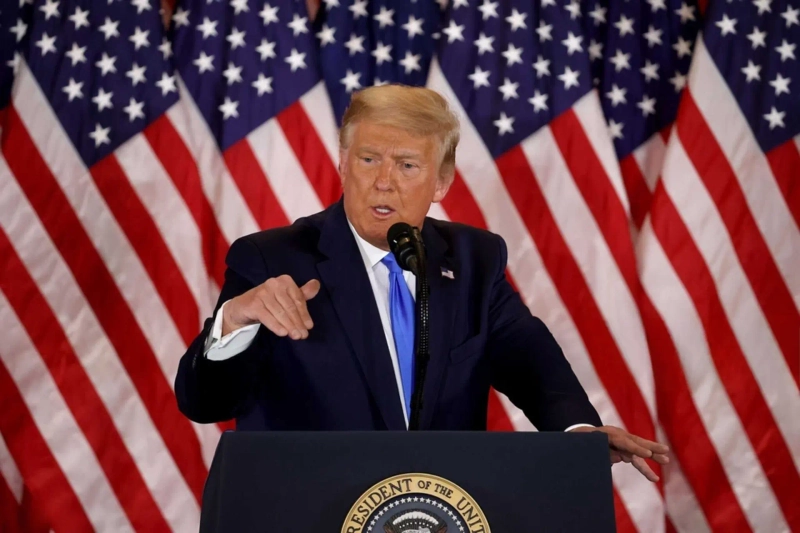
As US President Donald Trump declared a 'global tariff war,' export-oriented Asian stock markets collectively slumped. Concerns that a global economic recession might become a reality swept over the Asian stock markets as tariff rates much higher than market expectations were announced.
On the 3rd, South Korea's KOSPI index closed down 0.76% at 2486.70. Japan's Nikkei 225 index plummeted 2.77% to close at 34735.93, falling below the 35000 mark for the first time since August last year. Southeast Asian stock markets, which have served as manufacturing bases for global countries, also plummeted as they faced unexpectedly high tariff rates. Vietnam's VNI index, which was hit with a 46% mutual tariff rate, fell 6.68%. Hong Kong's Hang Seng index (as of 4 PM) also dropped 1.60%.
US stock index futures also plunged. As of 4 PM, US Nasdaq 100 futures fell 3.39%, and S&P 500 futures dropped 2.96%. As a 54% mutual tariff was imposed on China, Apple plummeted 7.14% in after-hours trading. Big tech stocks like Nvidia (-5.70%) and Amazon (-6.13%) also fell sharply in after-hours trading.
The unexpectedly strong tariff policy of President Trump has raised concerns that an economic recession in the US and other global countries could become a reality. Yoon Yeo-sam, a researcher at Meritz Securities, said, "It is the worst tariff rate among the scenarios the market had anticipated," adding, "Concerns that the US economy could enter stagflation have grown, causing global stock markets to slump collectively."
As unexpectedly high tariff rates were announced, global investment funds flocked to safe assets. International gold prices hit another all-time high. The spot gold price once reached $3167.84 per ounce in the morning, marking a new high. The yield on the US 10-year Treasury note fell to 4.06%, the lowest level since mid-October last year (bond prices rise).
In the domestic stock market, the electronics, shipping, and financial sectors showed a clear downward trend. Electronics companies with production bases in Vietnam, which faced a 46% mutual tariff, such as Samsung Electro-Mechanics (-8.50%), LG Innotek (-6.44%), and LG Electronics (-5.81%), all plummeted. The outlook that global trade will clearly slow down due to this mutual tariff policy also weakened the transportation and shipping sectors, such as HMM (-3.89%) and Korean Air (-2.55%). The financial sector, including KB Financial (-4.22%), also fell as the strong dollar trend is expected to continue for a long time. Although they narrowly avoided 'double tariffs,' Hyundai Motor (-1.27%) and Kia (-1.41%) could not avoid weakness either.
However, the view that 'tariff uncertainty' has passed its peak gained strength, and the KOSPI index, which had fallen nearly 3% during the morning session, reduced its decline in the afternoon. It is interpreted that the expectation that the biggest political uncertainty that has weighed on the domestic stock market will disappear with the impeachment ruling of President Yoon Seok-yeol scheduled for the next day also played a role. In the stock market, foreign investors dumped 1.4437 trillion won worth of stocks, but individual investors and institutional investors net bought 861.8 billion won and 464.6 billion won worth, respectively, defending the index.
The securities industry expects that stock market volatility will inevitably increase for the time being. Whenever countries hit with strong tariffs pull out retaliatory tariff cards, the stock market will inevitably wobble again. After the US imposed up to 25% tariffs on Chinese imports in July 2018 during Trump's first term, the KOSPI index fell 12.25% by the end of that year.
However, there is also a strong argument that as the US and each country enter into full-scale negotiations, the final tariff rate will decrease, and the stock market reflecting this could rebound. The fact that the earnings of listed companies are stopping their decline and rebounding also supports this argument. According to FnGuide, the combined operating profit of 101 domestic listed companies in the first quarter of this year is 37.641 trillion won, an increase of 1.17% compared to a month ago (30.2043 trillion won). Choi Jong-hyuk, CEO of C-Square Asset Management, said, "Not only global tariffs but also uncertainties that have weighed on the domestic stock market, such as impeachment and the resumption of short selling, are being resolved in earnest," adding, "The domestic stock market is likely to rebound as we move into the second half of the year." Lee Jin-woo, head of the Meritz Securities Research Center, also said, "Strictly speaking, with tariffs imposed on 50 countries, it is hard to say that Korea is at a relative disadvantage," adding, "As the semiconductor industry, which has the largest market capitalization, is passing through the bottom, there is still room for the stock market to rise."
Reporter Seong-mi Shim smshim@hankyung.com

Korea Economic Daily
hankyung@bloomingbit.ioThe Korea Economic Daily Global is a digital media where latest news on Korean companies, industries, and financial markets.