

Tariff Rate, Half of the Trade Deficit Divided by Import Amount…The U.S.'s 'Absurd Calculation Method'
Summary
- The Trump administration's introduction of reciprocal tariffs was announced as a measure to reduce trade deficits with countries without specific grounds.
- The reciprocal tariff rate for Korea was announced as 25%, but the White House stated it as 26%, and the government's confirmation request is underway.
- The Korea-U.S. FTA has been effectively nullified by the imposition of reciprocal tariffs, and it is highly likely to be renegotiated.
Trump says "25%" White House says "26%"…Reciprocal Tariff Q&A
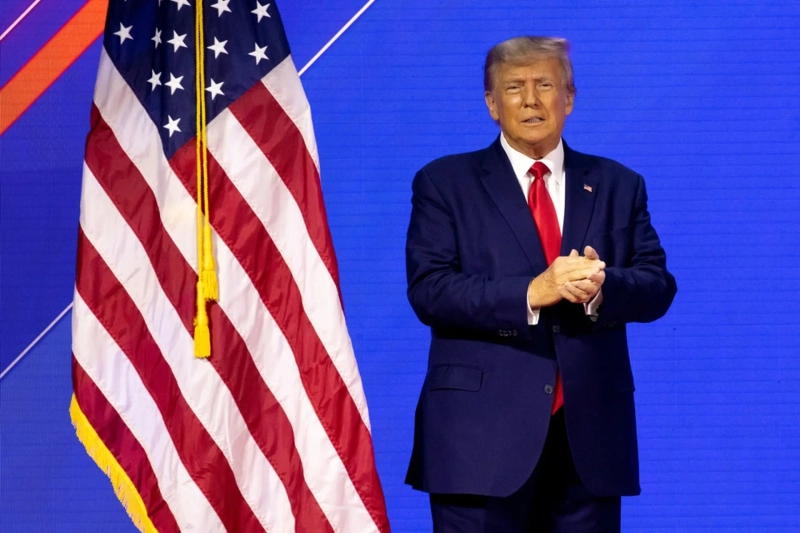
On the 2nd (local time), U.S. President Donald Trump announced reciprocal tariffs targeting major surplus countries with the U.S., along with a basic tariff (10%), causing confusion among countries worldwide. Questions are growing about the unclear basis for the reciprocal tariff rate, the correlation between reciprocal tariffs and other tariffs, etc. The contents announced that day were organized in a Q&A format.
Q1. What is the basis for calculating the reciprocal tariff rate?
"Will make trade deficit with trading countries zero"
According to the U.S. Trade Representative (USTR) website, the Trump administration derived the "tariff rate necessary to balance (make zero) the trade deficit between the U.S. and each trading partner." According to the formula disclosed by the USTR, the trade deficit with the country in question was divided by the product of the price elasticity of import demand, the pass-through rate of import prices, and the scale of U.S. imports.
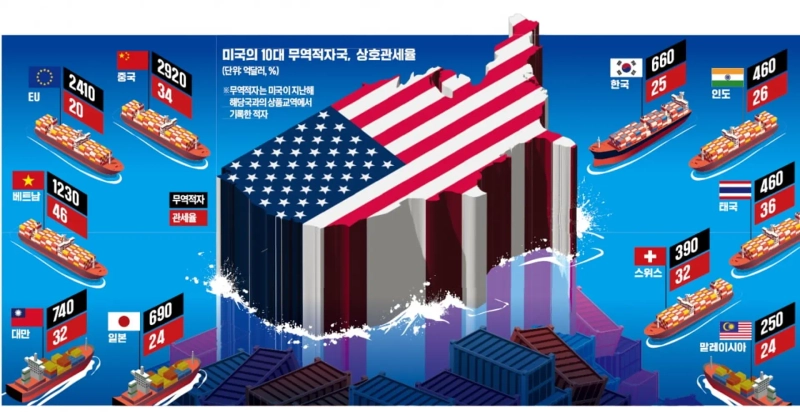
However, since the price elasticity was assumed to be 4 and the pass-through rate of import prices was assumed to be 0.25, this is ultimately the same as dividing the U.S. trade deficit (exports-imports) by the import amount from the country in question. For example, the amount the U.S. imported from Korea last year (based on goods) was $131.5 billion, and the trade deficit with Korea was $66 billion. Dividing $66 billion by $131.5 billion gives 50%, which is interpreted as setting Korea's reciprocal tariff rate at 25% by halving it. Most other countries' reciprocal tariff rates also match this calculation. The USTR made the outlandish claim that this calculation method is based on the assumption that "persistent trade deficits arise from a combination of tariff and non-tariff factors." In the White House announcement, President Trump presented a table labeled 'U.S. Tariff Rate - Including Currency Manipulation and Non-Tariff Barriers' without even this explanation.
Q2. What is Korea's reciprocal tariff rate?
Government checking figures with White House
President Trump announced it as 25%, but the White House stated it as 26%. The Korean government initially notified the media as 25% according to President Trump's announcement but has requested confirmation from the White House on which figure is correct.
Q3. When does it apply to Korea?
Basic tariff announced on the 5th, reciprocal tariff on the 9th
The basic tariff of 10% takes effect at 0:00 on the 5th Eastern Time (13:00 on the 5th Korean time), and the reciprocal tariff takes effect at 0:00 on the 9th (13:00 on the 9th Korean time). The basic tariff and reciprocal tariff are not cumulative. The imposition period is not set. The U.S. President can decide whether to terminate it based on deficit reduction, etc.
Q4. Does it overlap with item-specific tariffs?
Not applied doubly with steel, cars, etc.
It does not overlap. Steel and aluminum, which have been subject to a 25% tariff since the 12th of last month, are not subject to country-specific reciprocal tariffs. The reciprocal tariff on automobiles and major auto parts, which are subject to a 25% tariff from the 3rd of this month, is also exempt. Items such as copper, pharmaceuticals, timber, semiconductors, minerals, etc., which have been announced for tariffs but have not yet had tariff rates announced, are also excluded from reciprocal tariffs. These items will follow item-specific tariffs once the tariff rates are set in the future.
Q5. Which countries/items are excluded from reciprocal tariffs?
Mexico, Canada excluded…Gold bars, minerals also excluded
The U.S. announced that it would impose reciprocal tariffs on 57 countries worldwide and apply a 10% basic tariff to the rest. Mexico and Canada, which are subject to the United States-Mexico-Canada Agreement (USMCA), were excluded from reciprocal tariffs for the time being. The White House also announced that gold bars, energy, and certain minerals that cannot be sourced from the U.S. are not subject to this measure.
Q6. What is the tariff rate for USMCA applicable products?
Maintaining 0% tariff policy for the time being
Previously, the U.S. imposed a 25% tariff on imports from Mexico and Canada based on fentanyl and immigrant inflow. Currently, a 0% tariff rate is applied to items subject to USMCA, and a 25% tariff rate (10% for energy and potassium) is applied to items not subject to USMCA. The White House explained that this measure would continue for the time being.
Q7. What is the reciprocal tariff rate for China?
34% imposed…Average tariff burden 67%
The reciprocal tariff rate for China announced that day is 34%. China is subject to an additional 10% tariff from February 4th and an additional 20% (10%+10%) from March 4th. Adding the announced 34% results in an additional tariff of 54%. When the existing tariff rate on Chinese products (around 13%) is combined with the reciprocal and additional tariffs, the tariff rate on Chinese products rises to 67%. According to Bloomberg Economics estimates, if the tariff rate on Chinese products is calculated at 54%, China's exports to the U.S. are expected to decrease by 90% by 2030.
Q8. What happens to the Korea-U.S. FTA?
Effectively nullified…Likely to be renegotiated
The Korea-U.S. FTA has also been effectively nullified by the imposition of reciprocal tariffs. It is highly likely to undergo renegotiation. President Trump attempted to terminate the FTA agreement with Korea during his first term but only made partial amendments. The U.S. is expected to create a favorable trade environment for itself and pressure countries to increase investment in the U.S. during negotiations with countries, including Korea, after imposing reciprocal tariffs.
Kim Dong-hyun/Washington = Lee Sang-eun Correspondent 3code@hankyung.com

Korea Economic Daily
hankyung@bloomingbit.ioThe Korea Economic Daily Global is a digital media where latest news on Korean companies, industries, and financial markets.