

'34% Tariff Bomb' Hits China "Retaliation Against Unilateral Measures"… EU Also Warns of Retaliation if Negotiations Fail
Summary
- China immediately protested against the 34% tariff and hinted at the possibility of retaliatory measures.
- The European Union (EU) stated that it is preparing to implement retaliatory tariffs if negotiations fail.
- Taiwan and Japan have announced their plans to respond to the U.S. tariff measures in their own ways.
Complex Calculations Amidst Anger in Various Countries
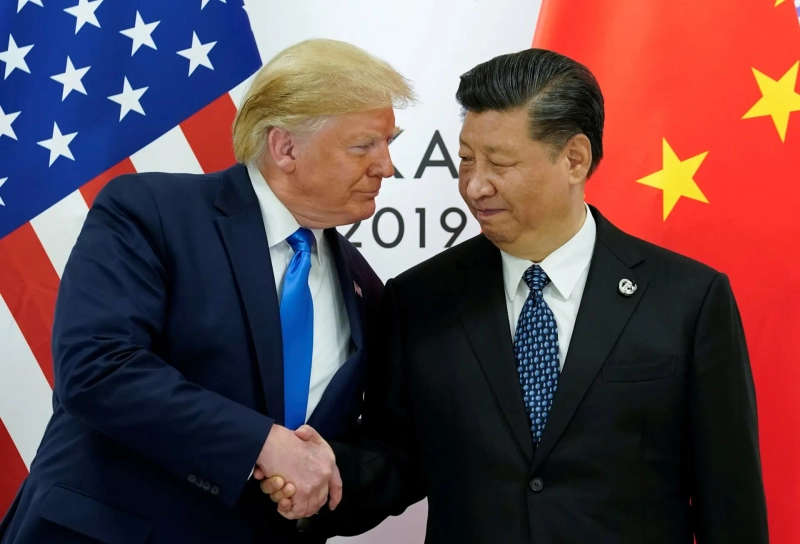
As U.S. President Donald Trump enforced reciprocal tariffs on the 2nd (local time), a global trade war is becoming a reality. Since the U.S. government has left room for negotiation, countries are considering the possibility of negotiating with the U.S. and are preparing countermeasures.
The country that reacted most strongly is China, which was hit with a 34% tariff. The Chinese Ministry of Commerce immediately issued a statement, warning that "the decision is based on the U.S. government's unilateral and subjective assessment," and that "the tariff increase will not solve U.S. problems but only threaten global economic and supply chain stability." They also hinted at the possibility of retaliatory measures. China is implementing retaliatory measures on coal, liquefied natural gas (LNG), and agricultural products. Furthermore, reports are emerging that China is raising the level of response, such as restricting domestic companies' investments in the U.S. Taiwan, which was hit with a 32% tariff, also plans to protest to the U.S. Taiwan Executive Yuan spokesperson Li Huizhi stated, "The recent trade surplus with the U.S. is due to the surge in demand for semiconductors and artificial intelligence (AI) and the U.S.-China conflict," and protested that "this measure does not properly reflect the reality of bilateral trade."
The European Union (EU) is preparing additional retaliatory measures against the 20% reciprocal tariff while leaving room for negotiation. Ursula von der Leyen, President of the European Commission, stated, "We are preparing retaliatory measures in case negotiations fail." The EU has temporarily suspended the implementation of retaliatory tariffs on 26 billion euros (about 42 trillion won) worth of U.S. goods announced last month and plans to decide whether to implement them around the 13th, depending on the negotiation results. These retaliatory measures are analyzed as pressure cards to increase negotiation leverage.
Brazil, in response to the 10% tariff, has passed a bill allowing the government to implement retaliatory measures and hinted at the possibility of filing a complaint with the World Trade Organization (WTO). Japan, which was hit with a 24% tariff, is reportedly focusing all its efforts on negotiations instead of retaliation. The application of reciprocal tariffs on Mexico and Canada has been temporarily suspended due to the United States-Mexico-Canada Agreement (USMCA). Mexico is expected to focus on negotiations. Canada is expected to adjust its response level. The previous day, the Canadian daily Globe and Mail reported, citing sources, that "Canada does not plan to impose retaliatory tariffs on essential goods imported from the U.S."
Reporter Hyein Lee hey@hankyung.com

JOON HYOUNG LEE
gilson@bloomingbit.ioCrypto Journalist based in Seoul