

Escalation of Tariff War Triggered by Trump... China Retaliates with 34% on US Imports
Summary
- It was reported that concerns about a global economic recession are spreading due to China's response to the U.S. reciprocal tariffs.
- International credit rating agency Fitch downgraded China's national credit rating, and global stock markets showed a downward trend.
- JP Morgan Chase and Barclays predicted that this situation will have a negative impact on the global economy and the U.S. economy.
Retreat of Free Trade and Inflation Concerns... Fitch Downgrades China's Credit Rating
Global Stock Markets in Decline... Dollar Value at Six-Month Low
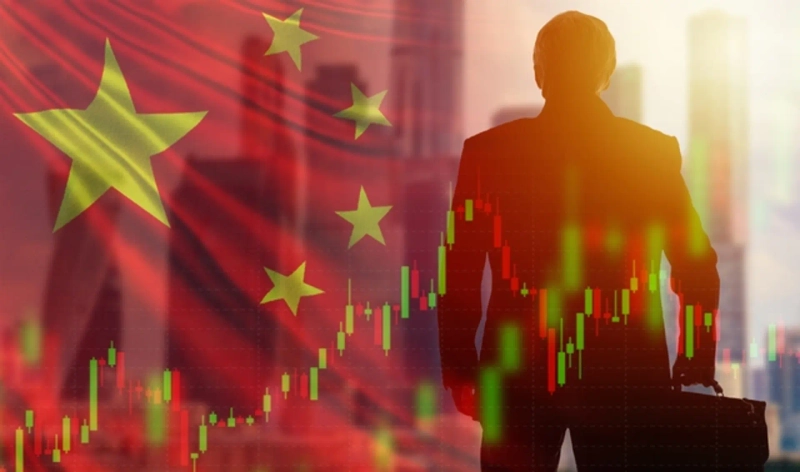
In response to U.S. President Donald Trump's imposition of reciprocal tariffs, China has retaliated. The imposition of U.S. tariffs and retaliatory tariffs from countries around the world are intertwining, rapidly spreading the fear of 'R (Recession)' in the global economy.
On the 4th, the Chinese government announced, "Starting from 12:01 PM on the 10th, an additional 34% tariff will be imposed on U.S. imports." They also introduced sanctions prohibiting the export of 'dual-use' items, which can be used for both military and civilian purposes, to 16 U.S. defense companies. The export of rare earth elements such as samarium, gadolinium, terbium, dysprosium, lutetium, scandium, and yttrium will also be controlled. Additionally, they stated that they have filed a complaint with the World Trade Organization (WTO) regarding the U.S. reciprocal tariffs.
When President Trump imposed reciprocal tariffs on countries around the world on the 2nd, applying a 34% rate to China, China retaliated with the same rate at the same time. The U.S. reciprocal tariffs take effect at 12:01 AM Eastern Time on the 9th, and 12:01 PM China time on the 10th.
As a result, concerns about a global economic recession are growing. JP Morgan Chase assessed that "the probability of a global economic recession this year has increased from 40% to 60%" following the Trump administration's announcement of reciprocal tariffs. Barclays predicted that the U.S. economy will experience negative growth in the fourth quarter of this year, and UBS forecasted 'two consecutive quarters of negative growth.'
International credit rating agency Fitch downgraded China's national credit rating from A+ to A for the first time in 18 years. Fitch pointed out that "the U.S. reciprocal tariffs are likely to act as downward pressure on China's growth and fiscal outlook."
The market reacted sensitively to the mere enforcement of U.S. reciprocal tariffs. On the first day of President Trump's announcement of reciprocal tariffs, the three major indices, Dow, S&P 500, and Nasdaq, plummeted simultaneously on the New York Stock Exchange, wiping out $3 trillion in market capitalization. The dollar value plummeted. The dollar index, which shows the value of the dollar against the currencies of six major countries, fell to 101.905, the lowest in six months. Meanwhile, the euro surged to a six-month high of $1.1 per euro at one point. The 10-year U.S. Treasury yield fell below the 4% mark. This was due to the spread of risk aversion and preference for safe assets.
The shock continued in the Asian stock markets, with Japan's Nikkei 225 index plunging 2.75%. The KOSPI index fell by 0.86%, but foreigners sold 1.78 trillion won worth of stocks in the securities market alone. The won-dollar exchange rate closed at 1,431.10 won, down 32.90 won due to the weak dollar.
New York = Park Shin-young / Beijing = Kim Eun-jung Correspondent nyusos@hankyung.com

Korea Economic Daily
hankyung@bloomingbit.ioThe Korea Economic Daily Global is a digital media where latest news on Korean companies, industries, and financial markets.