

Trump-induced Black Monday... Largest drop in Asian stock markets since the financial crisis
Summary
- Asian stock markets experienced the largest drop since the financial crisis due to the Trump-induced tariff shock.
- Goldman Sachs and JP Morgan raised the probability of a US recession to 45% and 60%, respectively.
- Investors expect the Federal Reserve to respond with rate cuts, and the market anticipates a 125bp cut by the end of the year.
KOSPI -5.5%, Hang Seng -12.4%, Nikkei -7.8%
Taiwan's weighted index hit by 32% tariffs, largest drop in history
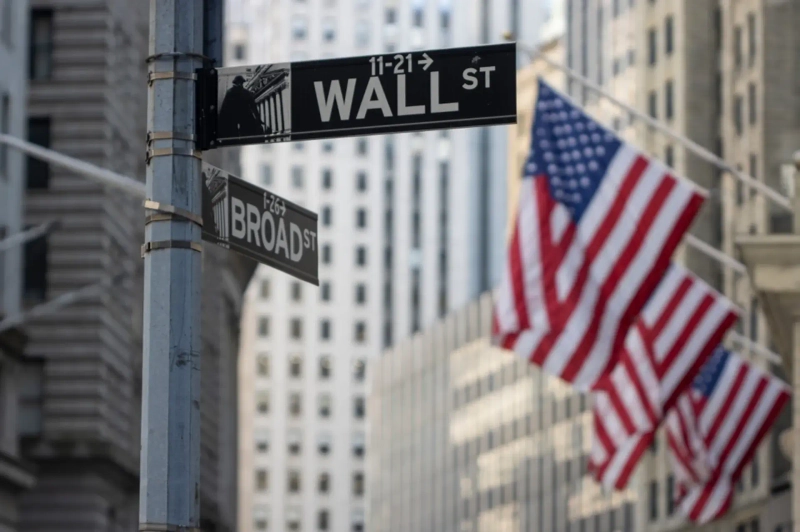
On the 7th (local time), Asian stock markets, heavily concentrated with high tariffs, experienced the worst Black Monday since the global financial crisis due to the shock of tariffs induced by Trump.
On this day, Taiwan's stock index recorded a historic drop of 9.8% after the market opened. Hong Kong's Hang Seng index also plummeted by 12.4%, and the Shanghai index fell by 7.3%. In the Tokyo stock market, the Nikkei 225 index plunged by 7.8%, triggering a circuit breaker at one point.
The KOSPI, a representative index, plunged by 5.5%, leading the Korean stock market to temporarily halt sell orders for program trading. The 5-year national credit default swap (CDS) widened the most since the pandemic.
The MSCI Asia Pacific index fell by 8.5% in just one day. This is the worst level in 16 years since the global financial crisis of 2008 and 2009.
The Stoxx 600 of the European stock market also started with a nearly 6% plunge right after opening.
The S&P 500 futures of the US stock market also showed a sharp drop of about 5% as soon as Wall Street trading began, indicating further declines after $5 trillion (7,328 trillion won) had already evaporated in the past week.
The Cboe Volatility Index (VIX), known as Wall Street's fear gauge, soared to its highest level since the COVID-19 pandemic began.
Traditional safe-haven currencies like the Japanese yen and Swiss franc surged. Bond prices also soared, with the 10-year US Treasury yield rising to 3.9%. The yield on the US 2-year Treasury, sensitive to monetary policy, fell to 3.43%, dropping 22 basis points (1bp=0.01%) on the day. Since Trump announced reciprocal tariffs last Wednesday, it has plunged a total of 50 basis points.
Goldman Sachs raised the probability of a US recession from 35% to 45% in just one week. JP Morgan increased the probability of a recession in the US and the global economy from 40% to 60%.
Traders expect the Federal Reserve to cut rates five more times this year as the likelihood of a recession increases. According to the CME Group's FedWatch tool on this day, the market is pricing in a 125bp rate cut by the end of the year. This corresponds to five 0.25% cuts. Just last week, the market had priced in three cuts.
Trump and his economic team dismissed concerns about inflation and recession in the market. By defending the tariff offensive and telling the market to forget it, they suggested that, unlike previous financial market collapses, the US government would not step in to rescue the market or boost stock prices.
Meanwhile, investors from Bill Ackman, a hedge fund manager on Wall Street who has supported Trump, to Stanley Druckenmiller criticized Trump's tariff measures, saying they would slow economic growth and fuel inflation.
Bill Ackman, founder of Pershing Square Fund and a Trump supporter, wrote on social media X, "This is not what I expected when I voted for Trump," demanding a 90-day grace period on tariffs. He criticized Trump for losing the trust of global business leaders and leading the US into a self-imposed 'economic nuclear winter.'
Billionaire investor Stanley Druckenmiller pointed out, "Tariffs over 10% pose more risk than reward, and even if foreigners pay some, it ultimately becomes a consumption tax borne by consumers."
Strategists led by Michael Wilson at Morgan Stanley stated that if tariff anxiety does not subside and the Fed remains on hold, the S&P 500 could fall another 7-8%.
Last Friday, the S&P 500 experienced its worst two-day consecutive drop since the March 2020 pandemic, falling 6% and evaporating over $5 trillion in value. Wall Street remains pessimistic about Trump's likelihood of abandoning his tariff policy.
Guest reporter Kim Jung-ah kja@hankyung.com

Korea Economic Daily
hankyung@bloomingbit.ioThe Korea Economic Daily Global is a digital media where latest news on Korean companies, industries, and financial markets.