

PiCK
Trump: 'No Consideration for Delaying Reciprocal Tariffs... Other Countries Begging for Negotiations'
Summary
- U.S. President Trump stated that he is not considering delaying the imposition of reciprocal tariffs.
- President Trump mentioned that 'many countries are requesting negotiations, and as a result, they will pay tariffs.'
- Despite the tension between the U.S. and China due to tariffs, Trump boasted of his relationship with China in his response.
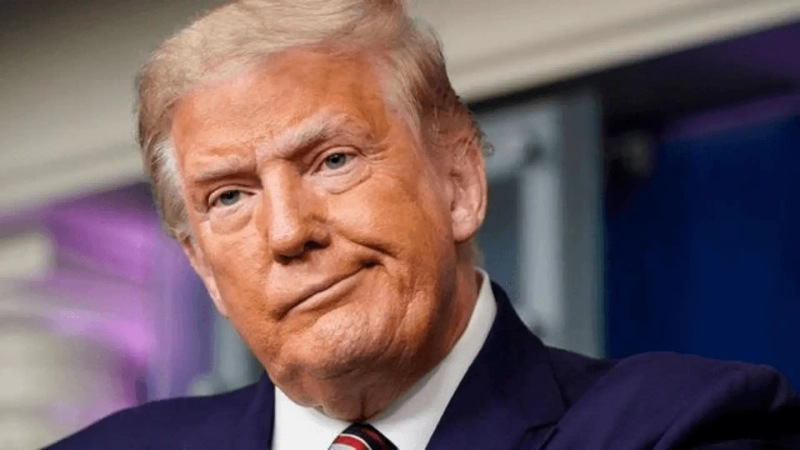
U.S. President Donald Trump said on the 7th (local time) regarding the possibility of temporarily delaying the imposition of reciprocal tariffs, "We are not considering that."
President Trump made this statement during a press conference held after meeting with Israeli Prime Minister Benjamin Netanyahu in the Oval Office, saying, "There is an opportunity to reshape the trade landscape." He stated, "Countries that have taken advantage of us are saying 'Please negotiate,' because they have been hit hard."
He mentioned, "Many countries are coming to negotiate with us," and added, "It will be a fair deal, and in many cases, they will pay substantial tariffs." However, contrary to President Trump's explanation, the entities paying the tariffs are U.S. importers. Of course, the counterpart countries might share some costs to prevent a decrease in export volumes.
President Trump further commented on the negotiations, addressing the contradiction of saying tariffs would be permanent, "Both can be true," he said, "Tariffs can be permanent, and it can also be a negotiation."
He reiterated through a Truth Social post that morning that if China does not withdraw its decision to impose a 34% retaliatory tariff on the U.S., he would impose an additional 50% tariff. He boasted of his close relationship with Chinese President Xi Jinping, saying, "I respect China, but they can't do this. China sees a huge surplus and spends it on military. We don't want that."
Peter Navarro, White House trade advisor, appeared on CNBC that day, emphasizing that non-tariff trade barriers are more important than tariffs, citing value-added tax (VAT) as an example.
Washington Correspondent: Sang-eun Lee selee@hankyung.com

Korea Economic Daily
hankyung@bloomingbit.ioThe Korea Economic Daily Global is a digital media where latest news on Korean companies, industries, and financial markets.