

Even with Duty-Free Proposals, "Not Enough"... Trump Cooler to Allies
Summary
- Countries have made radical proposals like duty-free to the U.S., but President Trump is rejecting them as 'not enough.'
- President Trump has a strategy to delay concluding trade negotiations with allies until he secures maximum leverage.
- He emphasizes purchasing U.S. energy to reduce the trade deficit and uses it as a negotiation card.
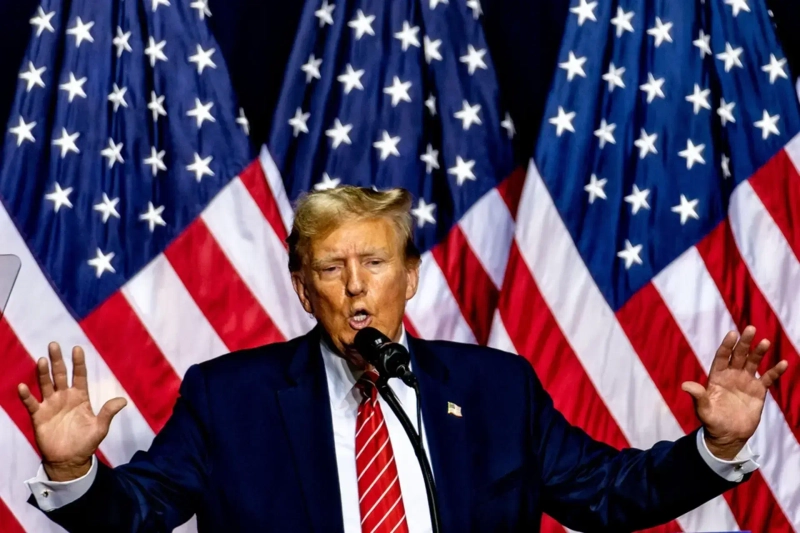
Countries around the world are flooding the United States with requests for reciprocal tariff negotiations. Radical proposals such as 0% tariffs are also being made one after another. However, U.S. President Donald Trump keeps repeating that he will "negotiate," but continues to send back proposals empty-handed, saying they are "not enough." This is the same for top allies like Japan and Israel. It is interpreted that President Trump's policy is not to easily enter the negotiation phase because he believes there is much more to gain from allies.
○ "No Reduction" Even After Summit
President Trump held a summit with Israeli Prime Minister Benjamin Netanyahu at the White House on the 7th. At this meeting, Prime Minister Netanyahu promised to "quickly resolve the trade deficit with the United States and remove trade barriers." President Trump thanked him for this remark, but when asked if he could reduce the reciprocal tariffs that will begin to be imposed at midnight on the 9th, he said, "Probably not." He then said, "We are giving Israel billions of dollars for security support and various reasons."
He went on to say that the White House is "not considering" temporarily suspending reciprocal tariffs for negotiations with various countries. Prime Minister Netanyahu is the first to hold a summit with President Trump since the announcement of reciprocal tariffs on the 2nd. Although the two countries are close, President Trump remained steadfast. Israel is the first country to sign a Free Trade Agreement (FTA) with the United States in 1985. Last year, the United States exported $14.8 billion worth of goods to Israel and imported $22.2 billion worth, recording a trade deficit of $7.4 billion.
President Trump showed a similar attitude in a call with Japanese Prime Minister Shigeru Ishiba. Prime Minister Ishiba told reporters that during the 25-minute call, he conveyed concerns that Japan has been the world's largest investor in the U.S. for five consecutive years (including brownfield) and that U.S. tariff measures could reduce Japanese companies' investment capacity. However, there was no outcome. It is reported that President Trump did not mention the possibility of tariff reduction.
○ Duty-Free Proposals Also Rejected
U.S. Treasury Secretary Scott Besant said in a Fox Business interview that "nearly 70 countries have approached," adding, "It will be a busy April and May, and probably busy until June." However, while President Trump is open to negotiations, he is simultaneously employing a vague strategy by saying "tariffs will be permanent."
Following Vietnam's duty-free proposal, the European Union (EU) proposed to the U.S. on the same day to trade industrial goods such as automobiles duty-free, but President Trump and White House Trade Advisor Peter Navarro did not change their negative stance of "not enough." The strategy is to delay concluding negotiations until the other party is eager and leverage is maximized. Secretary Besant said, "President Trump will be willing to start negotiations when he has secured maximum leverage."
Moreover, the U.S. is ignoring the facts even when countries correct them. Claims such as Japan imposing a 700% tariff on U.S. rice, South Korea's tariffs on the U.S. being four times higher, and the EU's VAT being a trade barrier have all been explained with full effort by each country, but the White House repeats the same message. The logic is not important as long as the goal is achieved. In other words, it means that there is no need to be swayed by President Trump's words, and just preparing negotiation cards is enough.
○ Emphasis on Energy Purchases
One negotiation clue emphasized by President Trump is the purchase of U.S. energy such as oil and gas. This is analyzed as a plan to reduce the trade deficit and create excess demand for U.S. energy to raise prices. Regarding the EU's proposal, he said, "The EU has treated us badly," adding, "They should buy energy from us." "They can buy it, and then we can reduce the trade deficit by $350 billion a week," he said.
Removing non-tariff barriers is also an important negotiation point in the future. President Trump previously demanded that the EU abolish the value-added tax (VAT), but this was unacceptable to the EU. However, demands such as starting to import beef over 30 months old or lifting import restrictions due to regulations, which the U.S. is asking of South Korea, are worth considering.
The lesson learned by the Washington diplomatic community so far is that rather than exhausting efforts in negotiations with working-level officials, it is much more important to present a 'one-shot' to President Trump. A diplomatic official said, "There is a mood that it is not even clear whether the results of ministerial meetings are reported to President Trump," adding, "Ultimately, it seems that only President Trump is making the decisions."

Korea Economic Daily
hankyung@bloomingbit.ioThe Korea Economic Daily Global is a digital media where latest news on Korean companies, industries, and financial markets.