

Korea Boosts New York Stock Market... Plunges Again Due to US Tariff Determination
Summary
- It was reported that President Trump's determination to enforce tariffs caused major indices of the New York Stock Exchange to plunge.
- The New York Stock Exchange, which showed an upward trend during the day, closed lower with the S&P 500 index falling below the 5000 mark.
- Apple's stock price rose early in the session but closed down nearly 5%, plummeting about 22% over the past four trading days.
Trump Improves Market Sentiment by Saying "Had a Great Call with Korea" on the 8th
Reaffirms Mutual Tariff Imposition, Causing New York Stock Market to Plunge Again
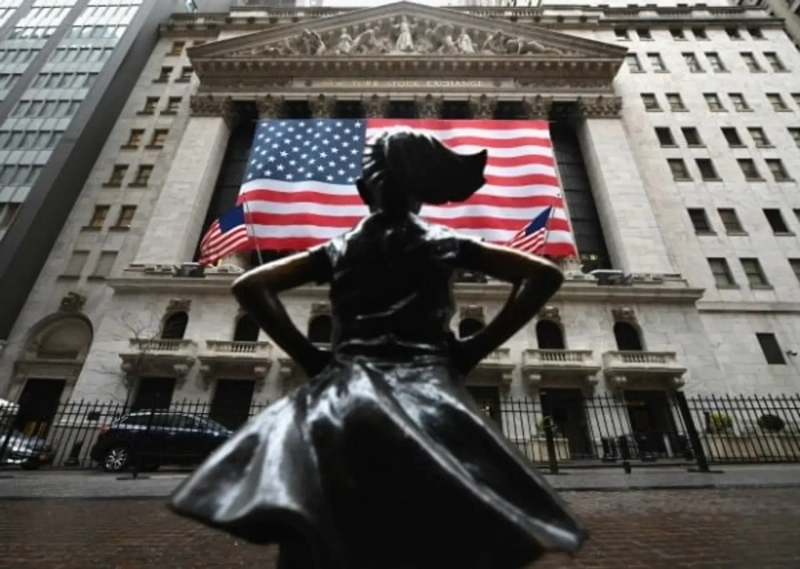
The three major indices of the New York Stock Exchange closed sharply lower again on the 8th (local time) as it was confirmed that the tariff war between the US and China would not end easily. Investors were hopeful about the possibility of negotiations between the two countries during the day, and the New York Stock Exchange also rose, but the Trump administration's determination to enforce tariffs dragged down the soaring stock prices.
On this day, the Dow Jones index closed at 37,645.59, down 320.01 points (0.84%) from the previous session. The S&P 500 index fell 79.47 points (1.57%) to 4,982.78, and the Nasdaq Composite index plunged 335.35 points (2.15%) to 15,267.91. The New York Stock Exchange gave up all intraday gains and eventually reversed to close lower. Notably, the S&P 500 index fell below the 5000 mark for the first time since April 2024.
The stock market started with gains under the analysis that it was in an oversold state. Investors were encouraged by signals that the US would enter into tariff reduction negotiations with major trading partners. President Trump boosted market sentiment by posting on Truth Social that he "had a great call with the Acting President of Korea."
However, the upward trend did not last long. White House spokeswoman Caroline Levitt said at a White House briefing that day, in response to a question about whether the additional 50% tariffs mentioned by President Trump would take effect from tomorrow, "It will take effect at 12:01 AM on the 9th." Spokeswoman Levitt stated, "It is a mistake for China to take retaliatory measures," adding, "The US hits back harder if hit. That's why the 104% tariff on China is being implemented."
She said, "President Trump believes that President Xi Jinping and China want to negotiate with the US. They don't know how to start it," adding, "If China contacts for negotiations, the President will be incredibly gracious, but he will do what is best for the American people."
As a result, major stocks, led by Apple, turned downward, dragging down stock prices. Apple's stock price rose more than 4% early in the session but eventually closed down nearly 5%. Apple has plummeted about 22% over the past four trading days, marking the worst four days since the 2008 financial crisis.
Robert Lujirello, Chief Investment Officer (CIO) of Brave Eagle Wealth Management, told CNBC, "For the market rebound to continue, trade policy stability must be supported," adding, "Policies must be consistent for companies to make long-term capital allocation decisions."
New York = Park Shin-young, Correspondent nyusos@hankyung.com

Korea Economic Daily
hankyung@bloomingbit.ioThe Korea Economic Daily Global is a digital media where latest news on Korean companies, industries, and financial markets.