

Samsung Breathes a Sigh of Relief... Smartphones and Semiconductors Exempt from 'US Reciprocal Tariffs'
Summary
- The US government announced that it will exempt 'reciprocal tariffs' on smartphones and semiconductors, and it is expected that Samsung Electronics will also benefit.
- Samsung Electronics mainly produces smartphones in Vietnam, and it is reported that they have 'breathed a sigh of relief' due to the local tariff grace measure.
- On the other hand, there is still uncertainty in the semiconductor field, and the possibility of item tariff application continues to be discussed.
Sudden Announcement by the US Government
Aimed at Protecting Domestic Companies like Apple
Samsung Electronics Also Expected to Benefit
Semiconductors, Including Equipment and SSDs, Exempt
Possibility of Tariffs on Certain Items Remains
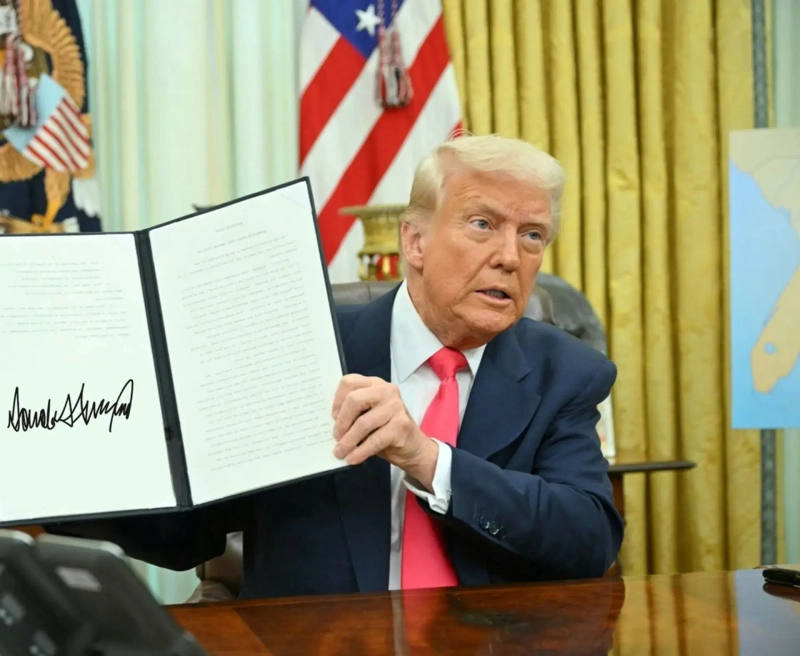
On the 11th (local time), the US government announced that "smartphones, semiconductors (including SSDs and equipment) are exempt from the 'reciprocal tariffs' imposed by the US government." It is expected that Apple, which produces about 90% of its iPhones in China, will directly benefit. There is also an evaluation that Samsung Electronics, which has a production base in Vietnam, has 'breathed a sigh of relief.'
It is analyzed that the imposition of reciprocal tariffs increases the damage to US companies and raises product prices, thereby increasing the damage to US citizens.
The US Customs and Border Protection under the Department of Homeland Security released guidelines on the 11th (local time) for 'exemption from reciprocal tariffs on certain products.'
According to the guidelines, smartphones, laptops, monitors, and semiconductors are excluded from the series of reciprocal tariff policies announced by the US government since the 2nd. Not only the basic tariff (10%) but also additional tariffs imposed on specific countries are not applied. Accordingly, products imported into the US from China are also known to be included in the tariff exemption.
The direct beneficiary company is Apple in the US. Apple produces 90% of its iPhone volume in China. As the US imposed a '20%' tariff on China's fentanyl response and added a '125%' reciprocal tariff, the tariff rate on Chinese products was calculated at 145%, leading to speculation that "iPhone prices will rise and Apple will be hit." With this measure, Apple iPhones will not be subject to tariffs even if produced in China.
Samsung Electronics is also expected to benefit. Samsung Electronics produces about 40-50% of its smartphones in Vietnam. Vietnam's reciprocal tariff rate is 46%, and the US government recently applied a '90-day grace' measure.
Semiconductors were basically exempt from reciprocal tariffs except for SSDs, semiconductor equipment, and memory modules. In this guideline, SSDs and semiconductor equipment are also included in the reciprocal tariff exemption.
However, US President Donald Trump stated on the 2nd that "semiconductors will be subject to separate item tariffs." There is a possibility that separate tariffs will be applied to semiconductors, similar to the 25% item tariff imposed on automobiles. The semiconductor industry evaluates that "uncertainty remains."
Reporter Jeongsoo Hwang hjs@hankyung.com

Korea Economic Daily
hankyung@bloomingbit.ioThe Korea Economic Daily Global is a digital media where latest news on Korean companies, industries, and financial markets.