

US to Ease Tariffs on Cars and Parts for Two Years, Avoid Overlapping with Other Tariffs
Summary
- The Trump administration is easing the tariff burden on cars and parts for two years, exempting tariffs on 15% of parts in the first year and reducing it to 10% in the following year.
- The White House reported that car manufacturers promised production expansion and job creation in return for the two-year tariff relief.
- Tariffs on cars and car parts will not overlap with other item-specific tariffs, and if a product is subject to more than one tariff, it will be applied preferentially.
Duty-free for 15% of the Value of Cars Made in the US, Reduced to 10% in the Second Year
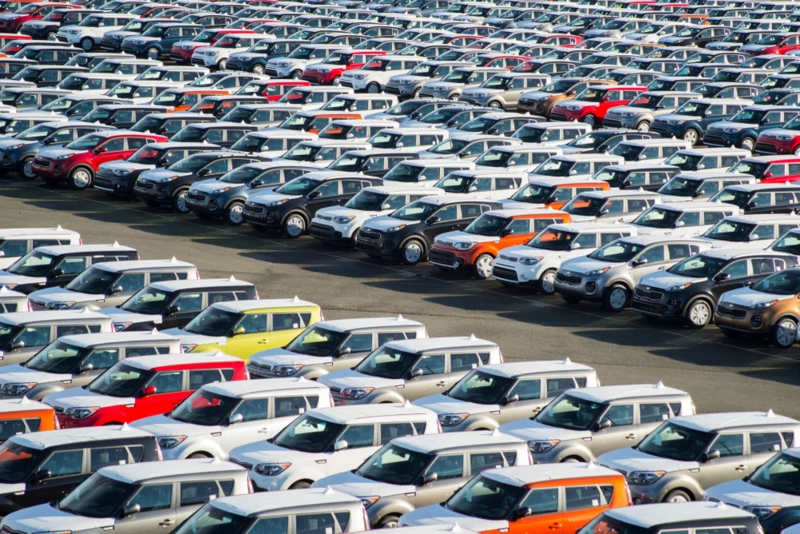
The Trump administration is temporarily reducing the tariff burden for two years on companies manufacturing cars in the United States that import parts from abroad.
The White House announced on the 29th (local time) that President Trump signed a proclamation containing this policy. The proclamation states that parts equivalent to 15% of the price of cars completed in the US will not be subject to the 25% tariff.
Since April 3, the US has been imposing a 25% tariff on cars, and this tariff will be extended to car parts starting May 3.
President Trump instructed that tariffs be reduced for one year on parts equivalent to 15% of the value of cars assembled in the US, and for the following year, on parts equivalent to 10%.
The US government plans to use 3.75% of the total Manufacturer's Suggested Retail Price (MSRP) of all cars produced in the US from April 3, 2025, to April 30, 2026, for offsetting parts tariffs.
This was determined because applying a 25% tariff rate to 15% of all car parts results in 3.75% (0.25 x 0.15 = 0.0375). However, this only applies to the first year, and from May 1, 2026, to April 30, 2027, 2.5% of the total MSRP can be used for tariff offsetting. The tariff relief measure is expected to last for two years.
A senior White House official explained, "This policy is being implemented because car companies have appealed that they need time to establish a complete supply chain in the US," adding, "Basically, companies can bring in and use 15% of the parts for cars without tariffs from abroad."
The senior official further stated that in exchange for the two-year tariff relief, car companies promised to create tens of thousands of jobs, expand production, increase production lines, and build new factories. He also emphasized, "All cars completed in the US with a domestic parts ratio of over 85% will not be subject to any tariffs," adding, "This relief measure can be used by both domestic and foreign companies."
The Trump administration also ensured that parts tariffs would not overlap with other item-specific tariffs. In a separate executive order, President Trump stated that tariffs on cars and car parts, tariffs imposed on Canada and Mexico, aluminum tariffs, and steel tariffs would not overlap.
If a specific product is subject to more than one tariff, the tariffs on cars and car parts will be applied first, followed by tariffs on Canada and Mexico. However, steel and aluminum tariffs may overlap depending on the situation. Additionally, car and car parts tariffs will overlap with tariffs not specified in the executive order, indicating that car tariffs will be combined with tariffs on China.
Reporter Oh Se-seong, Hankyung.com sesung@hankyung.com

Korea Economic Daily
hankyung@bloomingbit.ioThe Korea Economic Daily Global is a digital media where latest news on Korean companies, industries, and financial markets.