

PiCK
US-China Marathon Talks in Switzerland for Two Days... Trump Says 'Great Progress'
Summary
- The United States and China discussed tariff reductions and the fentanyl issue during talks in Geneva, Switzerland.
- President Donald Trump mentioned the possibility of tariff reductions and emphasized that the negotiations made great progress.
- The U.S. imposes a 145% high tariff on Chinese imports, and China imposes a 125% tariff on U.S. imports, making the outcome of this meeting important.
Chinese Anti-Drug Commissioner Dispatched... Fentanyl Discussed Besides Tariffs
Trump: 'Mutual Tariffs Minimum Rate 10% but Exceptions Possible'
White House Spokesperson: '10% Basic Tariff Maintained for All Countries, Not Just the UK'
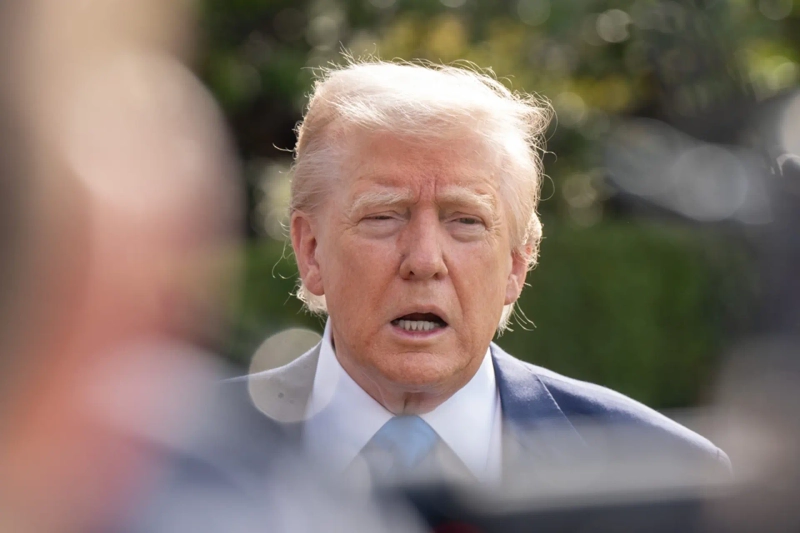
The United States and China, which have been in conflict by imposing high tariffs on each other, held a meeting for high-level trade negotiations in Geneva, Switzerland, on the 10th (local time). The two countries held a marathon meeting for about 10 hours that day, discussing tariff reductions and the handling of the drug fentanyl. U.S. President Donald Trump introduced that 'great progress' was made right after the first day's meeting.
Closed-Door Negotiations
On this day, the U.S. delegation led by Treasury Secretary Scott Besant and the Chinese delegation led by Vice Premier He Lifeng held a meeting at the Swiss Embassy in Geneva from 10 a.m. According to Reuters, the two sides concluded the first day's meeting around 8 p.m. The meeting is expected to resume on the 11th.
The meeting was held without public statements from the delegations. The Associated Press reported that the delegations did not answer reporters' questions as they returned to their accommodations after the meeting.
President Donald Trump said on Truth Social that day, 'We had a very good meeting with China in Switzerland today,' adding, 'Many issues were discussed, and numerous agreements were reached.' He continued, 'The overall relationship restructuring was conducted in a friendly and constructive manner,' and 'I hope China will be more open to American companies for the benefit of both China and the United States.' He emphasized again, 'There was tremendous progress.'
Currently, China and the United States are imposing high tariffs on each other. The Trump administration raised tariffs on Chinese imports to 145%, and China responded by imposing a 125% tariff on U.S. imports. They are also restricting the export of rare earth elements.
'China Must Resolve It'
It is presumed that the U.S. and China presented various opinions to lower tariff levels at this meeting. President Trump wrote on Truth Social on the morning of the 9th, '80% seems appropriate for tariffs on China.' He also mentioned Treasury Secretary Scott Besant, saying, 'It's up to Scott B.' Furthermore, U.S. media such as the New York Post and Bloomberg reported that the U.S. side would propose lowering it to the 50% range.
China expects the U.S. to show more concessions in terms of tariff levels and scope in the negotiations, as the U.S. started imposing tariffs first.
The U.S. wants China to present more concrete measures to reduce the import of the drug fentanyl into the U.S., in addition to tariff concessions. China included Wang Xiaohong, the highest-ranking official in the public security and anti-drug field, in its delegation. Therefore, it is possible that China conveyed specific measures related to the prohibition of fentanyl importation into the U.S. in Geneva.
10% Basic Tariff Maintained
Although the U.S. and China have opened the door to dialogue, there is a strong view that it will be difficult to reach an immediate agreement on tariffs. While the Trump administration is conveying an atmosphere of significantly lowering tariffs on China, it is uncertain whether China will respond. The imposition of tariffs by the U.S. on China can severely impact the Chinese economy, but China has also been preparing for export diversification after experiencing the first term of Trump.
Bloomberg analyzed, 'Both countries have maintained their stance that they have the upper hand in negotiations, but if the current situation continues, there will be significant risks for both countries,' adding, 'Concerns about price increases and product shortages in the U.S. are becoming a political burden for President Trump.'
In the U.S., there are also strong voices criticizing the lack of results despite President Trump's imposition of tariffs on China and waiting for China's response.
Some analysts suggest that the U.S.-China talks being held in Geneva, where the headquarters of the World Trade Organization (WTO), symbolizing the promotion of free trade, is located, reflects China's intention to check the Trump administration's trade protectionism led by tariffs.
Meanwhile, White House spokesperson Caroline Levitt told reporters on the 9th, 'The President has decided to maintain a 10% standard tariff in trade negotiations with all countries, not just the UK.' When a Fox News reporter asked, 'Does that mean you will permanently maintain that tariff even after an agreement is reached?' Levitt replied, 'The President has a firm stance on maintaining the 10% standard tariff.'
New York Correspondent Park Shin-young nyusos@hankyung.com

Korea Economic Daily
hankyung@bloomingbit.ioThe Korea Economic Daily Global is a digital media where latest news on Korean companies, industries, and financial markets.