

After US-China Tariff Truce, Countries Shift from Submissive Stance in US Negotiations
Summary
- After the US-China tariff truce, India, South Korea, and Japan are reportedly changing their negotiation stance to a tougher one.
- Countries with high dependence on US trade are warned that a tough strategy could be risky.
- Bloomberg reported that the US's move to lower the median tariff rate surprised many countries.
Following India, South Korea and Japan "Won't Rush"
South American countries like Brazil hasten agreements with China
"If dependence on US trade isn't low, a tough strategy could be risky"
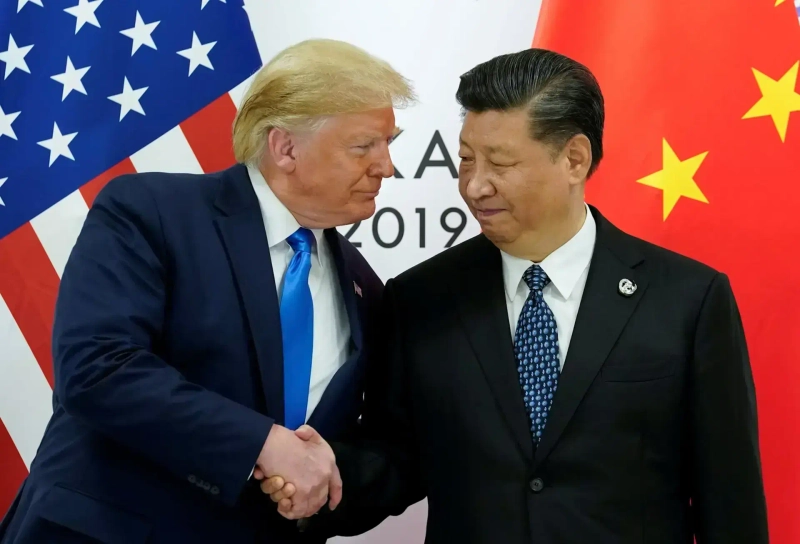
As China, which has been responding strongly to Trump's tariffs, secured a temporary but favorable truce in tariff negotiations with the US, some countries like India, South Korea, and Japan are showing signs of shifting to a more assertive stance. However, it is pointed out that a tough response could be risky if the impact on the US economy is not as significant as China's.
On the 19th (local time), Bloomberg pointed out that Trump's decision to lower the 145% tariffs imposed on China to an average of 30% surprised many governments from Seoul to Brussels (EU). As a result, these governments are questioning whether their previous diplomatic and swift approach to Trump's tariffs, rather than retaliatory measures, was the right path.
Stephen Olson, a former US trade negotiator and currently a visiting senior fellow at Singapore's ISEAS (Yusof Ishak Institute), said this is changing the dynamics of negotiations. According to him, "Many countries will conclude from the Geneva negotiations that President Trump has overstepped."
The basic tariff, currently maintained at 10%, will apply unless an agreement is reached between the two countries or an extension is approved before the 90-day suspension period ends in July.
President Trump suggested last week that there is no time to proceed with negotiations as the 90-day grace period is nearing its end, with about 150 countries participating in the negotiations. Therefore, the US might unilaterally raise tariff rates within the next 2-3 weeks.
Bloomberg quoted South Korea's leading presidential candidate Lee Jae-myung, who criticized the interim government for hastily engaging in negotiations, saying there is no need to rush for an early agreement in trade negotiations with the US.
Japan's Minister of Economy, Trade and Industry, Yoji Muto, did not attend a meeting held in South Korea last week, attended by US Trade Representative Jamie Greer. Ryohei Akazawa, the chief negotiator leading Japan's tariff task force, hoped to reach an agreement with the US in June, but recent local media reports suggest that an agreement is more likely in July, ahead of the upper house elections.
Prime Minister Shigeru Ishiba emphasized that he does not intend to compromise national interests by being fixated on time limits, indicating that the Japanese government prefers to take time to resolve issues rather than making concessions for a quick settlement.
President Trump said India is ready to lower tariffs on US goods, but India mentioned retaliatory tariffs on the 25% tariffs on steel and aluminum.
Marco Papic, chief geopolitical macro strategist at BCA Research, said, "What many countries can learn from China is that the right way to negotiate with President Trump is to take a firm stance, remain calm, and make him surrender."
The US-China negotiations are also interpreted as showing that the Trump administration is not free from the pressure of economic headwinds caused by tariffs. Robert Subbaraman, head of global research at Nomura Holdings, said the agreement with China could be seen as the Trump administration tacitly acknowledging that the economic pain in the US is more immediate and widespread.
Alicia Garcia Herrero, chief economist for Asia Pacific at Natixis, said countries negotiating with the US are questioning, "Why should we line up?"
Even US officials are signaling that negotiations will take longer. Commerce Secretary Howard Lutnick said in an interview with Bloomberg TV that negotiations with Japan and South Korea will take time. Treasury Secretary Scott Bessent said last week that the European Union (EU) is blocking negotiations due to difficulties in making unified decisions.
Latin America, which is trying to maintain both Chinese investment and exports to the US market, is trying to take a cautious stance amid the US-China confrontation.
Brazil's President Luiz Inácio Lula da Silva, who previously said "negotiation comes before retaliation," visited China last week and signed over 30 agreements. He dismissed concerns that strengthening relations with China would elicit a negative reaction from the US.
Colombia's President Gustavo Petro also visited China last week and signed onto China's Belt and Road Initiative to expand trade and investment.
However, Bert Hofman, a professor at the National University of Singapore and former World Bank China director, pointed out that unless a country has a large economic scale and low dependence on trade with the US, it is quite risky for most countries to take a tough stance against the US.
A typical example is Canada. Oxford Economics said last week that Canada has virtually halted tariffs on US products. However, over the weekend, Canadian Finance Minister François-Philippe Champagne countered that the Canadian government is imposing retaliatory tariffs of 25% on billions of dollars worth of US products. He stated in a social media post on the 17th that 70% of the countervailing duties imposed by Canada in March are still in effect, with tariffs on some items related to health and public safety only "publicly suspended temporarily."
Geopolitical strategist Papic noted that "China still wields significant influence as the world's factory, but other countries need to exert more creative influence if they want to negotiate toughly with the US."
Katrina Ell, head of Asia Pacific economics at Moody's Analytics, said one area where countries wanting to confront the US might have leeway is in service trade.
According to Moody's data, the EU, Singapore, South Korea, and Japan are among the countries with the largest service trade deficits with the US. Ell said, "China's influence on the US is too great for the US to maintain a tough stance, but other countries are not in the same position."
Guest reporter Kim Jung-ah kja@hankyung.com

Korea Economic Daily
hankyung@bloomingbit.ioThe Korea Economic Daily Global is a digital media where latest news on Korean companies, industries, and financial markets.