

"Very, Very, Very Dangerous Situation" - Why the Wall Street Emperor Warned
Summary
- Jamie Dimon, CEO of JPMorgan, warned that the market is underestimating tariffs and geopolitical risks.
- He pointed out that the possibility of inflation and stagflation is high, and the corporate funding environment could deteriorate.
- Dimon assessed the current tariff levels as 'extreme' and conveyed that corporate performance might decline further.
Dimon's Warning
"Market Underestimates Tariffs and Geopolitical Risks"
US Tariff Rates Still at Extreme Levels
Corporate Funding Environment Likely to Deteriorate
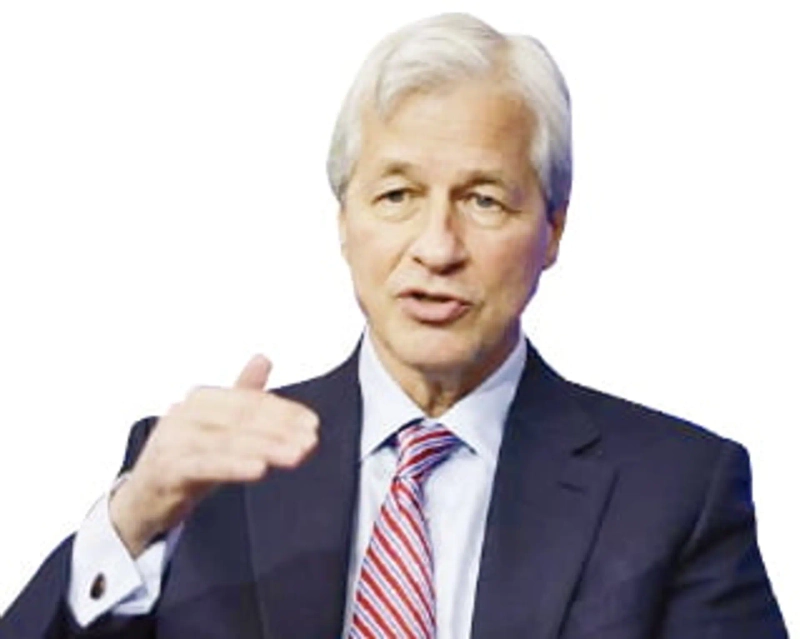
Jamie Dimon, CEO of JPMorgan, known as the 'Emperor of Wall Street', warned that the market is underestimating tariffs and geopolitical risks. He emphasized that the impact of tariffs imposed by US President Donald Trump has not yet been reflected in the real economy, pointing out that inflation, credit spreads (the interest rate difference between US Treasuries and corporate bonds), and geopolitical risks are surrounding the financial market, yet the market remains complacent.
CEO Dimon stated at an investor event hosted by JPMorgan in New York on the 19th (local time) that "the possibility of rising inflation and stagflation (rising prices amid economic slowdown) is higher than others think," and "US asset prices are still overvalued." He emphasized that geopolitical risks are also at a very high level, repeating the word 'very' three times.
The S&P 500 index plummeted in April due to the mutual tariffs imposed by the Trump administration and the decline in trust in US assets.
After the US-China trade negotiations on the 12th, the tariff war entered a truce phase, and the S&P 500 index showed a rebound. The current return since the beginning of the year is 1.62%. It turned from negative (-) to positive (+).
Regarding this, CEO Dimon diagnosed, "People seem to feel quite okay because they haven't yet seen the impact of tariffs," and "the market fell by 10% and then rose by 10%, which is astonishing complacency."
CEO Dimon mentioned that credit spreads have not sufficiently reflected the impact of economic recession. He said, "Those who have not experienced a large-scale recession are overlooking the point of what might happen regarding credit." He mentioned the situation where the corporate funding environment could deteriorate.
He also considered the current tariff levels to be 'quite extreme' even though the US and China temporarily lowered tariffs through an agreement. He stated that the 10% tariff imposed by the US on its trading partners is the highest level since 1971. He also mentioned that it is difficult to predict how countries negotiating tariffs with the US, such as China, Japan, South Korea, India, and the European Union (EU), will respond.
He expected that the plan to revitalize US manufacturing through tariffs would also take time. He anticipated that corporate performance estimates are likely to fall further during this process.
Reporter Han Gyeongje hankyung@hankyung.com

Korea Economic Daily
hankyung@bloomingbit.ioThe Korea Economic Daily Global is a digital media where latest news on Korean companies, industries, and financial markets.