

Stablecoins, It's Not the Time to Hesitate [Hankyung Koala]
Summary
- The importance of stablecoins in the global financial market is increasing, showing a trend of moving existing payment infrastructure to blockchain.
- Major countries, including the US, are making efforts to actively utilize stablecoins as a means of financial innovation.
- Global payment companies are rushing to adopt stablecoins, and companies are facing a situation where they cannot ignore them in international transactions.
Kim Min-seung's ₿ficial
Finance is Moving
Finance is moving. Just as coins and bills moved from paper passbooks to internet banking and mobile banking, the assets of the general public are moving to blockchain distributed ledgers. Recent news about stablecoins from home and abroad clearly shows this.
The market and the public have already chosen blockchain. Just as email is more convenient than mail, people around the world are actively adopting stablecoins, which are cheaper, faster, and more convenient than bank transfers. The reason why leading global financial institutions are issuing stablecoins or introducing them into existing payment networks is simple. The market's choice is power.
Why Doesn't It Feel Real?
In 2025, the expression 'financial innovation through blockchain' is not that shocking. It's a story that has been ongoing for a long time. Terms like 'banking for unbanked', 'cheap and fast payments', and 'fair financial infrastructure open to everyone' have been frequently mentioned since the ICO boom around 2017. The potential and possibilities of blockchain functioning as a public good open to everyone have remained unchanged since the creation of Bitcoin and Ethereum.
However, the ICO boom quickly dissipated due to the financial crisis and interest rate hikes in 2018, and Facebook's currency project 'Libra' was 'politically assassinated' by the US Congress in 2019. After that, the global economy had no room to proceed with blockchain innovation due to the outbreak of the COVID-19 pandemic.
After the pandemic, the US started raising interest rates in 2022, and from the Terra Luna incident to the FTX incident, many victims emerged. As a result, the perception that blockchain is 'bad' spread. The US Democratic Party and the Biden administration politically exploited blockchain as 'something bad people use to make bad money', and the Biden administration's SEC has long suppressed the blockchain industry using 'securities lawsuits' as a tool.
Nevertheless, the mass adoption of blockchain has steadily progressed worldwide, and the intersection with the mainstream economy is expanding with the inauguration of the Trump 2nd administration. Representative examples are Bitcoin spot ETFs and stablecoins. Despite regulatory authorities in various countries blocking the growth of blockchain and cryptocurrencies following the stance of the US SEC, Bitcoin and stablecoins have steadily expanded their presence, and now the US administration and Congress are actively trying to utilize them for the national interest.
How Should We View the Stablecoin Issue?
The stablecoin issue is not simply about 'who makes the coin and what risks need to be prevented'. It needs to be viewed much more broadly and significantly. It's a matter of whether to accept and respond to the era's trend of the 'trust infrastructure' responsible for the movement and storage of value in global finance moving from existing analog and internet financial networks to blockchain, or to ignore and disregard it.
Currency and finance are not tools used alone but platforms used by people worldwide. When trading, unless you are a 'superpower', the will or position of the counterparty is also important. Recent cases reported in the media of foreigners residing in Korea demanding 'salary in stablecoins' clearly show this. Their justification is clear: it's fast, cheap, and convenient.
Currently, those who want 'payment in stablecoins' are a small domestic financially marginalized group, but what if such demands come from other countries or companies? If a request for stablecoin payment instead of bank network payment comes in for essential services or raw material payments for company operations, can all companies in Korea say 'NO'? In a situation where the counterparty to a delivery that can determine the rise and fall of a company says they can only pay in stablecoins, can all companies say 'we cannot accept stablecoins, please deposit into a bank account'?
In 2025, the US, the 'superpower' of global finance and economy, announced the 'Digital Asset Leadership' executive order immediately after the president's inauguration and declared that 'the dollar stablecoin plays a key role in dollar hegemony and US Treasury demand'. Global payment companies like Visa, Mastercard, PayPal, and Stripe are rushing to adopt stablecoins. The situation where Korean companies, which rely on exports and imports, have to make payments in stablecoins may soon come.
Money Used by AI Agents, Stablecoins
Expanding the view to the artificial intelligence (AI) industry, the urgency of preparing for the blockchain economy and stablecoins becomes even more apparent. Recently, AI technology is evolving in the form of agents. OpenAI, the maker of Chat GPT, also cited the release of AI agents as a goal for this year. AI agents that autonomously make decisions and execute them online are likely to become the next-generation main AI products that many people are familiar with as 'chatbots'.
What will be the means for people to pay these AI agents, or further, what money will these AI agents operate or use? It's stablecoins. This is not my imagination, but a project actually being pursued by Circle (USDC issuer) and PayPal (PYUSD issuer). Recently, Coinbase and Circle announced the x402 protocol, and PayPal announced the Financial OS, which is part of the process of integrating stablecoins that settle in real-time 24/7 permissionlessly with AI agents.
What About the Korean Won Stablecoin?
As mentioned earlier, the introduction of stablecoins is not a simple matter of whether to allow a business to issue coins. It's a matter of whether to accept the era's trend of finance moving to blockchain. From this perspective, the question of whether to create a Korean Won (KRW) stablecoin is akin to asking whether the Korean Won (KRW) should exist in blockchain finance.
Let's change the question. Should the Korean language exist in the internet world, or should it not? Should the map of Korea be included in the world map made by Google, or should it not? It may not be difficult to answer these questions now, but when the internet was a new technology, various concerns about risks would have been raised.
Let's ask another question. Should Koreans who want to use blockchain finance only use dollars on the blockchain? Dollar stablecoins and Euro stablecoins are already widely used, and Japan is developing a Yen stablecoin with a consortium (Pax) of major banks, but should Korea ignore this global trend?
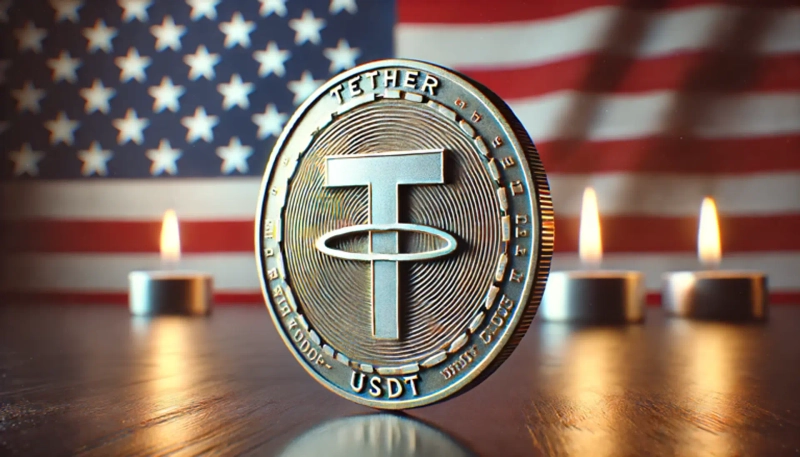
If we don't create it, foreign companies will. Tether (USDT), the most widely used dollar stablecoin, was issued by a Hong Kong company by preempting the market. If our financial institutions or companies do not issue a Korean Won stablecoin, foreign companies beyond the reach of our financial authorities will see it as a good opportunity and preempt the Korean Won stablecoin. At that time, we may really have to worry about currency sovereignty.
We Must Start Now
Fire, iron, machinery, electricity, plastic, the internet, and smartphones were all initially objects of fear. However, humanity has managed risks and maximized utility to make life beneficial. This is the essence of civilization.
Is the introduction of blockchain finance and stablecoins a concern for the distant future? The circulation of stablecoins has exceeded 200 billion dollars, and the US government is supporting stablecoins to maintain dollar hegemony and financial innovation. Visa, Mastercard, PayPal, and Stripe have started fierce competition. BlackRock and Franklin Templeton are issuing treasury tokens, and Standard Chartered and Bank of America have expressed their intention to issue stablecoins. Facebook's (now Meta) stablecoin project, which was thwarted by Congress in 2019, is also restarting.
Financial infrastructure is already moving from the internet to blockchain. Neither the internet, email, mobile phones, nor smartphones were introduced because the government allowed them. The market and the public chose them. The mass adoption of stablecoins is coming like a tsunami. It's not the time to watch the fire across the river.

Kim Min-seung, Head of Korbit Research Center...
He is a founding member and head of the Korbit Research Center. He works to easily explain complex events and concepts occurring in the blockchain and virtual asset ecosystem and to help people with different perspectives understand each other. He has experience in blockchain project strategic planning and software development.
▶This article is an external contributor column introduced to provide various perspectives to cryptocurrency investment newsletter subscribers and does not reflect the position of the Korea Economic Daily.
Reporter Jo Mi-hyun mwise@hankyung.com

Korea Economic Daily
hankyung@bloomingbit.ioThe Korea Economic Daily Global is a digital media where latest news on Korean companies, industries, and financial markets.