

PiCK
Democratic Party "Encourage Payments with Won-based Stablecoins for K-pop and Webtoons"
Summary
- The Democratic Party announced plans to issue won-based stablecoins to be used as a payment method for K-pop and webtoons.
- These digital currencies are proposed as part of a strategy to reduce dependence on the dollar and strengthen Korea's currency sovereignty.
- There are opinions against limiting the scope of stablecoin issuers to the financial sector, seeking opportunities to enter the global market.
Democratic Party Holds Stablecoin Forum

The Democratic Party has proposed a plan to issue a won-based stablecoin to expand digital currency sovereignty. The strategy is to establish the 'Korean Stablecoin' as a payment method in the content industry, including K-pop and K-webtoons. This comes from concerns that the won could become dependent on the dollar in the digital currency payment market, which is virtually monopolized by dollar-based Tether. Some have raised concerns about its feasibility.
Expanding 'Currency Sovereignty' in Countries Where K-Culture is Popular
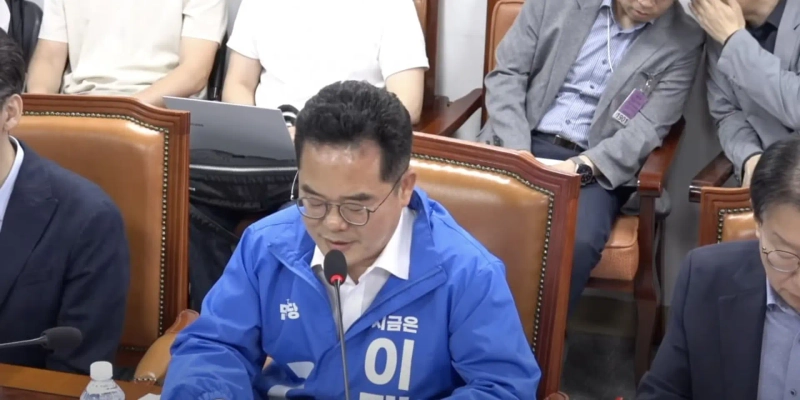
Democratic Party lawmaker Min Byung-deok analyzed at a forum held at the National Assembly Members' Office Building on the 21st, "Historically, no currency has ever successfully challenged the dollar's hegemony, but the financial paradigm is changing now." Min, who serves as the chairman of the Digital Asset Committee under the Democratic Party's election campaign committee, plans to propose the 'Digital Asset Basic Act' soon to incorporate digital assets into the institutional framework.
Min stated, "There are concerns that our currency sovereignty is being eroded and becoming dependent on the dollar," and "If we grow a won-based ecosystem in emerging markets such as Southeast Asia, based on platforms where we have strengths like K-culture, webtoons, and games, we can also play a role in the dollar-centered market."
Lee Jong-seop, a professor of business administration at Seoul National University, who gave the keynote presentation, also said, "The first digital wallet used by French or Swedish teenagers to purchase BTS merchandise could be Korea's won-based stablecoin," adding, "This is not just a simple payment but could be a global financial entry point."
In response to criticism from candidate Lee Jun-seok during the first TV debate on the 18th, Min said, "It's an anti-crypto perspective," and "It's like opposing the investment in high-speed internet networks during the Kim Dae-jung administration, saying that global companies are already leading." At that time, candidate Lee pointed out, "There are no cases of use other than dollar-backed stablecoins. Among them, Tether (USDT) and USD Coin (USDC) dominate 90% of the market."
Who Will Issue the Stablecoin?
A key issue in the industry is the authorization of the stablecoin issuer. The crypto industry broadly divides digital currencies into two types: CBDCs issued by central banks and asset-linked stablecoins issued by private companies. The draft of the Digital Asset Basic Act recently released by Min does not limit stablecoin issuers to the financial sector.
At the forum, there was also an argument that issuers should not be limited to the financial sector. Yoon Min-seop, a researcher at the Digital Consumer Research Institute, emphasized, "If only banks are allowed to issue, it will only be used to exchange Tether for won-based stablecoins domestically," and "It should be used as a means to expand currency territory."
There was also a suggestion that the public and private sectors should join forces. Lee Jong-seop, a professor of business administration at Seoul National University, explained, "By increasing the overall market share through operators, we should foster the blockchain ecosystem, and policymakers should negotiate with overseas central banks as the main negotiators on global liquidity management."
The Democratic Party is considering expanding the use of won-based stablecoins to administrative areas. Min wrote on his SNS, "Local currencies can be designed as a digital system based on blockchain to easily implement policy effects." He is also drawing a blueprint to embed functions such as a 10% discount applied with each payment, allowing payment of local taxes and public facility fees, and real-time balance disclosure into the system.
Reporter Choi Hae-ryeon haeryon@hankyung.com

Korea Economic Daily
hankyung@bloomingbit.ioThe Korea Economic Daily Global is a digital media where latest news on Korean companies, industries, and financial markets.