

PiCK
US Treasury Auction Demand Drops... "Trump Tax Cuts May Increase Treasury Issuance, Burdening the Market"
Summary
- Concerns were raised that the expansion of the US deficit and Trump's tax cuts would increase Treasury issuance, burdening the market.
- It was reported that the US Treasury's 20-year bond auction recorded a high issuance yield due to weak market demand.
- Warnings were issued that the rise in US Treasury yields could increase the likelihood of a recession.
Expected Increase in US Treasury Issuance Due to Rising Deficit
Trump's Tax Cuts Accelerate Deficit Expansion
"Market Shows Little Demand for Long-term US Treasuries"
"Recession Likelihood Increases if Interest Rates Rise"
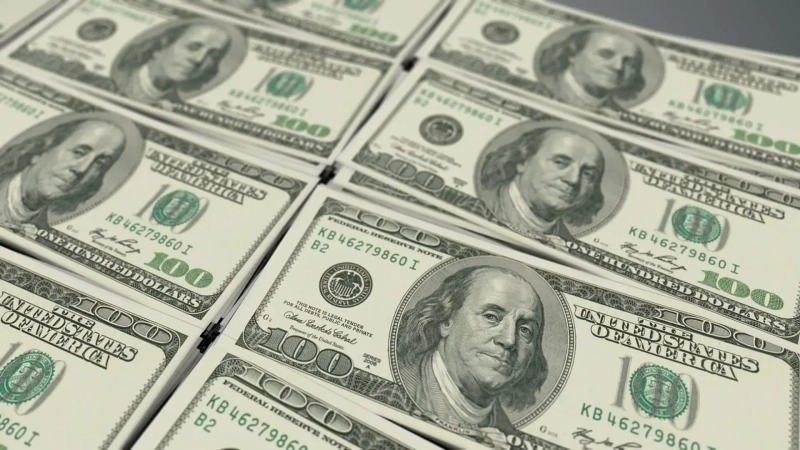
Wall Street began to stir after the US Treasury's auction of 20-year US Treasuries concluded around 1 PM on the 21st (local time). The bid-to-cover ratio was lower than usual, and due to weak demand, the issuance yield recorded a high of 5.047% per annum, the highest since November 2023.
As this news spread, the yield on circulating US Treasuries also began to rise. The yield on the 30-year US Treasury exceeded 5% per annum for the first time since October 2023 due to this impact.
Puja Kumra, a rate strategist at TD Securities, warned in an interview with the Financial Times (FT) that "there is almost no demand for long-term maturities in the market."
No Sign of Improvement in US Finances
The weak demand for the 20-year US Treasury yield on this day is analyzed to be due to two reasons. Recently, Moody's downgraded the US credit rating from the highest 'Aaa' to 'Aa1' due to the increasing deficit, and the market, already sensitive, was further agitated by the news of President Donald Trump's tax cuts.
Mike Johnson, a Republican Speaker of the House, is proceeding with the House schedule to pass the so-called 'One Beautiful Bill' (Mega Bill), which aims to extend and expand Trump's tax cuts before Congress goes on Memorial Day recess starting on the 26th.
The bill includes extending major tax cut provisions introduced during Trump's first term in 2017, which are set to expire at the end of this year, such as lowering personal income tax rates and the highest corporate tax rate, expanding standard deductions and child tax credits. It also includes new tax credits for tips and overtime pay, and interest deductions for loans to purchase American-made cars.
The US Congress Joint Committee on Taxation (KCT) estimates that if the Mega Bill is passed, it will increase the federal government's deficit by more than $2.5 trillion over the next 10 years. This means that federal government spending exceeded revenue by that amount. The debt from US Treasuries issued to cover the federal deficit amounts to about 124% of GDP. The interest cost is about $880 billion annually. If this trend continues, annual interest costs are expected to exceed $1 trillion in the next few years, surpassing both defense and Medicare spending.
"Increased Treasury Supply Burdens the Market"
The expansion of the deficit means that the issuance of Treasuries will increase. When many bonds are released into the market, prices fall and yields inevitably rise. Additionally, the credit risk of the US federal government rises, leading to weak investor participation in auctions.
In fact, the amount purchased by major US financial institutions, which have the obligation to underwrite Treasuries, was 16.9% of the issuance volume, exceeding the recent average of 15.1%. This indicates a lack of demand from global investors such as foreign central banks and sovereign wealth funds.
Mark Haefele, Chief Investment Officer (CIO) of UBS Global Asset Management, said, "The Republican (tax cut) bill is expected to add trillions of dollars to the US's $36 trillion national debt over the next 10 years," adding, "This will lead to an increase in Treasury supply, burdening the market."
Is a Recession Vicious Cycle Coming?
Currently, experts assess the likelihood of a recession by 2025 as low because Trump has deferred imposing high tariffs. However, the yields on the 30-year and 10-year US Treasuries are benchmark rates for consumer loans like mortgages. If yields continue to rise, it could increase the risk of a recession.
The Mortgage Bankers Association (MBA) stated that "mortgage applications decreased by 5.1% last week due to rising rates."
Attention is also focused on how US President Donald Trump will react to the rise in Treasury yields and the weak auction. The decisive factor for deferring reciprocal tariffs in April was the sharp rise in Treasury yields.
BMO Capital Markets warned, "If President Trump views the Treasury market as a barometer of investor confidence in Washington politics, the rise in the 30-year US Treasury yield is clearly a serious signal."
New York Correspondent Park Shin-young nyusos@hankyung.com

Korea Economic Daily
hankyung@bloomingbit.ioThe Korea Economic Daily Global is a digital media where latest news on Korean companies, industries, and financial markets.