

Fraud Rises as Market Grows… Why Virtual Asset Regulation is Necessary [Ha Tae-heon's Story Outside the Courtroom]
Summary
- The Korean virtual asset market has a market capitalization of 104 trillion won, with an average daily trading amount of 17.2 trillion won, surpassing the size of the capital market.
- The government announced the proposal of the Digital Asset Basic Act to transparently manage the issuance, listing, and distribution of virtual assets to protect investors.
- The need for public regulation of the virtual asset market has increased to address scam coin issues and prevent investor damages.
Digital Asset Basic Act Proposed to Protect 18 Million Investors
Need for Transparent Management from Issuance to Listing and Distribution
The 'Law Street' column of Hankyung Law & Biz provides practical legal knowledge to companies and individuals. Expert lawyers cover legal issues in various fields such as taxation, inheritance, labor, fair trade, M&A, and finance, and also provide analysis of major rulings.
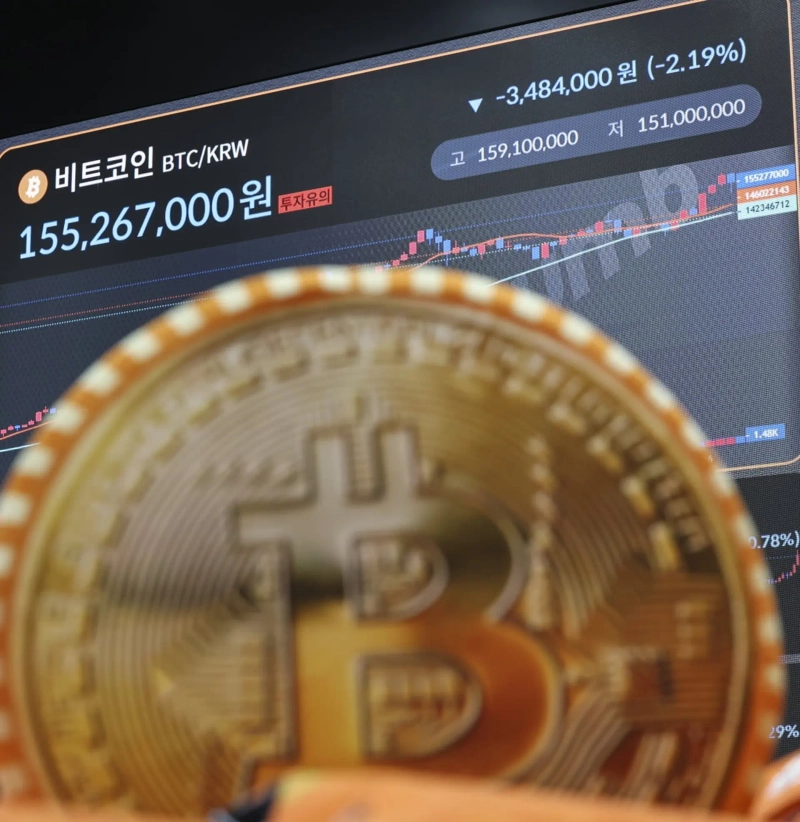
On August 18, 2008, the domain 'bitcoin.org', using a word that did not exist in the world, was first registered on the internet. At that time, no one could have guessed what that word meant, what this domain was for, or how it would turn the world upside down. Later, on November 1, 2008, a mysterious person named Satoshi Nakamoto released a paper titled 'Bitcoin: A Peer-to-Peer Electronic Cash System' through the domain, and in January 2009, the virtual asset called Bitcoin, which was even unfamiliar as a concept, first appeared in the world. In August 2010, Bitcoin began trading in the open market for just 10 cents each.
Fifteen years later, the virtual assets that started with Bitcoin have completely changed the history and common sense of our society. Although the prevailing prediction was that it would end as a speculative frenzy that swept through an era like the Dutch tulip mania that hit all of Europe in the 17th century, now it is impossible to discuss the global economy and investment market without knowing about virtual assets.
10-Cent Bitcoin Grew into a 104 Trillion Market
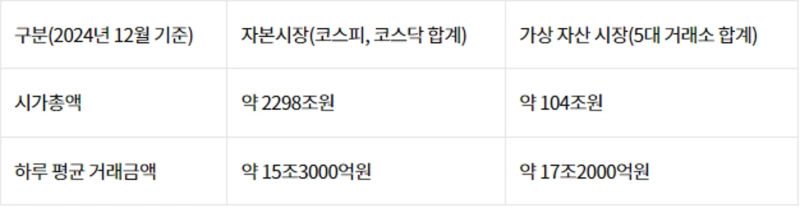
It's not just a distant matter. According to a report released by the Bank of Korea this year, as of December last year, the market capitalization of the virtual asset market in Korea was 104 trillion won. The average daily trading amount was 17.2 trillion won, already surpassing the size of the capital market (the sum of KOSPI and KOSDAQ), which is 15.3 trillion won. The number of investors has reached 18.25 million, making investment in virtual assets no longer a league of their own but a representative investment market in which the majority of the nation participates.
In line with this trend, the 'Virtual Asset User Protection Act' was implemented on July 19 last year to protect virtual asset investors at a level comparable to the existing capital market. Subsequently, the 'Digital Asset Basic Act', which regulates the issuance, disclosure, listing, and distribution of virtual assets, is expected to be proposed soon and is expected to pass the National Assembly smoothly. This law, proposed by Min Byung-deok, a member of the Democratic Party of Korea, clearly defines the concept of digital assets and, on the premise that digital assets have now become an important axis of the capital market, manages the entire process from issuance to listing and distribution transparently, incorporating it into the public regulatory domain, which is of great significance.
![Fraud Rises as Market Grows… Why Virtual Asset Regulation is Necessary [Ha Tae-heon's Story Outside the Courtroom]](https://media.bloomingbit.io/prod/news/4b93da78-30dc-48ac-94ca-f5affdf8c29b.webp?w=800)
In the process of the growth of virtual assets, our society has experienced many trials and tribulations. The social costs incurred until the virtual asset market grew and settled, such as damages caused by unverified virtual assets, controversies over opaque listings and delistings, and the wealth gap among the younger generation due to 'blind investment' dreaming of getting rich quick, are by no means small. Therefore, legislative moves to incorporate the virtual asset market into the public regulatory domain, as long as they do not fundamentally infringe on the autonomy of the market, are welcome.
There has been much controversy over the unilateral discretion of exchanges in listing and delisting without clear grounds and consistency. It is not impossible to trade virtual assets personally without going through an exchange. However, for the general public to easily access and actively trade according to market prices, exchange listing is essential.
Scam Coins and Other Damages… Need for Public Regulation Grows
However, because the listing process does not follow strict and clear standards, there have been cases where operators who issued 'scam coins' without substantial value used various illegal methods to list coins and then made huge profits by disposing of the coins they held in large quantities. There have also been cases where exchanges delisted already listed and traded virtual assets without clear standards, causing significant damage to investors who held those coins.
Even if some discretion of exchanges in deciding listing can be acknowledged, once listing and trading begin, numerous interests and legal relationships surrounding that virtual asset are formed. Therefore, once listed, that virtual asset should be considered incorporated into the public domain, and to delist it, it is necessary to undergo an objective review by a public regulatory agency or meet the delisting requirements clearly and objectively stipulated in relevant laws.
![Fraud Rises as Market Grows… Why Virtual Asset Regulation is Necessary [Ha Tae-heon's Story Outside the Courtroom]](https://media.bloomingbit.io/prod/news/0babeff2-6742-408a-8dd6-a5d22613c8b7.webp?w=800)
Nevertheless, until now, there have often been cases where many investors shed tears due to the exchange's delisting decisions based on inconsistent and unclear standards. Recently, even 'Wemix', the most recognized 'major coin' among domestic coins, faced a delisting decision due to insufficient measures after hacking, causing great controversy. In the past, when the virtual asset market was not as developed as it is now, the prevailing view was to resolve issues internally, and the courts also tended to recognize the discretion of exchanges. However, the world has changed, and the virtual asset market is no longer a market for only a few interested young generations but has become a national investment market, necessitating public regulation.
In this regard, even though it may be late, the move towards public regulation of the virtual asset market through the Digital Asset Basic Act is of considerable significance. Even the United States, which is recognized as the forefront of the global capital market, managed stock trading individually on a weekly basis until the early 20th century. However, after experiencing the Great Depression, it enacted the Securities Act of 1933, incorporating the stock market into the public regulatory domain. It is hoped that the domestic virtual asset market will also grow more healthily with a proper balance between market autonomy and public regulation.
Ha Tae-heon, Attorney at Law at Sejong Law Firm | Graduated from Seoul National University College of Dentistry, completed a specialist course at Seoul National University Hospital, passed the bar exam while serving as a public health doctor, and was appointed as a judge, serving in key positions in the court such as Supreme Court Research Judge (Chief Judge) and Seoul High Court Judge. Studied U.S. corporate law at Harvard Law School (LL.M), and as the only lawyer in Korea with a background as both a medical professional and a chief judge, he handles major civil and criminal litigation, corporate disputes, financial disputes, virtual assets, pharmaceutical and bio cases at Sejong Law Firm.
![Fraud Rises as Market Grows… Why Virtual Asset Regulation is Necessary [Ha Tae-heon's Story Outside the Courtroom]](https://media.bloomingbit.io/prod/news/d21f69ec-2561-4d34-9505-068cbbc0620f.webp?w=800)

Korea Economic Daily
hankyung@bloomingbit.ioThe Korea Economic Daily Global is a digital media where latest news on Korean companies, industries, and financial markets.