

Law Firms Defending Phishing Organizations "Fees Paid in Tether"
Summary
- Attempts to pay lawyer fees with hard-to-trace virtual assets like Tether by Southeast Asian criminal organizations are increasing.
- Some law firms are receiving virtual assets suspected to be criminal proceeds, raising concerns of lawyer ethics violations.
- If receiving Tether as legal fees is confirmed, there is a possibility of criminal punishment and revocation of the lawyer's license.
Southeast Asia-based Korean Organizations
Salaries Paid in Hard-to-Trace Tether
Fees Paid with Criminal Proceeds
Passed Through Private Money Changers in Gangnam
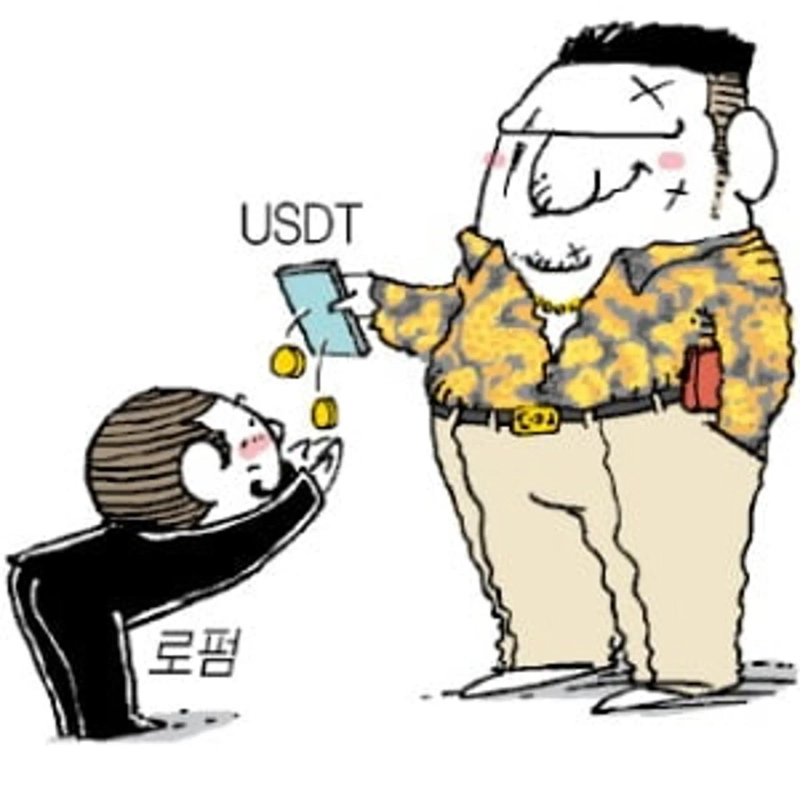
Some small domestic law firms are increasingly accepting hard-to-trace virtual assets like Tether (USDT, a dollar-based stablecoin) as retainer fees from organized criminals. Among these firms, there are cases where virtual assets suspected to be criminal proceeds were exchanged for cash at private money changers and received as retainer fees, raising concerns of lawyer ethics violations.
According to the legal community on the 27th, there is an increasing trend of Korean members of criminal organizations based in Southeast Asia, such as Cambodia, hiring domestic law firms before returning to Korea to reduce the severity of their criminal penalties. Some law firms have been found to demand virtual assets as retainer fees.
A 20-something head of a Cambodian voice phishing organization, Mr. A, who is on Interpol's wanted list and has had his passport invalidated, recently decided to return to Korea and consulted a criminal law firm, Firm B, in Seocho-dong about ways to reduce his sentence. The firm reportedly demanded Tether worth 5.5 million won as a retainer fee and provided a virtual asset wallet address for the transfer.
The issue is that cryptocurrencies like Tether held by members of organizations like Mr. A's are likely to be criminal proceeds. A police official explained, "Southeast Asia-based criminal organizations do not send cash directly to members to avoid tracking," adding, "It is common to exchange it for cryptocurrency through a local financial platform called Huiyuanpay and pay it to members in the form of salaries." Huiyuanpay has recently been identified by the UN and the US Treasury as an app used for money laundering. If a law firm receives a retainer fee in Tether, it is effectively receiving laundered criminal proceeds.
Although Tether also leaves transaction records in virtual asset wallets, making it not entirely untraceable, attempts to circumvent this continue. A typical method is using 'private money changers' in the Gangnam area to convert virtual assets like Tether into cash. A representative from Firm B reportedly advised Mr. A, "It is common for an acquaintance in Korea to bring cash on behalf of the retainer fee," suggesting the use of money changers. Firm B denied directly receiving Tether as retainer fees or legal fees.
The Korean Bar Association, which has the authority to discipline lawyers, maintains that if legal fees are confirmed to be criminal proceeds, it is a clear violation of the law. Jeong Hyuk-joo, a spokesperson for the Korean Bar Association, stated, "Receiving criminal proceeds as legal fees and taking on a case is a violation of Articles 11 and 21 of the Lawyer's Code of Ethics," adding, "If it is proven that the funds are criminal proceeds, it could lead to criminal punishment as well as the revocation of the lawyer's license."
Reporters Hee-won Jeong and Da-bin Kim tophee@hankyung.com

Korea Economic Daily
hankyung@bloomingbit.ioThe Korea Economic Daily Global is a digital media where latest news on Korean companies, industries, and financial markets.