

Concerns of 'Tariff-Induced Stagflation' in May FOMC... Fed Releases Minutes [Fed Watch]
Summary
- According to the Fed minutes, the risk of stagflation due to tariff policies is increasing, affecting rate cut decisions.
- Participants emphasize the risk that tariffs could lead to price increases, particularly with prices potentially rising more next year.
- Investors expect the Fed to maintain its rate hold policy, based on the Fed's stance that a high standard is needed for rate cuts.
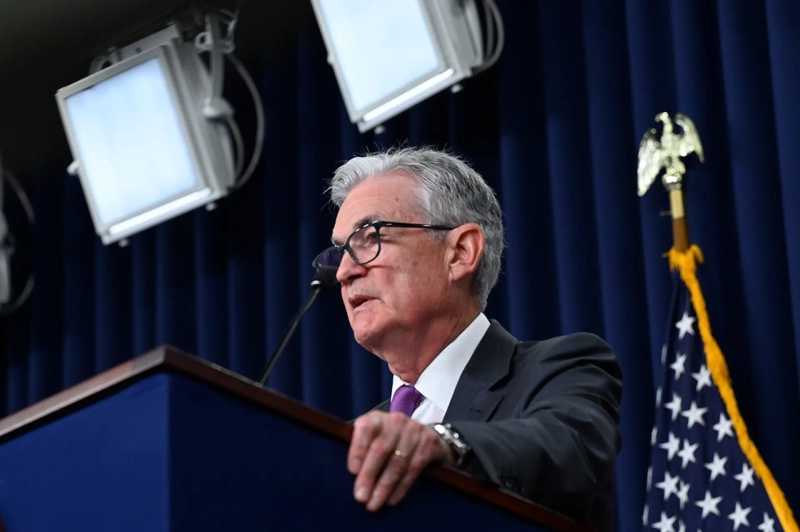
Chair Powell has so far been reluctant to use the term 'stagflation' in public. However, according to the minutes released today, the Federal Reserve's monetary policy meeting held from the 6th to the 7th revealed many expectations of stagflation. It has become clear that the Fed does not think it is time to decide on a rate cut.
The minutes were released this afternoon, and while the term stagflation was not directly mentioned, participants agreed on the need for a cautious approach to how tariff policies could drive up prices and their economic effects.
The minutes indicated that the Fed expects President Trump's tariff policies to significantly increase inflation this year, with a smaller increase next year. However, if this forecast is wrong, it could be because prices rise more than expected next year or the year after, not because this year's price increase is smaller. The risk of prices rising more and for a longer period than expected needs to be considered more heavily.
Participants in the Open Market Committee noted that while some companies have to raise prices due to tariffs, there could be a tendency to follow suit if competitors raise prices. Even after tariffs are initially reflected in prices, there are various pathways that could lead to additional inflation. Most indicators showed that long-term inflation expectations remain stable, but some participants saw a risk of rising inflation expectations, which could exert additional upward pressure on inflation.
They also assessed that tariffs on intermediate goods could more persistently drive up inflation. Just as the supply chain collapse during the pandemic led to a sharp rise in prices, tariffs could have a similar effect. However, some participants emphasized that there are also movements in the opposite direction, suggesting that the rise in inflation could be limited.
Regarding business, participants noted that while corporate fixed investment growth was solid in the first quarter, many companies they met with had suspended or delayed capital expenditure plans. They explained that small businesses find it difficult to bear the cost increases due to tariffs and lack the capacity to import substitutes.
In the agricultural sector, costs are rising, and export prices are falling, putting pressure on profits. In the energy sector, contrary to President Trump's claims, profitability is no longer achievable, and growth is not expected. Overall, there were shared concerns that tariffs would negatively impact the economy.
The minutes were written at the time of the monetary policy decision meeting earlier this month, before tariffs on China were deferred. It should be noted that this was written when concerns about tariff policies were at their highest, but Chair Powell is already showing a stance of "waiting to see how the economic situation unfolds has a relatively low cost."
This means that the Fed is not likely to lower rates easily, and a significantly high standard must be met to reduce rates. Currently, investors in the interest rate futures market expect the Fed to hold rates steady until the summer.
Washington = Special Correspondent Lee Sang-eun selee@hankyung.com

Korea Economic Daily
hankyung@bloomingbit.ioThe Korea Economic Daily Global is a digital media where latest news on Korean companies, industries, and financial markets.