

"The Economy is Bad, Let's Quit Drinking and Smoking"... Household Spending Cliff 'Worst in 4 Years'
Summary
- It was reported that due to the household spending cliff, alcohol and tobacco consumption has decreased for 8 consecutive quarters.
- "KT&G and HiteJinro," known as sin stocks, are said to potentially provide stable returns.
- While total household expenditure increased, the consumption expenditure growth rate is emphasized to be at its lowest since the economic crisis.
Reversing the Sin Stock Notion
Household Spending Worst in 4 Years
Alcohol and Tobacco Consumption Decreased for 2 Years
Political Uncertainty Closed Household Wallets
"Isn't it time to buy KT&G and HiteJinro?"
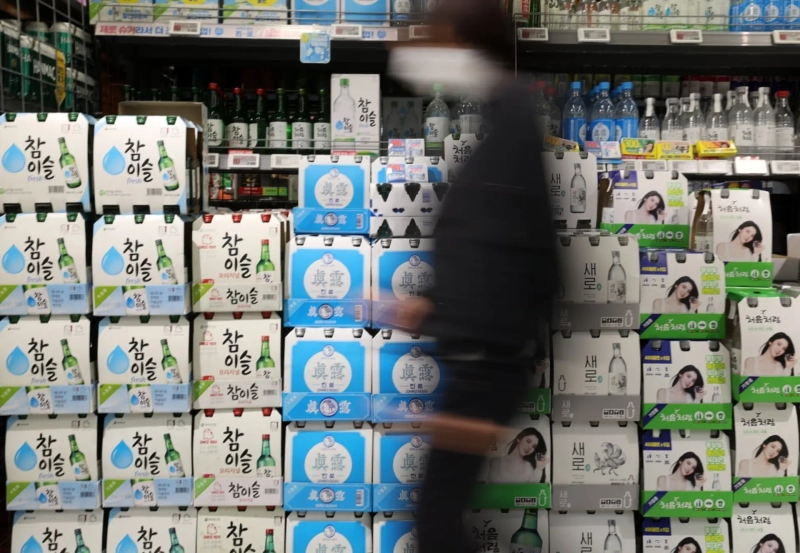
These two stocks are known as 'sin stocks.' Sin stocks are considered to provide stable returns even when the economy is shaky. This is based on the long-standing notion in the securities industry that spending on alcohol, tobacco, and economic newspapers increases whenever the economy wavers. Many people relieve stress from the worsening economy with alcohol and tobacco. The number of people seeking economic newspapers to find a way out of the difficult economy also increases.
However, even in the current sluggish economy, few people are turning to alcohol and tobacco. It has shown a declining trend for eight consecutive quarters. The growth rate of overall household spending, including alcohol and tobacco, in the first quarter of this year was the lowest in four years. Political uncertainty has grown more than ever, and with bad news such as the U.S. tariff shock pouring in, households have closed their wallets.
According to the '2025 Q1 Household Trend Survey Results' released by Statistics Korea on the 29th, the average monthly expenditure of households in the first quarter of this year was 4.072 million won, up 2.2% from the same period last year. The expenditure growth rate was the lowest since the first quarter of 2021 (1.6%) when COVID-19 swept through. Real household expenditure, reflecting inflation, increased by only 0.1%. It was the lowest in four quarters since the first quarter of 2024 (-0.5%).
Looking only at consumption expenditure among household expenditures, the household spending cliff is even more pronounced. The average monthly consumption expenditure of households in the first quarter was 2.95 million won, up only 1.4% from the same period last year. The growth rate was the lowest since the fourth quarter of 2020 (-2.3%). Real consumption expenditure was -0.7%, the lowest since the fourth quarter of 2020 (-2.8%).
Consumption expenditure showed a clear decline, centered on alcohol and tobacco (-4.3%), clothing and footwear (-4.7%), and transportation (-3.7%). Spending on alcohol and tobacco decreased the most since the fourth quarter of 2020 (-5.6%). It continued to decline for eight consecutive quarters from the second quarter of 2023 to the first quarter of this year. In the case of transportation consumption, the decrease in car purchases had a significant impact. The 'average propensity to consume,' which indicates the proportion of consumption in disposable income, was 69.8%, down 2.1 percentage points from the same period last year. However, it rose slightly from the previous quarter (69%).
Households are curbing spending, which is linked to the contracted consumer sentiment. Household sentiment froze immediately after the '12·3 Martial Law' incident last year. In addition, the U.S. tariff policy also led to a contraction in household spending. According to the Bank of Korea, the Consumer Confidence Index (CCSI) from January to March was below the long-term average (100). As domestic and international uncertainties grow, households have reduced spending and hoarded cash.
The average monthly household income in the first quarter was 5.351 million won, up 4.5% from the same period last year. It was the largest increase since the first quarter of 2023 (4.7%). Real income, reflecting inflation, increased by 2.3%. The average monthly disposable income, excluding taxes, was 4.228 million won, up 4.5% from the same period last year.
By income level, the average monthly income of the first quintile (bottom 20% of households) was 1.14 million won, down 1.5% from the same period last year. It was the largest decrease since the first quarter of 2020 (-3.7%). This was due to a simultaneous decrease in transfer income, including various subsidies and pensions, and earned income. The average monthly income of the fifth quintile (top 20%) was 11.884 million won, up 5.6%. Their earned income increased significantly as wages rose and bonuses increased compared to the previous year.
Income distribution indicators also worsened. The quintile ratio (based on disposable income), which is the average income of the top 20% divided by the average income of the bottom 20%, was 6.32 times in the first quarter, the largest gap since the first quarter of 2023 (6.45 times).
Kim Ik-hwan/Nam Jeong-min Reporter lovepen@hankyung.com

Korea Economic Daily
hankyung@bloomingbit.ioThe Korea Economic Daily Global is a digital media where latest news on Korean companies, industries, and financial markets.