

PiCK
US Court Ruling Puts a Brake on Trump's Tariffs Q&A [Lee Sang-eun's Washington Now]
Summary
- The item-specific tariffs imposed by the Trump administration are expected to continue regardless of the IEEPA, it reported.
- The court ruling weakened the legal legitimacy of reciprocal tariffs targeting countries but stated that existing tariffs like steel and aluminum are unaffected.
- Tariffs on specific items like automobiles and semiconductors are likely to continue under the Trade Expansion Act Section 232, it reported.
(1) Loss of Effectiveness for Reciprocal Tariffs and Fentanyl Tariffs
(2) What Logic Was Applied
(3) Does It Take Effect Immediately
(4) Is Negotiation Unnecessary
(5) Possibility of Reversal
(6) Impact on Other Tariffs
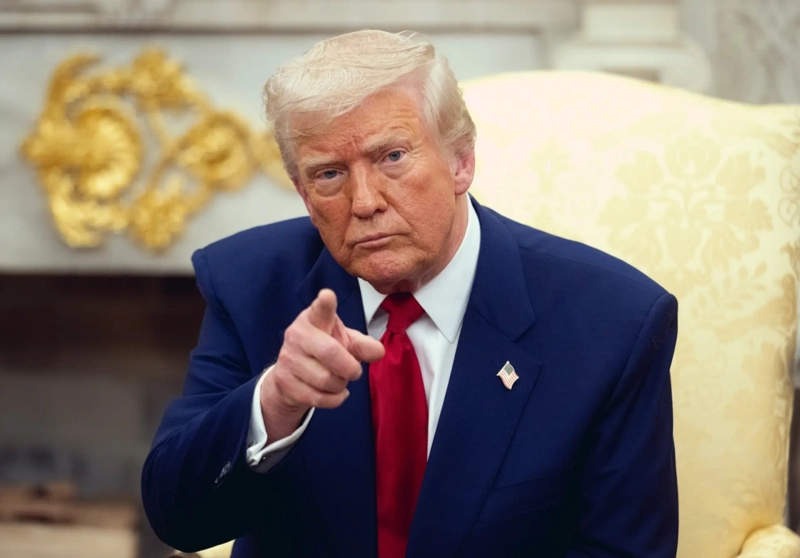
The U.S. Court of International Trade (TIC) ruled on the 28th (local time) to cancel the effectiveness of the 'Fentanyl Tariff' imposed by President Trump since February on Canada, Mexico, and China, and the reciprocal tariffs announced on 'Liberation Day' on April 2.
Five small businesses, including VOS Selections, which imports wine, and 12 state governments, including Oregon, filed a lawsuit against the U.S. government, Pete R. Flores, Director of Customs and Border Protection, Jamieson Greer, USTR Representative, and Howard Lutnick, Secretary of Commerce. The three judges involved in the ruling were appointed by Presidents Obama, Reagan, and Trump, respectively.
Oregon Attorney General Dan Rayfield, who participated in the lawsuit, welcomed the ruling as a "victory for working families, small businesses, and ordinary Americans," criticizing that "President Trump's broad tariffs were illegal, reckless, and economically destructive." The main questions about this ruling have been summarized in a Q&A format.
(1) Which Tariffs Are Suspended - Loss of Effectiveness for Reciprocal Tariffs and Fentanyl Tariffs
All tariffs imposed using the International Emergency Economic Powers Act (IEEPA) are suspended by this measure. President Trump imposed fentanyl tariffs on Canada, Mexico, and China based on this law in February and March. Among these, the 25% tariff on Canada and Mexico is currently partially deferred (duty-free for USMCA applicable items, 25% tariff applied to others), and a 20% tariff is maintained on China.
The reciprocal tariffs announced by President Trump on April 2 and subsequent increases in reciprocal tariff rates on China (up to 125%) and the 90-day deferral measure targeting the world, as well as the remaining basic tariff (10%), have all lost their basis.
The imposition of an additional 25% tariff on countries importing Venezuelan crude oil, which was signed by executive order but not yet imposed on specific countries, has similarly lost its basis.
(2) What Logic Was Applied - "Leverage Theory Is Illegal" Specified
The court emphasized that when Congress enacted the IEEPA, it had an explicit intent to limit the president's emergency powers, and upon reviewing this process, the authority granted to the president should be interpreted 'narrowly.' It also mentioned that when Congress enacted the Trade Act in 1974, it included Section 122. This provision specifically regulates remedies for trade deficits and grants the president limited authority (tariff cap of 15%, limit period of 150 days) in this situation. The court explained that this suggests Congress limited the authority to impose tariffs on trade balance issues to this narrow scope and granted the authority to Section 122, not the IEEPA.
Furthermore, the court stated that "global reciprocal tariffs were imposed in response to the large and persistent annual deficit in U.S. merchandise trade," and this must comply with the restrictions of Section 122. Imposing tariffs without adhering to these restrictions was concluded to be "ultra vires" and illegal.
Regarding the fentanyl tariffs, the court pointed out that the IEEPA can only be exercised in response to exceptional and extraordinary threats when a national emergency is declared, and cannot be exercised for other purposes. It noted that, contrary to the government's claim, this cannot be evaluated as a 'threat' based on political judgment, and there are judicially manageable standards, and this decision-making power was not solely delegated to the president. It particularly pointed out the lack of direct correlation between imposing tariffs on legitimate imports and foreign governments not blocking drug traffickers and drugs.
The Trump administration argued that tariffs are allowed because they create 'pressure' and 'leverage' for foreign countries to change their behavior, but the court "rejected this interpretation," stating that "such an interpretation would effectively allow any measure." It also emphasized that "this measure must have a reasonable relation to the emergency." The executive order was concluded to be a clear misinterpretation of the statute and an action beyond the delegated authority to the president.
(3) Does It Take Effect Immediately - "Order to Repeal Within 10 Days"
The court ruled that the IEEPA-related tariff imposition by President Trump, which exceeded the authority delegated by Congress to the president, "is canceled, and its effect is permanently prohibited."
Theoretically, the effectiveness of the tariffs should be lost immediately from the time this ruling is finalized. However, the court ordered a repeal within 10 days. As there are no clear guidelines on this part, it is still unclear when the obligation to pay tariffs actually disappears. It is also uncertain whether refunds are possible for tariffs paid under the executive order imposed since February. We will have to wait for the guidelines that U.S. customs authorities will issue in the future regarding the court's ruling.
(4) Is Negotiation Unnecessary - Burden Reduced but Pressure Continues
South Korea was imposed a 25% reciprocal tariff on April 2. Even if some reduction is negotiated, maintaining the 10% basic tariff was the consistent policy of President Trump and White House officials.
However, this court ruling is based on the premise that even the basic tariff is a matter for Congress to decide, and the president cannot unilaterally decide tariffs. Therefore, the burden of having to negotiate due to reciprocal tariffs and fentanyl tariffs has disappeared for governments, including South Korea.
However, it is unlikely that the Trump administration will cancel its plan to reduce the trade deficit or not pursue the removal of trade barriers. It is expected to continue reviewing existing trade agreements, imposing tariffs on specific items, and exerting pressure. Our government will likely have to focus more on negotiating tariffs on automobiles, semiconductors, steel, and pharmaceuticals instead of reciprocal tariffs.
(5) Possibility of Reversal - Likely to Be Contested Up to the Supreme Court
The Trump administration has announced that it will appeal. The White House responded, "It is not the authority of unelected judges to determine how to appropriately respond to a national emergency," and "the government will mobilize all means of administrative authority to restore America's greatness."
If the Trump administration appeals, the appeal will be handled by the U.S. Court of Appeals for the Federal Circuit. If the losing party is not satisfied, the case will ultimately be reviewed by the U.S. Supreme Court. Until the results of the appeal are out, the current ruling remains in effect.
However, regardless of which provision is used, it has become more likely that the aggressive and unprecedented tariff impositions by the Trump administration using the IEEPA will be restrained by the judiciary. The Trump administration will also have to consider legal aspects more to create a space for substantive negotiations with other governments.
The initial use of the IEEPA was because President Trump wanted to impose tariffs himself without going through Congress. If it goes through the formal legislative process via Congress, a much more stable basis for imposing tariffs can be created. However, for new legislation or amendments and repeals of existing bills, at least 60 votes are needed in the Senate. Given the current situation where there are 53 Republican senators (47 Democrats), it is difficult to be confident of legislative success. Also, imposing tariffs through legislation makes it difficult to apply tariff rates freely as President Trump desires and use them as a negotiation tool.
Therefore, there is a significant possibility that President Trump will attempt to introduce new tariffs using other tariff-related laws. The major tariff-related laws reviewed before the Trump administration took office include the Trade Act Section 301, the Trade Expansion Act Section 232, the Tariff Act Section 338, and the IEEPA. The Trade Act Section 122, which grants the president the right to impose tariffs within a 15% range for 150 days to correct trade deficits, can also be used. Section 338 of the Tariff Act, which allows the U.S. president to impose tariffs of up to 50% on imports from countries that discriminate against U.S. commerce, is also a strong alternative.
(6) Impact on Other Tariffs - Automotive and Semiconductor Tariffs Remain
This court ruling only addresses the IEEPA. Item-specific tariffs based on the Trade Expansion Act Section 232 are exempt from this measure. Tariffs that have already started on items such as steel, aluminum, automobiles, and auto parts, as well as tariffs on items like semiconductors, copper, timber, and pharmaceuticals that have not yet reached actual tariff imposition, are unrelated to this ruling. If it becomes difficult to secure legal legitimacy for tariffs targeting 'countries' like reciprocal tariffs, the Trump administration may adopt a strategy of pressuring other countries using item-specific tariffs as a pretext.
Since tariff impositions based on the Trade Act Section 301 or the Trade Expansion Act Section 232 have precedents, it is unlikely that the court will suddenly restrain them. Steel and aluminum tariffs were imposed during the first Trump administration and have been maintained under the Biden administration. However, various exceptions have only reduced their practical impact. While there may be practical debates about whether items like automobiles, semiconductors, timber, copper, and pharmaceuticals are important for national security as claimed by the Trade Expansion Act Section 232, it is unlikely to expand into a controversy over presidential overreach like the IEEPA.
Washington Correspondent Lee Sang-eun selee@hankyung.com

Korea Economic Daily
hankyung@bloomingbit.ioThe Korea Economic Daily Global is a digital media where latest news on Korean companies, industries, and financial markets.