

PiCK
[New York Stock Market Briefing] New York Stock Market Closes Mixed Amid U.S.-China Geneva Agreement Clash
Summary
- It was reported that the New York stock market showed a mixed trend amid issues of breach of agreement between the U.S. and China and reports that the Trump administration may sanction Chinese technology sectors.
- In particular, AI and semiconductor-related stocks fell sharply, with the Philadelphia Semiconductor Index plunging 2.11%.
- While the PCE Price Index preferred by the Fed matched expectations and showed stability, investors reflected a 73.1% probability of a rate freeze in July.
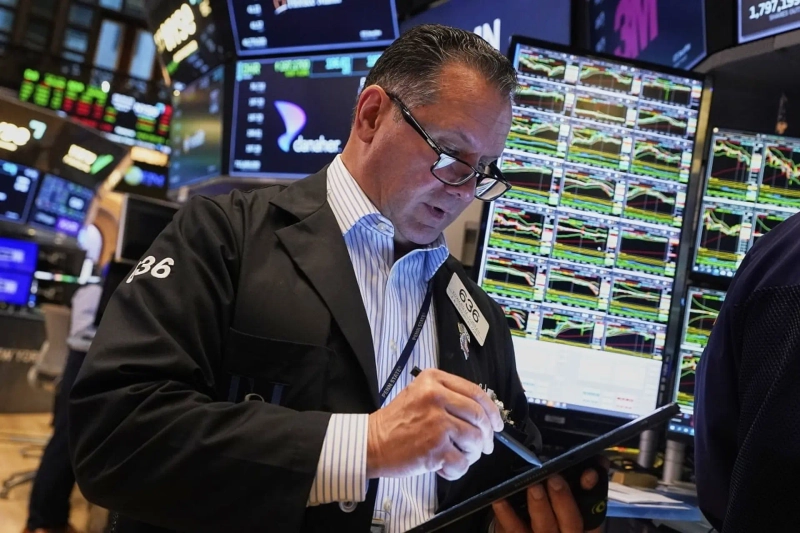
On the 30th (U.S. Eastern Time) at the New York Stock Exchange (NYSE), the Dow Jones Industrial Average closed up 54.34 points (0.13%) at 42,270.07. The S&P 500 index fell 0.48 points (0.01%) to 5,911.69 from the previous session, while the Nasdaq Composite Index dropped 62.11 points (0.32%) to end at 19,113.77.
Trump stated on his social network service (SNS) account, "The bad news—although some people may not be surprised—is that China has completely violated our agreement." He said, "Even just two weeks ago, China was in deep economic crisis," and although everything stabilized quickly through negotiations between the U.S. and China, he criticized that China has violated the terms of the agreement.
Stephen Miller, the White House Deputy Chief Policy Officer, said in an interview with CNN in the U.S., "Measures have already been taken, and there are measures currently being taken," adding, "Because China has not kept the promises and obligations made to the U.S., the U.S. can take all kinds of actions."
However, Trump eased investor concerns by saying at an afternoon White House press conference, "I am confident I will speak with President Xi Jinping," and "I hope we can resolve this issue." Following these remarks, a buying trend appeared, causing indexes to rebound to near unchanged levels.
By sector, discretionary, energy, and technology stocks fell. Utilities and consumer staples rose by more than 1%. Among individual stocks, artificial intelligence (AI) and semiconductor-related stocks mostly dropped. The Philadelphia Semiconductor Index plunged 2.11%, with 29 out of 30 constituents showing weakness except for Broadcom.
Investor sentiment froze after foreign media reported that the Trump administration is planning broader sanctions on Chinese technology sectors. Nvidia, a leader in AI, fell 2.92%, while TSMC, ASML, AMD, Qualcomm, and Arm dropped by around 2%.
The 'Magnificent Seven'—referring to the seven big tech companies—showed mixed performance. Tesla fell 3.34%, even though CEO Elon Musk held a farewell press conference at the White House, marking his departure from the administration.
Retailers' shares were generally strong. Costco's stock price jumped more than 3% as its first-quarter earnings exceeded expectations. Major U.S. beauty retailer Ulta Beauty surged more than 11% after announcing surprise earnings and an upward adjustment to its annual guidance. On the other hand, clothing brand Gap's stock plummeted 20% after offering disappointing quarterly sales guidance.
The Fed's preferred inflation gauge, the Personal Consumption Expenditures (PCE) Price Index for April, matched estimates and showed a moderate increase. According to the U.S. Department of Commerce, the core PCE Price Index—excluding volatile food and energy—rose 0.1% over the previous month in April, matching forecasts. Although it slightly increased from the previous month's flat reading (+0.0%), the trend remained moderate.
The overall PCE Price Index also rose 0.1%, in line with expectations. American consumer sentiment stabilized after a sharp decline and shifted to a wait-and-see attitude. According to the University of Michigan, the finalized May consumer sentiment index came in at 52.2.
According to the Chicago Mercantile Exchange (CME) FedWatch Tool, the probability of the benchmark interest rate being held steady at the July FOMC was reflected at 73.1% in the federal funds futures market. The Chicago Board Options Exchange (CBOE) Volatility Index (VIX) fell 0.61 points (3.18%) to 18.57.
Reporter Park Surim, Hankyung.com paksr365@hankyung.com

Korea Economic Daily
hankyung@bloomingbit.ioThe Korea Economic Daily Global is a digital media where latest news on Korean companies, industries, and financial markets.