

Will stocks rise no matter who wins the 'presidential election'?…Why expectations for KOSPI are growing [Weekly Outlook]
Summary
- As major presidential candidates have promised support for the stock market, it has been reported that optimism toward the new government is positively affecting the KOSPI's upward trend.
- It is expected that the policy rate cut by the Bank of Korea and strong earnings by Nvidia will encourage capital inflows into the domestic stock market and improve investment sentiment in the semiconductor sector.
- It was reported that profit-taking from low-PBR stocks, holding companies with a high ratio of treasury shares, and brokerage firms sensitive to policy changes, as well as tariff uncertainties, can pose risks.
Securities Industry: "Expectations for Stimulus Drive KOSPI Higher"
NH Investment & Securities Sets Weekly KOSPI Band at 2,590~2,800
Consensus on Stimulating Domestic Demand and Supporting the Stock Market
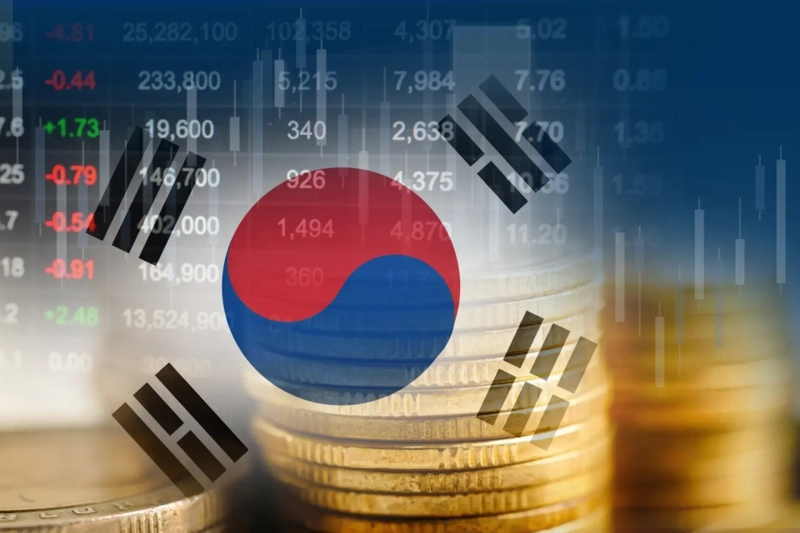
Ahead of the presidential election, the KOSPI is showing an upward trend. Optimism toward the new government is serving as a positive factor. As the main presidential candidates have promised to support the stock market, some expect that KOSPI strength will continue regardless of who wins.
According to the financial investment industry on the 1st, NH Investment & Securities presented a weekly KOSPI forecast range of 2,590~2,800 for this week (2nd~6th). NH Investment & Securities cited expectations for the new government's policies as a driver for the index's rise. Na Jeong-hwan, a researcher at this firm, explained, "Expectations for the stock market support policies proposed by presidential candidates are having a positive effect on share prices," adding, "If policies are implemented to increase dividend tendencies in the Korean stock market and expand share buybacks, foreign capital could flow in."
There is also a consensus that domestic demand needs to be boosted. Kim Jae-seung, a researcher at Hyundai Motor Securities, explained, "Both major parties recognize that domestic demand is currently extremely weak. The new government is expected to carry out a supplementary budget," and added, "All governments inaugurated since 2000 have pursued a supplementary budget early in their term."
The Bank of Korea is also leaning toward economic stimulus by cutting the policy rate. Lowering the rate can improve risk appetite and drive more funds into the stock market. On the 29th of last month, the Monetary Policy Committee of the Bank of Korea lowered the policy rate from 2.75% per year to 2.5% per year. All committee members agreed to the rate cut. During a press conference after the decision, Lee Chang-yong, Governor of the Bank of Korea, stated, "Growth has weakened much more than initially expected," raising the possibility of additional rate cuts.
Strong earnings by Nvidia are also expected to act as a positive factor for the domestic stock market. On the 28th (local time), Nvidia announced that its revenue for Q1 of fiscal year 2026 (February–April) reached about $44.06 billion (approximately ₩60.6 trillion), up 69% year-on-year. This surpassed the estimate of $43.31 billion compiled by market research firm LSEG. The company's datacenter business drove this strong performance. As semiconductor firms like Samsung Electronics and SK Hynix hold a large weight in the domestic stock market, the index tends to move when investment sentiment for semiconductors recovers.
However, caution is needed regarding profit-taking. Last week, the KOSPI rose 4.07%, surpassing the 2,700 mark during the week and returning to levels seen just before 'Black Monday' in August last year. Especially, low-PBR stocks, holding companies with high treasury share ratios, and brokerage firms sensitive to policy changes have already surged, so after the election, demand for profit-taking could intensify.
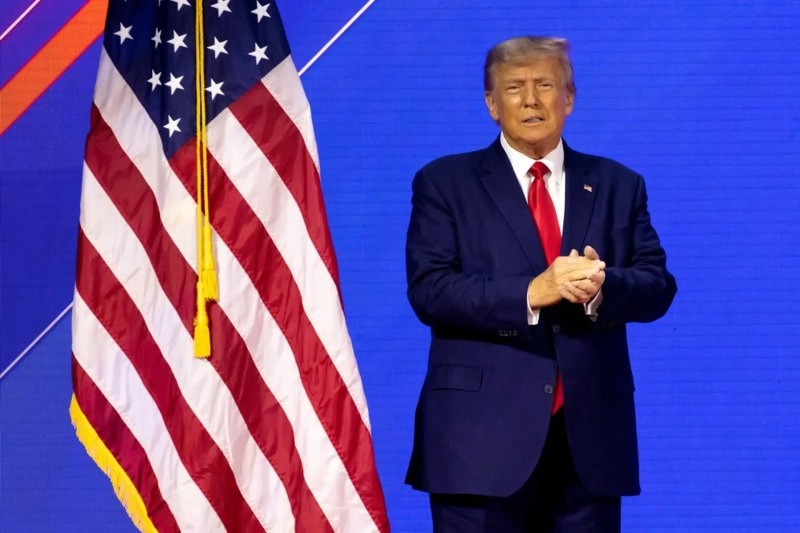
Tariff uncertainties are also cited as a risk. On the 29th (local time), an appellate court in Washington, D.C. ordered a temporary suspension of the lower federal United States Court of International Trade's ruling that had invalidated reciprocal tariffs imposed by President Trump. The court accepted the Trump administration's emergency request for a 'stay of judgment' against the lower court's ruling. Until the appellate decision is made, the Trump administration can continue imposing tariffs.
President Donald Trump criticized on Truth Social, "The ruling by the International Trade Court is so wrong and so political." He added, "Radical left judges and some very bad people are destroying America. The trillions of dollars our country could lose as a result of the (International Trade Court) decision is money that will 'Make America Great Again'."
Hwang Jun-ho, a researcher at Sangsangin Securities, explained, "As the appellate court has accepted the Trump administration's request, tariff risks may grow again," adding, "In addition to reciprocal tariffs, there are many laws and alternative measures that can justify further tariffs. The U.S. Supreme Court is also effectively conservative now."
Major economic indicators to be released this week (Korea Standard Time) include: △ June 2 — U.S. Institute for Supply Management (ISM) May Manufacturing PMI, △ June 3 — European Union (EU) May Consumer Price Index (CPI), △ June 4 — ISM May Services PMI, △ June 6 — U.S. May Employment Report, and others.
The U.S. central bank's (Fed) Beige Book and the European Central Bank's (ECB) benchmark rate will be released on the 5th. The domestic stock market will close for the presidential election on the 3rd, with Memorial Day on the 6th also being a market holiday.
Jin Young-gi, Hankyung.com Reporter young71@hankyung.com

Korea Economic Daily
hankyung@bloomingbit.ioThe Korea Economic Daily Global is a digital media where latest news on Korean companies, industries, and financial markets.