

Summary
- It was reported that rising trade tensions between the United States of America and the People's Republic of China and President Donald Trump's threat of higher tariffs on steel and aluminum led to declines in global stock markets and the value of the US dollar.
- Safe-haven assets such as gold, Japanese yen, and Swiss franc trended upward, while shares of steel manufacturers in Asia and Europe fell.
- According to the outlooks of MUFG strategists and the Federal Reserve Bank of Atlanta, the future investment environment is likely to remain uncertain depending on the imposition of tariffs and upcoming economic indicators.
Steel & Aluminum Tariff Hikes Spark US-China Trade Tensions
Safe-Haven Assets Like Gold, Yen Rise
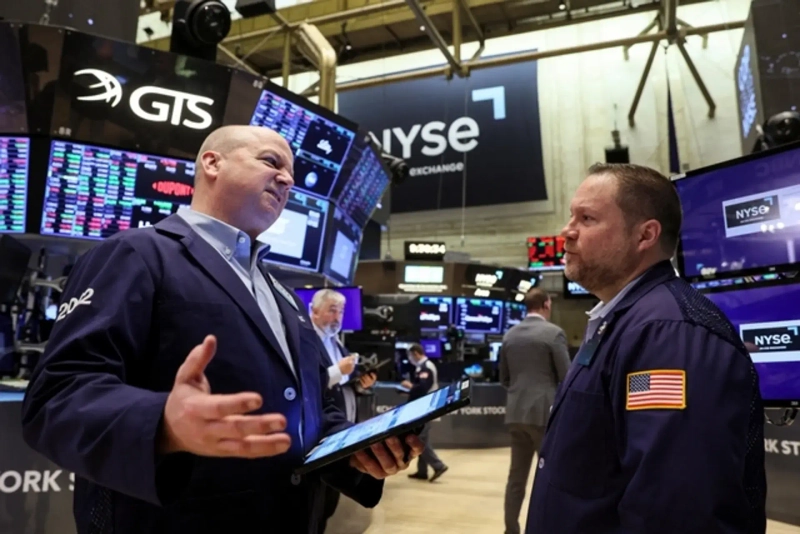
Trade tensions between the United States of America and the People's Republic of China have resurfaced, and with Donald Trump threatening to double steel tariffs from 25% to 50%, global stocks and the dollar fell on the 2nd (local time).
On the 2nd (local time), the Nikkei 225 dropped sharply by 1.3%, the Hang Seng Index declined 0.57%, and the TAIEX of the Taipei Stock Exchange in Taiwan fell by 1.61%. The KOSPI in the Republic of Korea closed up by 0.03%.
In the United States of America, S&P 500 futures fell 0.5%, and NASDAQ futures declined 0.7%. The yield on 10-year US Treasuries rose by 4 basis points (bp=0.01%) to reach 4.44%.
As President Donald Trump threatened to double tariffs on imported steel and aluminum to 50% effective June 4, shares of steel manufacturers in Asia and Europe that export metals dropped. Europe announced it was ready to retaliate in response.
The dollar index fell 0.6% against a basket of six major currencies that day, closing at 98.77. Since the beginning of the year, it has depreciated by 9% against the same major currencies.
Safe-haven assets—Japanese yen and Swiss franc—strengthened, while gold, which had declined 1.9% last week, surged nearly 2% to reach $3,353 per ounce.
Treasury Secretary Scott Besent stated that President Donald Trump would soon meet with Chinese President Xi Jinping to resolve disputes over critical minerals. However, the People's Republic of China firmly rejected President Donald Trump's trade criticisms, suggesting that a dialogue could take some time.
"Diverging trade policies are likely to persist, and the resulting uncertainty does not seem to bother President Donald Trump at all. This would likely provide investors with further justification to sell US dollars," said MUFG strategist Derek Halpenny.
Investors are watching closely to see whether President Donald Trump will actually impose the 50% tariff starting the 4th, or whether he will back down as he often has before.
The imposition of tariffs has already caused significant volatility in the US economy. In the first quarter, a surge in imports just before the tariffs led to economic contraction, but this quarter, with imports falling, GDP could rebound sharply.
The GDPNow estimate from the Federal Reserve Bank of Atlanta shows annualized US GDP growth of 3.8% for the April–June quarter, but analysts expect this figure to drop sharply in the second half of the year.
US manufacturing and employment data slated for release this week will prove useful for gauging economic momentum. New jobs in May are expected to increase by 130,000, with the unemployment rate projected to remain at 4.2%.
Christopher Waller, a member of the Board of Governors of the Federal Reserve System, noted that, in light of the risks that tariffs pose to economic activity and employment, as well as the upward risks to inflation, there is still a possibility of a rate cut by the end of this year.
The United States Senate will deliberate this week on a tax and spending bill that would add about $3.8 trillion to the federal government's $36.2 trillion debt.
The European Central Bank is all but certain to cut interest rates by 0.25% point to 2.0% on the 4th.
With OPEC+ deciding on a smaller-than-expected production increase from July, Brent Crude rose by 3.4% to trade at $64.95 per barrel, and US West Texas Intermediate (WTI) was up 3.7% at $63 per barrel.
Guest reporter Kim Jung-ah kja@hankyung.com

Korea Economic Daily
hankyung@bloomingbit.ioThe Korea Economic Daily Global is a digital media where latest news on Korean companies, industries, and financial markets.