

Will the Presidential Election Turnout Surpass 80%...All-Time Highs by the Hour and Maximum Tension
Summary
- The voter turnout for the 21st presidential election was reported at 71.5% as of 4 PM, marking the highest-ever presidential election turnout for that time slot.
- Turnout in the Seoul metropolitan area is somewhat below the overall average, drawing investor attention to how the final result may be affected.
- There is speculation on whether the final turnout will exceed 80%, and whether high base mobilization on both sides will impact the market going forward.
Presidential Election Turnout at 4 PM: 71.5%
Continues to Set Highest Turnout for Time Slot
Full Mobilization on Rhyu Si Min’s Remarks and Reebak School?
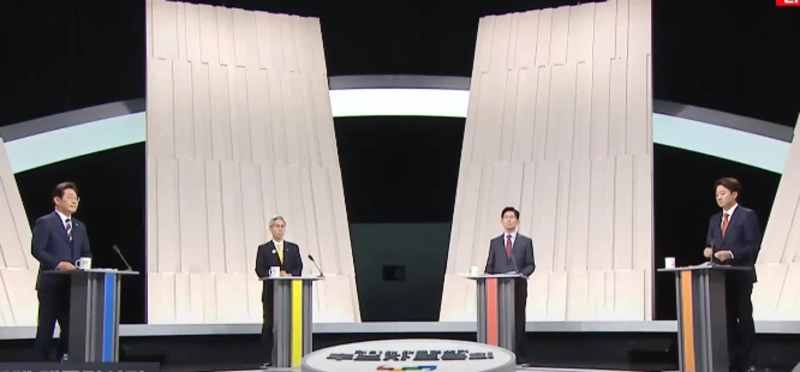
According to the National Election Commission, as of 4 PM on the 3rd, the provisional voter turnout for the 21st presidential election stood at 71.5% (31,734,725 out of 44,391,871 eligible voters). This is the highest turnout ever recorded for this time slot in a presidential election.
This figure combines the early voting turnout from the 29th–30th of last month (34.74%), as well as the overseas, on-ship, and absentee voting turnouts.
As of 4 PM, voter turnout surpassed the same time during the 20th presidential election in 2022 (71.1%) by 0.4 percentage points, and is 4.4 percentage points higher than the same time during the 19th presidential election in 2017 (67.1%).
By region, Jeollanam-do (79.3%), Gwangju (78.3%), Jeollabuk-do (77.5%), and Sejong (75.4%) recorded the highest turnouts in order. Although the main election turnout in the three Honam areas was relatively low, when combined with early voting (Jeollanam-do 56.50%, Jeollabuk-do 53.01%, Gwangju 52.12%), the total approaches 80%.
The regions with the lowest total turnouts are Jeju (68.1%), Chungcheongnam-do (68.7%), Busan (69.0%), and Chungcheongbuk-do (69.7%). In the Seoul metropolitan area, turnout rates were 71.5% for Seoul, 71.4% for Gyeonggi-do, and 69.8% for Incheon, with all but Seoul falling below the national average. As this region accounts for more than half of all eligible voters, its turnout results are especially noteworthy.
With the sum of early and regular voting rates setting a new time-slot record, attention is on whether final turnout will surpass 80% for the first time since the 15th presidential election in 1997.
Both progressives and conservatives hope that high turnout could work in their favor. The Democratic Party of Korea expects a high turnout will boost calls to judge the Yoon Suk-yeol administration and People Power Party, while the People Power Party believes that disaffected conservatives may have rallied under an anti–Lee Jae-myung banner.
Towards the end of the campaign, both camps escalated their negative campaigning, further consolidating their bases, according to analysis.
Until mid-campaign, controversy centered on Democratic Party candidate Lee Jae-myung’s remarks on ‘hotel economics’ and ‘the cost of coffee beans at 150 won’. In the later stages, the Democratic Party raised allegations linking Kim Moon-soo of the People Power Party to the far-right group ‘Reebak School’, while the People Power Party and Reform Party targeted remarks by former Roh Moo-hyun Foundation director Rhyu Si Min about Seol Nan-young, allegations surrounding Lee Jae-myung’s eldest son, and the ‘Jim Rogers endorsement’ controversy.
Reporter Shin Hyun-bo, Hankyung.com greaterfool@hankyung.com

Korea Economic Daily
hankyung@bloomingbit.ioThe Korea Economic Daily Global is a digital media where latest news on Korean companies, industries, and financial markets.