

Eurozone inflation in May at 1.9%...Lower than the ECB target
Summary
- It was reported that the Eurozone's inflation rate for May was recorded at 1.9%, lower than the ECB target of 2%.
- Accordingly, the probability of an additional ECB rate cut has risen to 95%.
- Investors reportedly expect that after June this year, the ECB's rate cuts will be paused, with only one more likely to take place in autumn.
Decline in energy costs and slowdown in service price increases
95% likelihood of additional ECB rate cut
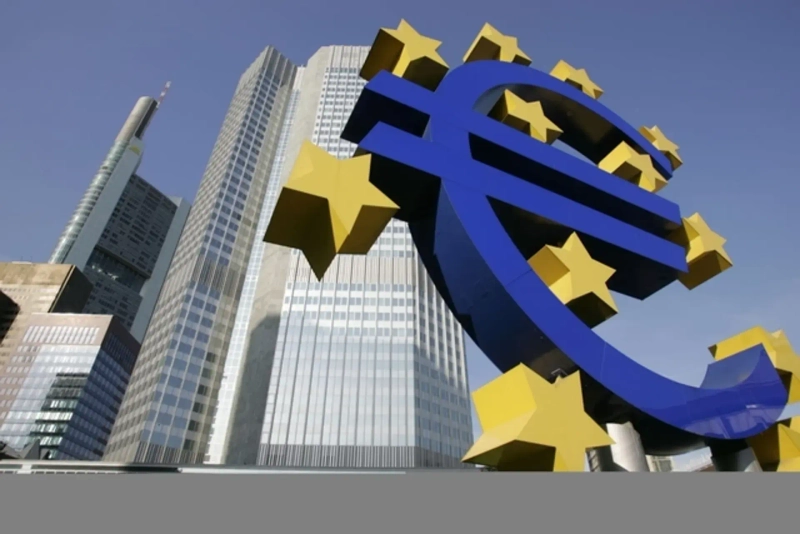
Eurozone’s inflation rate in May was tallied at a low 1.9%, even below the European Central Bank (ECB)’s target. Accordingly, the likelihood of an ECB rate cut at the meeting later this week is further increasing.
According to a flash estimate released by Eurostat on the 3rd (local time), the Eurozone’s inflation rate in May sharply eased from April’s 2.2% to a lower-than-expected 1.9%. This is below the ECB target of 2%. Economists polled by Reuters had expected Eurozone inflation for May would reach 2%.
Core inflation, which excludes volatile energy and food prices, also fell from April’s 2.7% to 2.3%. A key factor was the significant drop in service prices, which the ECB monitors closely, from April’s 4.0% down to 3.2% in May.
The ECB has cut rates seven times since June last year and is expected to lower its benchmark interest rate by another 25bp (1 basis point = 0.01%) at its policy meeting on the 5th. This expectation reflects all factors suggesting easing inflation: slower wage growth, declining energy prices, a stronger euro, and tepid economic growth.
According to Reuters, some economists expect price pressures to remain weak, resulting in inflation staying below the ECB’s 2% target through this year and not rebounding until 2026.
However, short- and long-term inflation prospects for the Eurozone are mixed. As a result, investors believe that after a rate cut in June, the ECB will pause further easing and only carry out one additional cut this autumn.
Meanwhile, some experts urge caution regarding how unpredictable U.S. trade policy might affect Eurozone growth and price trends.
Hawkish policymakers are warning that unusually high geopolitical tensions could lead to a resurgence in inflation soon.
President Trump’s protectionist tariff policies are also casting a shadow over the European Union (EU)’s auto and steel industries and various other sectors. The European Union (EU) is negotiating with the United States to lower a 20% reciprocal tariff suspended until early July.
The Organisation for Economic Co-operation and Development (OECD) stated in its latest economic outlook released that day that it projects the Eurozone’s 2025 economic growth rate will remain unchanged at 1%. The Eurozone’s inflation rate for this year is expected to remain at 2.2%, as in the March report, suggesting it will be relatively less affected by Trump’s tariffs.
— Kim Jung-ah, Guest Reporter kja@hankyung.com

Korea Economic Daily
hankyung@bloomingbit.ioThe Korea Economic Daily Global is a digital media where latest news on Korean companies, industries, and financial markets.