

Will Trump's Approach Work as China Remains Unresponsive to the White House ‘Call’ Rumor?
Summary
- Experts point out that President Trump’s tariff threat and preference for direct dialogue may make it difficult to reach an agreement due to China’s cautious stance and differences in negotiation approaches.
- US–China trade negotiations have stalled amid mutual accusations regarding core issues such as export controls on rare earth metals and restrictions on Huawei exports.
- The EU has also warned of retaliatory measures if President Trump enforces a 50% tariff on steel and aluminum, highlighting increased uncertainty in the global trade environment.
Trump Prefers Direct Talks Following Preliminary Threats Such as Tariffs
China Prefers Xi Jinping to Step Forward Only After Aides Have Prearranged Discussions
EU: "If the US Imposes a 50% Tariff on Steel, We Will Retaliate"
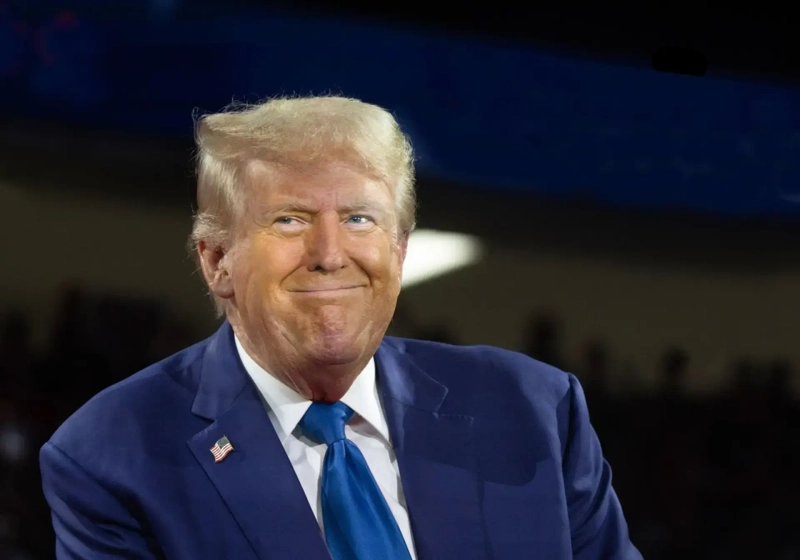
President Trump is continuously issuing threats to China and Europe to prompt trade negotiations, but there is little sign of a breakthrough. Some experts point out that Trump’s impulsive changes and preference for direct meetings make it difficult to reach a deal with China.
According to foreign media such as CNBC and Bloomberg on the 3rd (local time), the White House announced the previous day that a phone call would take place between President Trump of the United States and President Xi Jinping of China, but the Chinese side has yet to publicly respond.
Until the previous day, the US and China claimed that "the other side has seriously harmed trade negotiations." The Trump administration accused the Chinese government of stalling on lifting export controls on rare earth metals, which the US sees as central to negotiations. China countered that the US was blocking Huawei exports and discriminating against Chinese students.
Meanwhile, the European Union (EU) also issued a fresh warning, saying that it would introduce countermeasures if President Trump actually carried out the threat of imposing a 50% tariff on steel and aluminum.
The European Commission, which handles trade matters for the EU, strongly criticized President Trump’s 50% steel and aluminum tariffs and emphasized that it undermines efforts to resolve trade barriers. EU officials warned that if no agreement is reached, retaliatory measures are being prepared.
President Trump’s negotiation style is based on a belief that tariffs are an economic tool to restructure global trade and that excessive threats during the 90-day truce period following the April 2 tariff increase will maximize results. So far, this approach has yielded some results, such as signing a trade agreement with the United Kingdom. However, other negotiations with major partner countries promised by Trump and his aides have yet to materialize.
Despite recent turmoil, Trump’s team remains optimistic that his approach will work. Last week, the United States Court of International Trade ruled that Trump’s reciprocal tariffs were imposed illegally, raising doubts about their legitimacy. However, the Court of Appeals temporarily suspended the lower court's ruling to allow time for review.
Differences in negotiation styles between US and Chinese leaders are another obstacle that needs to be overcome.
Mick Mulvaney, who served as Acting White House Chief of Staff during Trump’s first term, said that the outcome of the US–China negotiations depends on whether Trump and Xi Jinping can overcome their fundamental differences in negotiating style.
In an interview with Bloomberg Television on the 3rd, Mulvaney said there is a "fundamental gap" between the two leaders. According to him, "President Trump prefers to meet and speak directly with top officials, but China (Xi Jinping) does not always wish to operate that way."
His remarks suggest that this could be a potential obstacle to a phone call between the two leaders, which the White House said could be held this week.
Mulvaney, who also served as Budget Director during President Trump’s first term, said Trump preferred to communicate directly with top officials in both business and politics. This is quite different from the usual practice of Chinese leaders, who prefer aides to coordinate key issues in advance.
At the Nomura Investment Forum Asia held in Singapore that day, Mulvaney said, “It’s already difficult with just back-channel dealings, but it will be extremely hard to conclude a deal through one-on-one negotiations between President Trump and President Xi alone.”
He also said, "If China takes steps to become a leading country in the world, I believe the US and China can find a way to coexist."
In other words, he stated, “You cannot become a leading country by stealing others’ intellectual property, forcing unfair deals to do business in China, or hiding information needed during emergencies such as the COVID-19 pandemic.” He emphasized, “For China to become a first-class country, it needs to raise itself to the next level.”
White House spokesperson Caroline Leavitt told reporters the previous day that it is highly likely that the two leaders will hold a call this week, but did not specify a potential date for the call. The Ministry of Foreign Affairs of the People's Republic of China did not respond to a request for comment on the call possibility. If a phone call between President Trump and President Xi goes ahead, it will be their first call since January before Trump took office.
Reporter Kim Jung-ah (kja@hankyung.com)

Korea Economic Daily
hankyung@bloomingbit.ioThe Korea Economic Daily Global is a digital media where latest news on Korean companies, industries, and financial markets.