

The Democratic Party becomes a super majority… Policy and legislative 'obstacles' are gone
Summary
- With the Democratic Party of Korea securing 171 seats, it has become a super majority party capable of single-handedly advancing major bills and budget processes.
- As decision-making authority over government policies and budget planning/execution shifts to the Democratic Party, significant impacts on the corporate and industrial landscape are expected.
- Reduced political uncertainty and policy shifts driven by the new ruling bloc are expected to introduce new variables for industries and investors.
Where will the political landscape head next?
People Power Party falls to a minority opposition
Bills and budgets previously blocked by veto
Now the Democratic Party holds the initiative and can pass them alone
Investigative concerns after President Lee's inauguration
Political 'storms' of investigations may hit the PPP
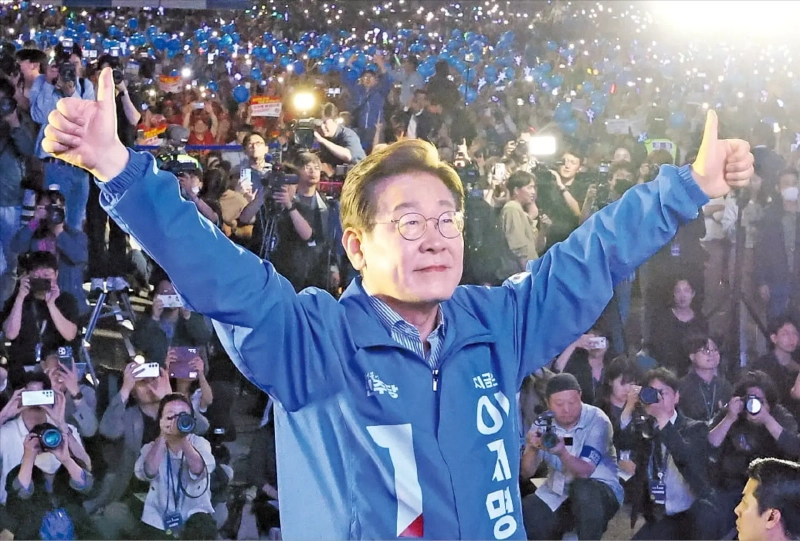
With Lee Jae-myung elected President, the National Assembly has shifted to a ruling party dominance for the first time in about three years. The Democratic Party of Korea has transformed into a super majority ruling party with 171 seats, while the People Power Party is now a minority opposition holding 107 seats. Including the Cho Kuk Innovation Party (12 seats), the pro-government bloc now holds 190 seats in total. This means that bills promoted by the Democratic Party and President Lee are likely to pass and be implemented swiftly.
According to political sources on the 3rd, the Democratic Party is planning to open a plenary session as early as this week to process various bills. Revisions to the Public Official Election Act to resolve President Lee's judicial risks are reportedly among the bills considered for passage. During Yoon Suk-yeol’s administration, the Democratic Party's bills that passed the assembly were often vetoed by the president, whereas many government-initiated bills failed to clear the National Assembly.
With the current huge ruling party structure, such situations are unlikely to recur. Besides bills related to President Lee, sources predict swift passage within the year for laws like the Yellow Envelope Act, Grain Management Act, and amendments to the Commercial Act. A political insider explained, "With more than 180 seats thanks to the Democratic Party and Cho Kuk Innovation Party, fast-track (expedited bill designation) is possible." He added, "Except for constitutional amendments, which require 200 seats, the Democratic Party can push through all the bills they want."
There is also pessimism about the People Power Party’s ability to fulfill its role as the main opposition. With internal strife over responsibility for losing the presidential race, the party may lack the resources to counter the ruling party. For the time being, public opinion is expected to favor giving the new president a chance. Many forecast that the upcoming fall National Assembly audit will focus more on criticizing the Yoon Suk-yeol government’s past performance rather than scrutinizing the newly launched Lee Jae-myung administration.
Control over drafting and executing the government’s budget is also shifting to the Democratic Party. The People Power Party lawmakers’ ability to secure local district budgets will inevitably shrink. Policy demands and budget allocations from the opposition are also likely to be deprioritized.
If the Lee Jae-myung administration and the Democratic Party continue with the 'end of rebellion frame,' the People Power Party’s position will only narrow further. There are even suggestions that the ruling bloc might initiate judicial investigations targeting the PPP. President Lee stated during the election, "If politicians are responsible (for the rebellion), a special prosecutor is necessary." It is possible that prosecutorial investigations targeting opposition lawmakers could continue.
Some expect the newly empowered coalition may petition for the dissolution of the People Power Party on constitutional grounds. Last month, a Cho Kuk Innovation Party youth spokesperson commented in a statement, "Right after the presidential election, we plan to again urge the government to request a constitutional dissolution trial for the PPP." Article 8 of the Constitution stipulates that the government can petition the Constitutional Court for party dissolution, but only upon the justice minister’s recommendation and presidential approval.
The earliest timing for the PPP to turn the tide will be next year’s local elections. If they miss that opportunity, there won’t be any nationwide elections until the 2028 general election.
By Jeong So-ram, ram@hankyung.com

Korea Economic Daily
hankyung@bloomingbit.ioThe Korea Economic Daily Global is a digital media where latest news on Korean companies, industries, and financial markets.