

Will Trump's Budget Bill Be Blocked in the Senate? Uncertain Majority If Deficit Isn't Reduced
Summary
- President Trump's budget bill is facing uncertainty in the Senate due to opposition from within the Republican Party and concerns over the budget deficit.
- The Congressional Budget Office (CBO) projects that if the budget bill passes, the deficit will increase by $3.8 trillion.
- Wall Street and Elon Musk are warning about the rapid increase in U.S. national debt and the potential for an ensuing economic crisis.
Opposition to the Budget Bill Within the Republican Party
Concerns That the Deficit Could Grow Even Larger
Musk Also Criticizes the Bill: "Disgusting and Revolting"
Wall Street: "U.S. Economy Heart Attack… The Wolf Is at the Door"
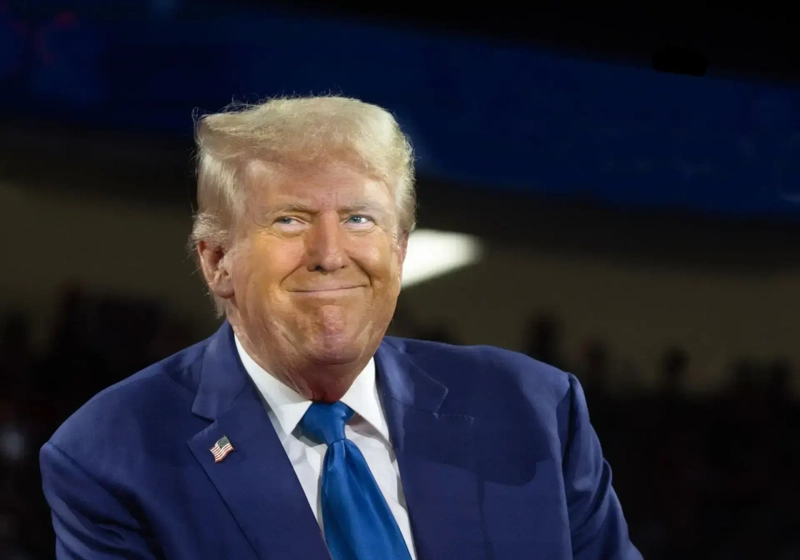
U.S. President Donald Trump has encountered difficulties in getting his budget bill, named the 'One Big Beautiful Bill Act (OBBBA),' passed in the Senate. Some Republican lawmakers are opposing the bill, which centers on extending tax cuts, among other core provisions. These lawmakers worry that, as the U.S. federal government is already struggling under an astronomical amount of debt, passing this bill could further increase the budget deficit.
"Four Republican Senators Oppose"
Rand Paul (Kentucky), a Republican Senator, expressed his opposition to the budget bill during a meeting with reporters on the 3rd (local time). Senator Paul takes issue with the bill’s provision to raise the debt ceiling by $5 trillion, stating, "The debt limit increase is still unacceptable and goes against (fiscal) conservative values," and arguing, "If we raise the cap by $5 trillion, it will eventually reach that level." He means that increasing the cap will inevitably grow the actual debt.
Paul stated he would be open to reviewing the rest of the tax cut provisions in detail if the debt ceiling increase is separated from the bill.
President Trump criticized Paul on Truth Social, saying, "(Senator Paul) votes 'no' on everything and offers no constructive ideas." He also warned that if Paul opposes the bill, he would be "helping Democrats and the radical left, and Kentucky residents will not forgive this."
However, it's not just Paul—three other Republican senators also oppose the bill. The Republicans currently hold 53 seats in the Senate, and at least 50 votes are required to pass the bill. But at least four Republican senators, including Paul, Ron Johnson (Wisconsin), Mike Lee (Utah), and Rick Scott (Florida), have expressed opposition citing concerns over the deficit.
Deficit to Grow by $3.8 Trillion
The OBBBA centers on extending major tax cuts first implemented during Trump's first term in 2017, which are set to expire at the end of this year. Key contents include reductions in personal income tax rates, lowering of the maximum corporate tax rate, and expansion of both the standard deduction and child tax credits. There are also provisions for exemptions on tips and overtime pay, and a new tax credit for interest on auto loans for American-made vehicles.
To offset the lost revenue from these tax cuts, the government plans to cut various federal subsidies and welfare programs, including Medicaid (for low-income medical coverage), SNAP (food assistance for low-income Americans), tax credits for clean energy and electric vehicles, and education grants.
However, according to the Congressional Budget Office (CBO), if this bill passes, the U.S. budget deficit is projected to increase by $3.8 trillion.
A budget deficit occurs when government expenditures exceed revenue. The U.S. government covers the deficit by issuing government bonds and taking on debt. As of the 2024 fiscal year end (September 30, 2024), the U.S. budget deficit stood at about $1.83 trillion, and total government debt was $36.4 trillion. With the deficit and debt rising, as of the 4th, total government debt reached about $36.93 trillion.
Continued Warnings About the Deficit
Elon Musk, CEO of Tesla, who was appointed as the head of the Department of Government Efficiency (DOGE) and led federal government restructuring and spending cuts, also criticized the budget bill.
Musk denounced the bill on X (formerly Twitter), saying, "This enormous, utterly ridiculous, and waste-filled congressional budget bill is disgusting and revolting," and, "Those who vote for this bill should be ashamed."
Warnings from Wall Street about the nation's debt also continued. Ray Dalio, founder of the world's largest hedge fund, Bridgewater Associates, recently reiterated his warnings about the rapid growth of the U.S. national debt and deficit. In his book published on the 3rd, 'How Countries Go Bankrupt,' Dalio likened America’s debt situation to that of a heart disease patient. He warned the period for the U.S. to avoid economic cardiac arrest is "about 3 years ± 1 year."
Peter Orszag, CEO of investment bank Lazard and former Director of the Office of Management and Budget at the White House during the Barack Obama administration, also joined the recent wave of warnings. He said, "When I was in government, I thought those who criticized deficit spending and the debt level were like the boy who cried 'wolf'," but "now, the wolf is much closer to our doorstep."
New York = Park Shin-young, Correspondent nyusos@hankyung.com

Korea Economic Daily
hankyung@bloomingbit.ioThe Korea Economic Daily Global is a digital media where latest news on Korean companies, industries, and financial markets.