

China: "Do not sow discord in China-South Korea relations"…Direct rebuttal to US 'concerns about Chinese interference'
Summary
- The United States expressed concerns about China's interference and influence over democracies, including South Korea.
- China strongly rebuked the US, warning not to provoke or sow discord in China-South Korea relations.
- The US reiterated its policy of checking China, emphasizing the strengthening of US-South Korea-Japan security cooperation and economic resilience.
Lin Jian, Spokesperson of the Ministry of Foreign Affairs: "US, Stop Provoking China-South Korea Relations"
United States Unusually Mentions 'Chinese Interference' in Democracies
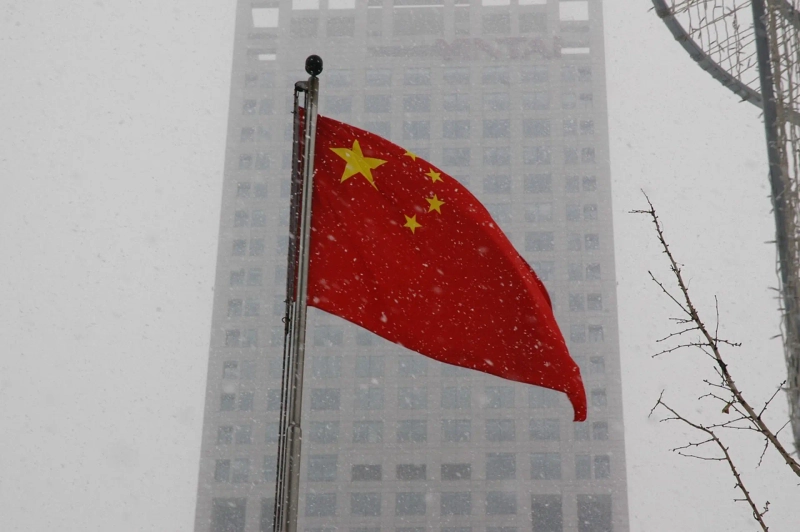
China has strongly rebuked comments from the United States government regarding China-South Korea relations, warning, "Do not sow discord."
Lin Jian, spokesperson for the Chinese Ministry of Foreign Affairs, stated at a regular briefing on the 4th, "China has consistently adhered to the principle of non-interference in internal affairs, has not interfered in the internal affairs of any country, and will not do so," adding, "We urge the US to stop its chronic habit of speculating about and projecting China onto its own behavior and to stop provoking China-South Korea relations."
Previously, the White House expressed its position regarding the results of South Korea’s presidential election, stating that "the US-South Korea alliance remains ironclad," but at the same time demonstrated caution toward China.
According to Yonhap News, the White House, in a response issued that day under the title of a 'White House official,' said, "South Korea held a free and fair election, but the United States still holds concerns and opposes China's interference and influence over democracies around the world."
It was considered unusual for the White House to mention ‘Chinese interference in democracies’ in its comment regarding the launch of Korea's new administration, and in diplomatic circles, this is interpreted as the US signalling to the Lee Jae-myung administration to keep its distance from China.
Previously, the Trump administration had sent warning messages to South Korea and other allies pursuing economic cooperation with China while maintaining security ties with the United States, the so-called 'Anmi-gyeongjung (Security with the US, Economy with China)’ stance.
US Secretary of Defense Pete Hegseth stated at the Asia Security Conference (Shangri-La Dialogue) on the 31st of last month, "We know that many countries are tempted to pursue economic cooperation with China and defense cooperation with the US at the same time," and pointed out, "China leverages such situations as a bargaining chip."
He further emphasized, "Economic dependence on China only deepens their harmful influence and complicates our room for defense-related decisions in times of heightened tension."
Meanwhile, the Trump administration also welcomed the election of President Lee Jae-myung in its official statement, promising to strengthen US-South Korea-Japan security cooperation.
Secretary of State Marco Rubio said in a statement that day, "We congratulate President Lee Jae-myung on his election as the 14th President of South Korea."
Although President Lee is the 21st President of South Korea, Secretary Rubio is considered to have used the '14th president' count in accordance with US tradition, which focuses on individuals.
Secretary Rubio stated, "The United States and South Korea share an unwavering commitment to an alliance built on the mutual defense treaty, shared values, and deep economic ties," adding, "We will continue to deepen trilateral cooperation among the US, South Korea, and Japan to strengthen regional security, enhance economic resilience, and uphold shared democratic principles."
Reporter Jihee Yoo, Hankyung.com keephee@hankyung.com

Korea Economic Daily
hankyung@bloomingbit.ioThe Korea Economic Daily Global is a digital media where latest news on Korean companies, industries, and financial markets.