

Summary
- The MSCI World Index reached a record high despite the tariff war and geopolitical tensions.
- Strong earnings from companies in the US and Europe, a weaker dollar, and the rise of tech stocks led to gains in emerging and European stock markets.
- Expectations for the AI industry and rallies in major tech stocks such as NVIDIA spurred inflows into equity markets.
MSCI World Index Breaks February High
South Korea Leads Emerging Markets with 2.7% Gain on the Day
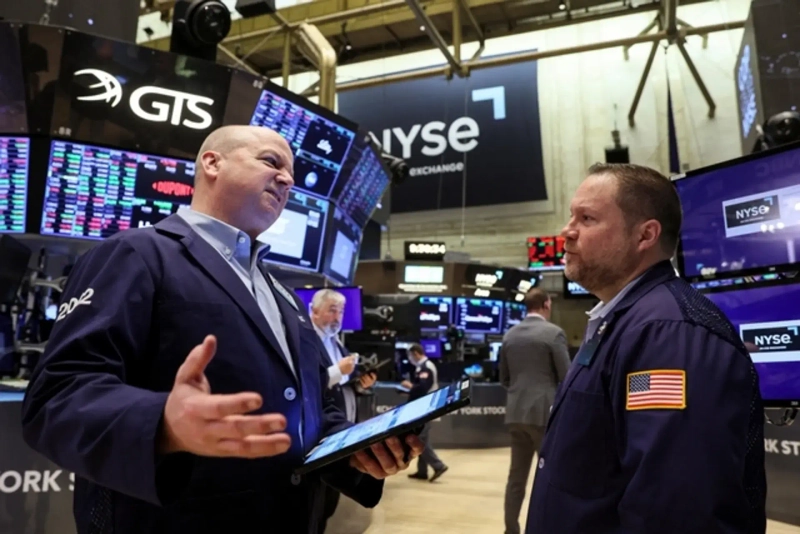
Despite the tariff war and geopolitical tensions, global stock markets reached record highs on the 4th.
According to Reuters and Bloomberg on the 4th (local time), the MSCI World Index rose as much as 0.3% to 888.24 points on the day, surpassing the previous high of 887.72 set in February. This marks an increase of nearly 23% from the low in early April after US President Trump announced reciprocal tariffs.
This rebound was greatly influenced by a more relaxed trade war stance than in the early stages, such as the mutual tariff postponements and the US-China tariff truce, as well as the stronger-than-expected earnings announced by US and European companies. In addition, the recently released US employment and other economic data were better than feared, positively affecting risk appetite.
In the Asian session, South Korea's stock market surged 2.7% as its months-long political leadership vacuum resolved, and Asian tech stocks rose, lifting the MSCI Emerging Markets Index by 1.2%. Amid dollar weakness, the emerging market currency index made a slight gain. The Nikkei 225 climbed 0.8%, and Hong Kong's Hang Seng Index rose 0.6%.
Anders Faergemann, head of global sovereign and economics at PineBridge Investments, said, "Since uncertainty peaked during the first weeks of April, emerging-market sentiment is reversing sharply." He noted, "Although policy uncertainty remains, the easing of US recession fears has allowed emerging-market investors to focus on the strong fundamentals of emerging markets, the weaker dollar, and positive technical factors."
European stocks continued their rally as well. According to data compiled by Bloomberg, 8 out of the 10 best-performing stock markets globally in the first five months of this year were in Europe. Based on the dollar, Germany's DAX Index rose over 30%, while Slovenia, Poland, Greece, and Hungary each gained more than 20%.
The pan-European Stoxx 600 Index reached a record high, beating the S&P 500 Index by 18%p in dollar terms, boosted by Germany’s historic fiscal spending plans and euro strength. Market participants expected that resilient corporate earnings, predictable monetary policy, and attractive valuations compared to the US market would attract global investment capital to European stocks, while trade and fiscal deficit concerns gripped the US economy.
Benjamin Melman, CIO at Edmond de Rothschild Asset Management, added, "Investors are using the 'TACO' (Trump Always Chickens Out) strategy regarding Trump’s trade policies." That is, seeing Trump begin with exaggerated threats and then dial them back in response to the markets, investors are not rushing to sell despite his rhetoric.
As the US and China accuse each other of breaking the trade agreement, uncertainty has risen again. President Trump hinted at tough negotiations, saying on social media that, "talks with Xi Jinping, President of China, are very difficult."
However, as expectations for AI and strong first-quarter earnings rise again, funds are flowing back into the equity markets. NVIDIA, which leads the AI trend, issued an optimistic outlook, becoming the world’s largest company by market capitalization on the New York Stock Exchange the previous day. The Bloomberg Magnificent Seven Index surged 30% from its April low, with market capitalization growing by more than $3.5 trillion (₩4,783 trillion).
Contributing Reporter Jung-ah Kim kja@hankyung.com

Korea Economic Daily
hankyung@bloomingbit.ioThe Korea Economic Daily Global is a digital media where latest news on Korean companies, industries, and financial markets.