

PiCK
Trump Sets '2-Week Negotiation Deadline' for Iran... Will the 'Maximum Pressure' Strategy Work? [Washington Now by Sang-eun Lee]
Summary
- The U.S. government presented a two-week negotiation deadline to Iran, continuing its maximum pressure strategy.
- The U.S. and Iran are negotiating over the nuclear program, but it is uncertain whether President Trump's demands will be accepted.
- If negotiations fail, geopolitical risks in the Middle East and the likelihood of Iran developing nuclear weapons may increase.
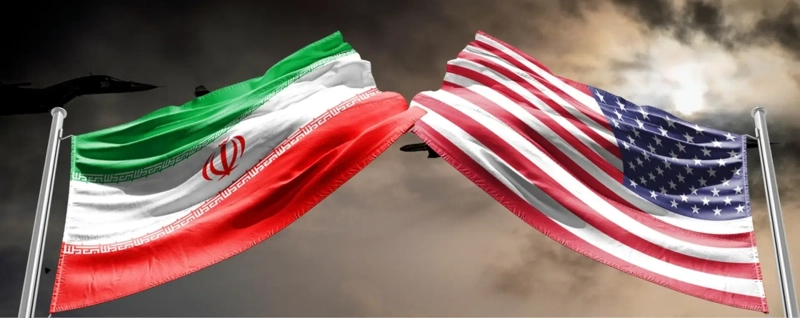
The U.S. government has set a two-week negotiation deadline for Iran. President Donald Trump wants Iran to dismantle its nuclear program on its own and 'surrender' as the U.S. desires. There are two main responses within Iran. Publicly, they advocate for all-out resistance, but there are also signs of a willingness to negotiate with the U.S. However, it is uncertain whether Iran will immediately accept the U.S. demands as President Trump hopes. Some analysts even suggest that this could prompt Iran to make a decisive move to develop nuclear weapons.
○"Significant Possibility of Negotiation"
White House Press Secretary Caroline Leavitt stated at a regular news briefing on the 19th (local time) that President Trump said, "Based on the considerable possibility of negotiations with Iran, which may or may not happen in the near future, I will decide within the next two weeks whether to launch an attack or not."
The U.S. believes now is the opportunity to resolve the Iranian nuclear issue as Iran's main war infrastructure and military leadership have been neutralized. Hardliners around President Trump, such as Senator Lindsey Graham, are urging him to make a decision to drop bunker busters. Niall Ferguson, a fellow at Stanford University's Hoover Institution, co-wrote an article with former Israeli Defense Minister Yoav Gallant for Free Press, stating, "U.S. intervention would create a new balance in the Middle East, reaffirm American leadership, and contribute to global economic stability," urging President Trump to act decisively.
However, President Trump is still postponing a final decision, even after having given approval for an attack on the 17th. This is due to repeated U.S. failures in attempting regime change or unilateral war interventions in the Middle East. There are considerable concerns about creating a 'second Afghanistan' or 'second Iraq' war.
It is known that bunker busters could strike Iran's deeply buried Fordow nuclear fuel enrichment facility, but there is a risk of failing to completely eliminate its nuclear capabilities. If military action is taken and the main objectives are not achieved, it would be difficult to handle the aftermath. President Trump's core MAGA (Make America Great Again) supporters are also strongly opposed to U.S. involvement in Middle East conflicts, which adds to the burden.
○"Diplomatic Solution Opportunities Remain"
Ayatollah Ali Khamenei, Iran's Supreme Leader, who is attempting retaliation after Israeli airstrikes, conveyed the message, "The battle has begun" and "No mercy." At the same time, Iran is conducting negotiations on the nuclear issue with the U.S. and the EU, respectively.
On the 20th, nuclear negotiations will be held with the U.K., Germany, and France. According to Reuters, under U.S. coordination, this negotiation aims for the European foreign ministers to receive firm assurance that Iran's nuclear program is strictly for civilian, not military, purposes. David Lammy, the U.K. Foreign Secretary—after meetings with U.S. Secretary of State Marco Rubio and U.S. Middle East envoy Steve Whitcoff—posted on social media that "the opportunity for a diplomatic solution remains open for the next two weeks."
Direct dialogue between the U.S. and Iran also continues. After the Israeli airstrike on the 13th, Steve Whitcoff, U.S. Middle East envoy, and Abbas Araghchi, Iran’s Foreign Minister, are known to have had several phone calls to seek a diplomatic resolution. Minister Araghchi stated, "If Israel stops its attacks, we will also halt retaliation."
The U.S. wants Iran to render its Fordow nuclear facility unusable on its own. A source told CBS News that "for President Trump, finishing the job means destroying Fordow."
The problem is that if the negotiation fails to yield a response on the level that the U.S. wants, there is little room for retreat. President Trump previously gave Russian President Vladimir Putin a two-week deadline, but when Russia did not comply, he did not take any special measures. As Trump's maximum pressure strategy increasingly stops at verbal intervention, its credibility is falling sharply.
There are also predictions that excessive pressure could drive Iran to make a decision to manufacture nuclear weapons. According to The New York Times (NYT), U.S. intelligence agencies believe that if Fordow is attacked or if Supreme Leader Ayatollah Ali Khamenei is assassinated, Iran will likely decide to produce nuclear arms.
○Iran Suspected of Using 'Devil’s Weapon' Cluster Bombs
The military conflict between Israel and Iran is intensifying daily. An Israeli Defense Forces (IDF) spokesperson announced that Iran's heavy water nuclear facility in Iraq and the Natanz nuclear facility, along with the Bushehr Nuclear Plant constructed jointly with Russia, had been attacked. The spokesperson later corrected the mention of the Bushehr Nuclear Plant as a mistake, but did not affirm or deny whether an actual attack occurred.
Pressed by Israel’s massive missile strikes on its facilities, Iran is reported to have launched ballistic missiles equipped with cluster warheads. The IDF confirmed that at least one of the Iranian ballistic missiles that fell in central Israel that morning was armed with a cluster warhead. Cluster bombs contain dozens to hundreds of smaller bomblets that spread in all directions upon detonation. Because of their indiscriminate lethality against civilians and soldiers alike, they are nicknamed the devil’s weapon and classified as inhumane weapons.
The number of casualties caused by this conflict continues to rise. According to the Israeli government, at least 24 people have died in Israel due to Iranian attacks as of the previous day. The Iranian human rights organization in Washington, D.C., estimated that at least 639 people, including 263 civilians, have died in Iran, and more than 1,300 have been injured.
Washington, D.C. = Sang-eun Lee, Correspondent / Joo-wan Kim, Reporter

Korea Economic Daily
hankyung@bloomingbit.ioThe Korea Economic Daily Global is a digital media where latest news on Korean companies, industries, and financial markets.