

Summary
- The European Union (EU) is reported to have made expanding access to rare earth elements and critical minerals its top priority in its summit with China.
- Due to China’s rare earth export controls, the European automotive industry is facing concerns over supply chain disruptions and production delays.
- In May, China's rare earth magnet exports decreased by 74% year-on-year, indicating that China’s export restrictions are having a real impact.
Europe Faces Delays in Auto Parts Procurement
Likely to Demand Removal of Export Permit System
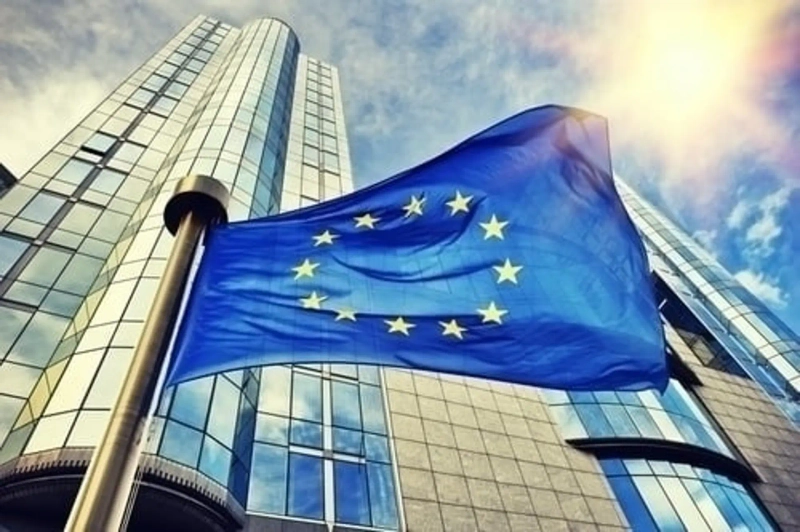
The European Union (EU) is reportedly prioritizing expanded access to Chinese rare earth elements and critical minerals as its top agenda in the upcoming summit with China next month.
According to Reuters on the 19th (local time), citing multiple sources, Ursula von der Leyen, President of the European Commission, and António Costa, President of the European Council, will attend the EU-China summit to be held in Beijing, China, on the 24th-25th of next month. They are scheduled to meet separately with Chinese President Xi Jinping and Premier Li Qiang, and are expected to convey the EU’s position on China’s rare earth export controls. The EU is said to be planning to request China to either shorten the approval period for rare earth exports or abolish the permit system for shipments to the EU.
Early last April, as a response to the United States' high tariff policy, China began imposing controls by delaying approvals for rare earth exports. As a result, the European automotive industry faced concerns over disruptions in parts procurement and delays in production.
The Ministry of Commerce of the People's Republic of China announced last month that it had introduced a 'fast-track' system for processing rare earth export permits for EU companies, but it is reported that more than half of the total applications are still pending. On the same day, The Wall Street Journal (WSJ) reported, based on an analysis of Chinese customs data, that in May, China's rare earth magnet exports amounted to only 1,200 tons, a 74% decrease year-on-year.
The export volume was also the lowest since February 2020, during the COVID-19 pandemic. WSJ explained that these figures are an example of how much China’s export restrictions on rare earth magnets can control export quantities.
Hyein Lee, Reporter hey@hankyung.com

Korea Economic Daily
hankyung@bloomingbit.ioThe Korea Economic Daily Global is a digital media where latest news on Korean companies, industries, and financial markets.