

PiCK
Will the Fed Cut Rates in July? 'Strong Hawk' Vice Chair Says 'Will Support if Inflation is Contained'
Summary
- Fed Vice Chair Michelle Bowman stated she could support a rate cut in July if inflation slows.
- Due to changes in tariffs and the trade environment, economic risks have decreased, and an interest rate adjustment may be necessary.
- The Fed announced plans to reform bank regulations such as the Supplementary Leverage Ratio (SLR) and review their impact on the U.S. Treasury market.
"Tariff impact will be delayed and reduced... Economic risks have decreased"
Pursuing SLR regulatory easing... "Need to reduce penalties for holding Treasuries"
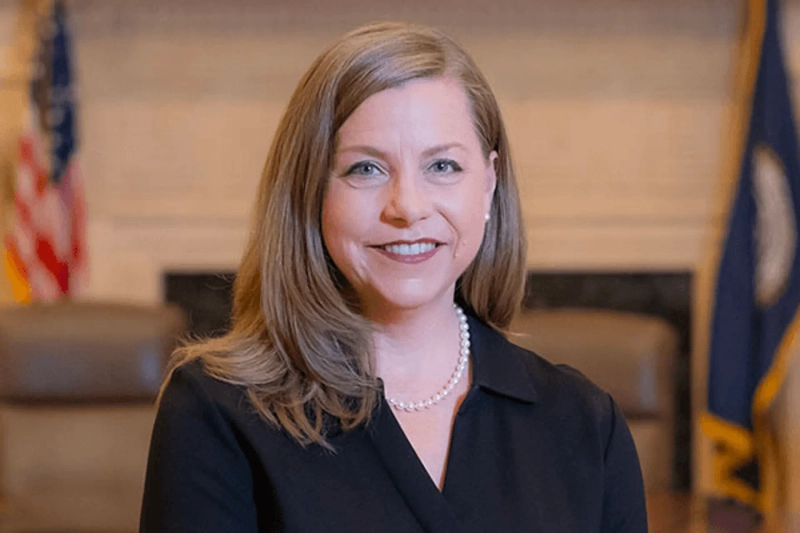
Michelle Bowman, Vice Chair of the U.S. Federal Reserve (Fed), suggested on the 23rd (local time) that she would support a rate cut in July if the trend of slowing inflation continues. Following Christopher Waller, another Fed Board member known for hawkish (tightening) tendencies, Bowman's support for a July rate cut is the latest in a series of such statements from within the Fed.
Speaking at an event in Prague, Czech Republic, Bowman remarked, "It may take longer than initially expected for the impact of tariffs on inflation to materialize, and that impact will likely be smaller." She indicated that she could support a rate cut as soon as next month. She also explained, "Many companies have secured inventory in advance, and now is the time to consider adjusting policy rates given future directions."
Bowman noted, "Recent economic data show no clear substantial effects from tariffs and other policies, and the impact of the trade war on inflation may be more delayed or less significant than expected." She again indicated that she could support a rate cut as early as next month.
She added, "Overall, progress in trade and tariff negotiations has noticeably reduced economic risks," emphasizing, "Now is the time to consider adjusting policy rates."
Immediately following Bowman's comments, the yield on the U.S. 2-year Treasury note—which reacts sensitively to monetary policy—fell during the session to an annual low of 3.82%.
Appointed by U.S. President Donald Trump earlier this month, Vice Chair Bowman continued with remarks in line with President Trump's recent advocacy for rate cuts. Bowman stated, "There are signs of vulnerabilities in the labor market," adding, "Going forward, we need to place a greater emphasis on downside risks to employment mandates."
In her speech, Bowman also stated that the Fed will actively advance U.S. bank regulatory reform. Notably, she mentioned supplementary leverage ratio (SLR) reform, which sets the standards for how much high-quality capital banks must hold against total assets. U.S. banks have long argued that these rules penalize holding low-risk assets like Treasuries and have called for easing. Although Treasuries are low-risk assets, they do not count as capital, so holding more Treasuries either requires accumulating more capital or risks lowering the SLR ratio.
Regarding this, Bowman commented, "It is now time to reexamine the impact of leverage ratios on the Treasury market." The Fed is scheduled to discuss potential revisions to these rules on the 25th. Consensus is expected around lowering the minimum leverage ratio for large banks from the current 5% to the 3.5–4.5% range.
New York = Shin-Young Park, Special Correspondent nyusos@hankyung.com

Korea Economic Daily
hankyung@bloomingbit.ioThe Korea Economic Daily Global is a digital media where latest news on Korean companies, industries, and financial markets.