

Iran succumbs just one day after U.S. 'regime change' pressure... Will they abandon nuclear development too?
Summary
- It is analyzed that Iran agreed to the ceasefire due to strong pressure from the United States and Israel.
- President Trump stated that Iran must fully abandon its nuclear program.
- The weakening of Iran's military capability and concerns over diplomatic isolation in the international community are expected to be crucial factors affecting future decisions.
Trump: "Israel-Iran Ceasefire"... Marks end of 12 days of war
U.S. pushes for 'real end' with nuclear abandonment
Israel plots Khamenei assassination
Iran's 'missile depletion'—loss of counterattack capability
Ceasefire chosen amid internal backlash and diplomatic isolation
Complete termination of nuclear program remains unclear
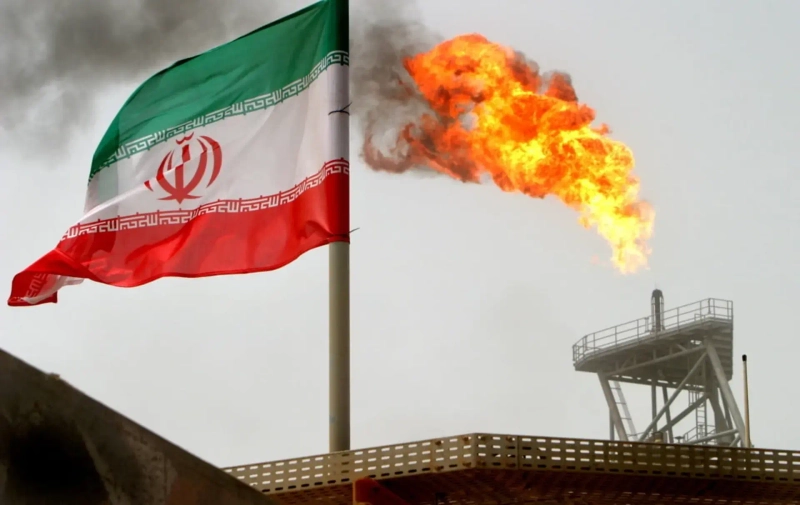
Just one day after U.S. President Donald Trump pressured for 'regime change' in Iran, Israel and Iran have agreed to a ceasefire. This follows two days after the United States used bunker-busters to bomb three Iranian nuclear facilities. Analysts say Iran has succumbed to 'the power of America.'
◇ Official ceasefire to begin on the 25th
According to the ceasefire plan announced by President Trump on the 23rd (local time), Iran will first start a 12-hour truce after its final attack. Then Israel will observe its own 12 hours of ceasefire. If there are no attacks during the truce period, both sides will then enter into a simultaneous ceasefire. Based on the time President Trump announced the ceasefire on social media, the expected start time for both sides is around 1pm on the 25th.
Israeli Prime Minister Benjamin Netanyahu said that "Israel agrees to the ceasefire with Iran" and pledged a strong response to any violations of the ceasefire agreement. Iranian state-run media also reported, following its last airstrike against Israel, that "the ceasefire has begun."
The consensus is that Iran agreed to the ceasefire because of strong pressure from the United States and Israel, after even core nuclear weapon facilities were targeted. From the beginning of the conflict between Israel and Iran, President Trump made it clear: "We do not want just a ceasefire—we want a 'real end,' with Iran giving up its nuclear ambitions completely." The day before the ceasefire announcement, he even mentioned the possibility of regime change in Iran.
◇ Overt threats of regime change
Such threats from the U.S. and Israel reportedly caused alarm in Iran’s leadership over the very survival of the regime. Iran’s Supreme Leader Ayatollah Ali Khamenei, who took shelter in an underground bunker near the capital Tehran at the onset of war, was himself subjected to assassination threats, which reportedly influenced Iran’s decision to agree to the ceasefire. President Trump also issued a warning: "We know where Iran’s Supreme Leader is hiding."
Most importantly, Iran's military power had significantly declined. Israel partly neutralized Iran’s military during its 12 days of attacks. After their preemptive strike, Israeli forces carried out targeted killings of most of Iran’s military leadership, including Chief of Staff Mohammad Bagheri and Islamic Revolutionary Guard Corps Commander-in-Chief Hossein Salami. Israeli attacks disabled Iran’s radar and air defense systems, dominating the airspace.
Iran's medium- and long-range ballistic missiles, capable of striking Israel, were rapidly depleted. More than half of Iran’s missile launchers were destroyed in Israeli airstrikes, drastically weakening its ability to retaliate. Ryan Crocker, Honorary Chair of Foreign and Security Affairs at the RAND Corporation, commented: "Iran had to choose between negotiation and retaliation—choosing retaliation would have triggered massive U.S. counterattacks."
◇ Attention turns to uranium whereabouts
Iran’s internal situation also influenced the ceasefire decision. At first, the Iranian public supported the government for ‘national defense.’ However, as relentless airstrikes in Tehran and elsewhere caused hundreds of civilian deaths, dissatisfaction and anxiety about the regime grew. The prospect of prolonged war and public resentment weighed heavily on Iran’s leadership.
International pressure and fears of diplomatic isolation also played a role. Even Iran’s ‘allies’ Russia and China could not openly take Iran’s side this time.
It remains uncertain whether Israel and Iran will achieve a permanent end to hostilities or if Iran will fully scrap its nuclear program. Some analysts suspect Iran may have transferred enriched uranium to another location before U.S. airstrikes. The Isfahan nuclear facility originally stored about 400kg of 60% enriched uranium. Uranium enriched to 60% is considered near-weapons grade and can be raised to weapons-grade (90%) in just weeks. With many Iranian nuclear facilities and related equipment destroyed by U.S. attacks, most analysts say weapon development will not be easy.
By Juwan Kim / Donghyun Kim, kjwan@hankyung.com

Korea Economic Daily
hankyung@bloomingbit.ioThe Korea Economic Daily Global is a digital media where latest news on Korean companies, industries, and financial markets.