

PiCK
Unstable Ceasefire Between Israel and Iran... Oil Prices Plunge, Asian Stock Markets Surge
Summary
- Following the unstable ceasefire declaration between Israel and Iran, international oil prices reportedly plunged below $70 per barrel.
- Asian stock markets surged with KOSPI jumping 2.96%, rising 29% year-to-date and leading major Asian indices in gains.
- MSCI is reviewing the potential upgrade of South Korea to developed market status, and global investors remain net buyers in the Korean market.
Most Asian markets rise, South Korea's KOSPI sees the highest increase
After Trump's ceasefire declaration, Israel announces another attack on Iran
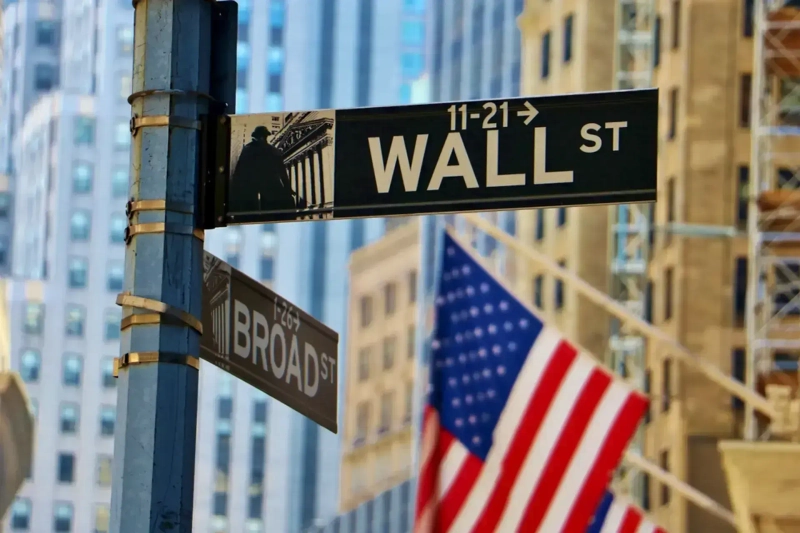
U.S. President Donald Trump announced the implementation of a ceasefire between Israel and Iran, and on the 23rd (local time), international oil prices plummeted below $70 per barrel and Asian stock markets soared, pushing stocks up overall. However, with Israel claiming that Iran violated the ceasefire agreement and again launching an attack on Iran, suspicions about the durability of the agreement remain.
Brent Crude Oil plunged by 5.6% to as low as $67.50 at one point early in the day at the European Intercontinental Exchange (ICE). This marks the price level of June 12, the day before Israel's airstrikes on Iran. As of 6:00 a.m. London time, Brent is trading down 3.3% at around $69. West Texas Intermediate (WTI) also fell to $64.38 per barrel but rebounded to around $66 as of 5:00 a.m. Eastern Standard Time.
The dollar also weakened, with the Bloomberg Dollar Spot Index—which measures the U.S. dollar’s value against a basket of major currencies—falling 0.4% from the previous day. The Japanese Yen, a safe-haven asset, climbed 0.7% to 145.18 yen per dollar. Gold, another safe asset, dropped 1.5% to $3,341.50 per ounce.
Immediately after the ceasefire was announced, Asian markets surged.
The MSCI Asia Pacific Index soared by 2.1%, the largest gain since May 2, and the Emerging Markets Index rose 2.2%. Semiconductor companies such as TSMC, Samsung Electronics, and SK Hynix contributed significantly to these gains.
Japan's Nikkei 225 rose by 1.14%, the Hang Seng Index by 2.06%, and mainland China's CSI 300 by 1.20% respectively.
South Korea’s KOSPI spiked 2.96% to close at 3,103.64 points, leading Asian indices in annual performance. The KOSPI is up 29% year-to-date, about 20 percentage points higher than the MSCI Asia Pacific Index’s 9% gain this year.
Meanwhile, index provider MSCI Inc. is set to release a market reclassification report today, including rating changes. Global investors continued to be net buyers in the Korean market, watching closely to see if MSCI will add South Korea to the review list for possible upgrade to developed market status.
U.S. stock futures were also up across the board. S&P 500 futures climbed 0.8%, Nasdaq 100 futures rose 1.1%, and Dow Jones Industrial Average futures advanced 0.6%.
Europe’s broad STOXX 600 index was up 1.3% as of 10:00 a.m. London time, compared to the previous day.
Meanwhile, Israeli Defense Minister Israel Katz said that Iran violated the ceasefire and ordered an attack on Tehran after a missile launch was detected.
Earlier, Iran confirmed that it would halt retaliation against Israel if Israeli airstrikes ceased.
Daniel Murray, CEO of Swiss EFG Asset Management, commented, "There is no guarantee the ceasefire will hold, but by reducing some uncertainty, the market is taking it positively."
Federal Reserve Board Chairman Jerome Powell is scheduled to testify before Congress today and Wednesday, where he is expected to explain reasons for keeping interest rates on hold.
Tony Sycamore, a market analyst at IG Australia in Sydney, noted in a report, "Stock markets, famous for their short attention span, are expected to shift focus back to tariffs and the Fed."
Kim Jeong-ah, Contributing Reporter kja@hankyung.com

Korea Economic Daily
hankyung@bloomingbit.ioThe Korea Economic Daily Global is a digital media where latest news on Korean companies, industries, and financial markets.