

Central Banks Around the World: The 'Reverse Trump Effect'… Expanding Gold and Euro Holdings Instead of the Dollar
Summary
- Central banks across the globe have announced plans to increase holdings of gold, euro, and yuan over the next two years.
- Seventy percent of central banks cited U.S. political instability as a reason to avoid dollar investments, leading to the dollar's reserve ranking dropping to seventh this year.
- Over the next ten years, the share of euro and yuan reserves is expected to increase, while the dollar’s proportion of global foreign exchange reserves will decrease from the current 58% to 52%.
Plans to Increase Gold, Euro, Yuan, and Yen Holdings Over the Next Two Years
Dollar, Ranked First Last Year, Drops to Seventh This Year
70% of Central Banks Say They Won't Invest in Dollar Due to U.S. Politics
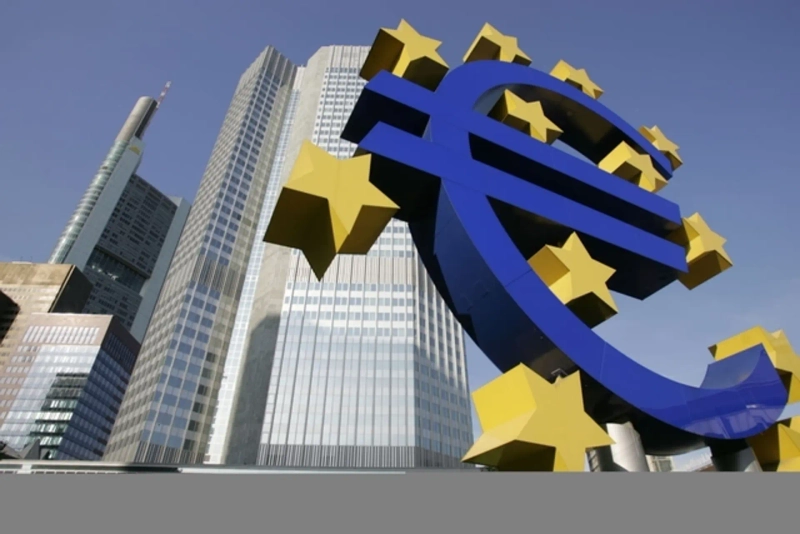
Central banks worldwide plan to move away from dollar-centered reserves and increase their holdings of gold, euros, and Chinese yuan. This reflects growing unease about dollar assets during the Trump administration.
According to Reuters, citing official data from the Official Monetary and Financial Institutions Forum (OMFIF) on the 24th (local time), one-third of central banks globally intend to raise their gold reserves by a total of $5 trillion over the next one to two years. This figure, excluding banks planning to decrease reserves, is the highest in five years.
In a survey of 75 central banks conducted between March and May, after gold, the euro ranked as the top currency that central banks plan to increase in their reserves. 16% of the world's central banks answered that they would increase their euro holdings over the next two years.
The Chinese yuan followed in second place, while the Japanese yen ranked third, with the Australian dollar, Canadian dollar, and British pound following. The U.S. dollar, which topped last year’s central bank survey as the most popular currency to increase reserves, fell to seventh place this year.
Seventy percent of central bank respondents said they would not invest in the dollar due to the U.S. political climate. This shows the aftermath of President Trump’s global imposition of tariffs and the undermining of the Federal Reserve’s independence, resulting in the decline of the dollar and U.S. Treasuries as safe assets.
However, central banks responded that they would prefer the yuan over the euro over the next decade. Thirty percent of central banks worldwide said they would increase their net yuan holdings within ten years.
Central banks are adding gold at a record pace. About 40% of all central banks globally said they plan to increase their gold reserves over the next ten years. OMFIF noted, "Reserve managers are doubling down on gold investments."
Meanwhile, sources dealing directly with forex reserve managers stated that, following Trump’s announcement of reciprocal tariffs, there is a more positive outlook toward the euro among these managers. Although the proportion of the euro in reserves fell in 2011 due to the European debt crisis, the average currency holding as of this year has recovered to around 25%.
Max Castelli, head of sovereign market strategy and advisory at UBS Asset Management, said, "Global forex reserve managers are increasingly asking whether the dollar’s status as a safe asset is at risk," adding that such doubts did not arise even during the 2008 global financial crisis.
OMFIF’s survey projects that in 2035, ten years from now, the dollar will account for an average of 52% of global foreign exchange reserves—still the number one reserve currency but lower than the current 58%. The euro is expected to account for about 22% of the world’s foreign exchange reserves in ten years.
OMFIF survey respondents anticipated that the euro’s share of global forex reserves would rise to 22% within ten years. On this, Harvard University professor and former IMF chief economist Kenneth Rogoff commented, "The rise of the euro has more to do with the weakening status of the dollar than with expectations for the European economy."
Europe currently has $9 trillion in national bonds divided by country, lacking liquidity as a single market compared to the U.S. Treasury market, which amounts to $29 trillion (about ₩3,950 trillion). If the bond market is integrated, the euro’s status could rise even further.
Bernhard Altshuler, global head of central banks at HSBC, remarked, "The euro is currently the only alternative currency capable of bringing about significant changes in foreign exchange reserves." He explained that this is because the Chinese yuan remains subject to capital controls.
He stated that if issues like the expansion of the government bond market are resolved, the euro could reach a 25% share of global foreign exchange reserves within two to three years.
Recently, Europe has shown determination to reduce dependence on the U.S. by increasing defense spending through joint EU borrowing schemes. Along with efforts to integrate capital markets, Germany is increasing its defense spending.
Meanwhile, public pension funds and sovereign wealth funds surveyed by OMFIF regard Germany as the most attractive advanced market.
Jung-Ah Kim, Contributing Reporter kja@hankyung.com

Korea Economic Daily
hankyung@bloomingbit.ioThe Korea Economic Daily Global is a digital media where latest news on Korean companies, industries, and financial markets.