

Fed split over timing of rate cut... "No need to rush" vs "Support for July cut"
Summary
- There is a divergence of opinion within the Fed over the timing of a rate cut.
- Financial markets are putting more weight on a September rate cut, with the CME FedWatch Tool showing the probability of a cut in September at 69%.
- Some Fed officials have mentioned the possibility of a July rate cut as well, but uncertainties in inflation and economic conditions mean further discussion is needed.
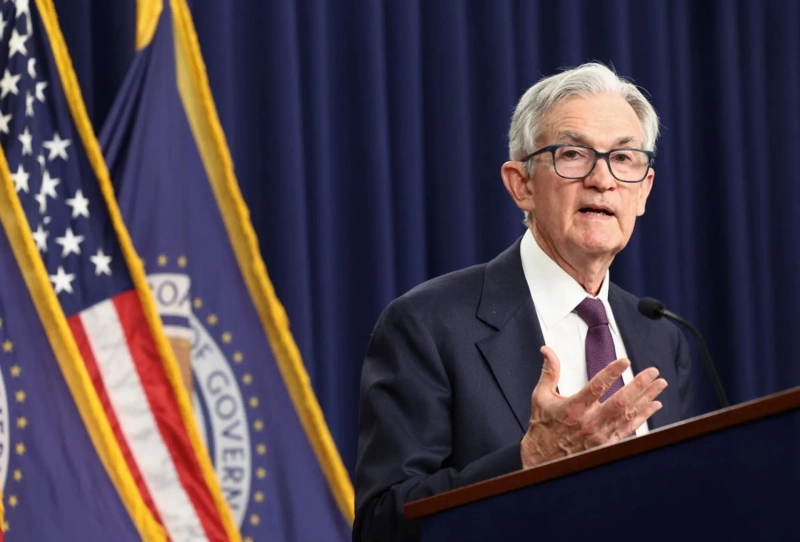
There are differing views within the Fed regarding the timing of a rate cut. Currently, financial markets are leaning toward a 'September rate cut.'
According to CME FedWatch Tool, the probability of a rate hold in July is 81%, while the probability of a 0.25% rate cut in September is 69%. The September rate cut probability has increased by 16 percentage points compared to a week ago.
First, Chair Jerome Powell reaffirmed his 'wait and see' stance at the semi-annual monetary policy hearing of the House Financial Services Committee on the 24th (local time), stating, "We see no need to rush." Powell explained, "This is because the economy is still strong. The labor market is strong."
Michael Barr, Fed Governor, also stated that the economy is on a stable footing, noting that the unemployment rate is low and inflation is moving toward the 2% target. However, he predicted "inflation will likely rise due to tariffs" and pointed out that "a rise in short-term inflation expectations, supply chain adjustments, and secondary effects may cause some persistence in inflation."
He added that while tariffs could cause slower growth and higher unemployment, there remains significant uncertainty regarding policy and its impacts. He noted, "Monetary policy is well positioned to observe how economic conditions evolve."
Beth Hammack, President of the Federal Reserve Bank of Cleveland, also commented that despite recent progress, there is still "some distance to go" to reach the inflation target. She pointed out that official indicators are based on past data, so current trends—such as the recent increase in global oil prices—may not be fully reflected.
In contrast, Michelle Bowman, Vice Chair of the Fed and regarded as the most hawkish among Fed officials (preferring monetary tightening), hinted at the possibility of a rate cut as early as July.
In a keynote speech at a conference hosted by the Czech National Bank in Prague, Czech Republic, Bowman stated, "If inflation pressures remain contained, I will support a rate cut as early as the next (July) meeting."
Regarding the U.S. economic environment, she assessed, "At this point, we have not seen significant economic impacts from trade developments or other factors, and despite a slight slowdown in growth, the U.S. economy has continued to demonstrate resilience."
About inflation, she said that "upward pressure on goods prices from high tariffs is being offset by other factors" and "the underlying trend in core PCE appears much closer to the 2% target than current headline numbers suggest."
She expected that the tariff policy of the Trump Administration would only create a small, one-off increase in prices. She stated, "Depending on trade negotiations, I ultimately expect resulting tariff rates to be lower than current levels, which aligns with the renewed optimism seen in financial markets," adding, "Furthermore, looking at this year's inflation impact, the economy's underlying strength is expected to keep those effects small and temporary."
She also said, "If upcoming indicators continue to show favorable progress on inflation and upward price pressure remains limited to goods, or if consumption slowdown begins to spread to labor market weakness, such developments should be considered in monetary policy discussions."
Until February this year, Bowman continued to reflect a hawkish stance in her public remarks, warning of the risk that inflation could rise again.
Christopher Waller, Fed Governor, said in a CNBC interview on the 20th that the FOMC should start considering a rate cut at the July meeting.
Waller stated, "I agree we should begin to consider a rate cut at the next monetary policy meeting," adding, "I do not want to wait until the labor market drops sharply before initiating a rate cut."
He continued, "We have been waiting and watching for six months, and so far, the data has been solid," adding, "Even if tariffs come later, their effects are expected to be one-off and not cause persistent inflation."
Su-rim Park, Hankyung.com journalist paksr365@hankyung.com

Korea Economic Daily
hankyung@bloomingbit.ioThe Korea Economic Daily Global is a digital media where latest news on Korean companies, industries, and financial markets.