

Summary
- It was reported that with the Nasdaq hitting a record high, both Asian and European stock markets climbed together.
- Weak U.S. economic data and growing expectations for interest rate cuts stood out, with yields on the 10-year and 2-year Treasury notes falling.
- On this day, international oil prices rebounded after falling for two days, and the dollar neared a four-year low against the euro.
Oil prices rebound slightly after a two-day decline
Weak U.S. economic indicators fuel expectations for interest rate cuts
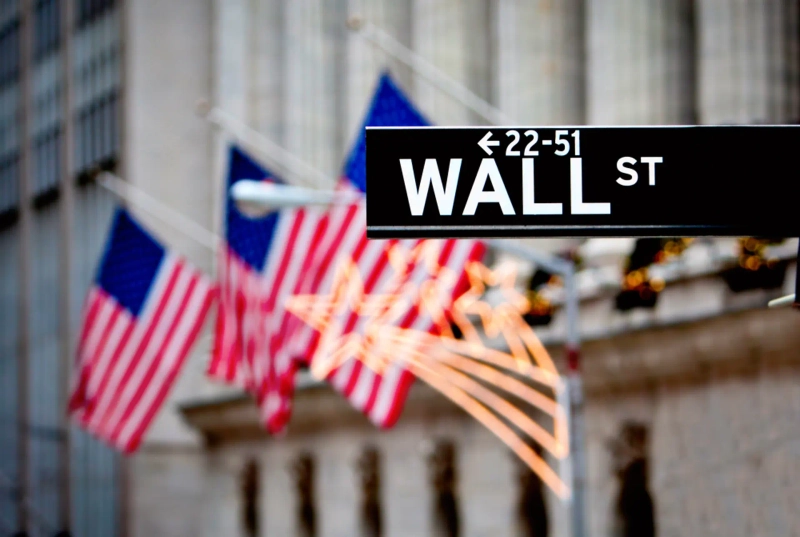
Driven by easing Middle East tensions and expectations of a Federal Reserve rate cut, the Nasdaq set an all-time high, contributing to a broad advance in Asian stock markets on the 25th. European equities also opened higher, while U.S. stock futures showed little change.
On the 25th (local time), Asian stocks rose by 0.5%. South Korea's KOSPI climbed 0.1% to 3,108 points, marking its highest level in 3 years and 9 months. The Nikkei 225 increased by 0.39%.
In China, optimism over domestic stimulus led the mainland blue-chip CSI Index to close 1.44% higher, its best finish since March 20. Hong Kong's Hang Seng Index also rose 1.23%.
The MSCI Asia Pacific Index gained 0.5%, while the MSCI Emerging Markets Index advanced 0.9%.
Europe’s broad-based STOXX 600 Index opened up 0.4%.
Futures on the S&P 500, Nasdaq, and Dow Jones remained little changed as of 5 AM Eastern Standard Time.
Oil prices rebounded after a sharp two-day decline. Benchmark Brent crude oil rose 1.7% to $68.28 per barrel on the European ICE exchange, while U.S. West Texas Intermediate (WTI) climbed 1.6% to $65.42 per barrel on the New York Mercantile Exchange.
Comments from Federal Reserve Chair Jerome Powell—interpreted as somewhat dovish after his testimony before the House the previous day—led the 10-year Treasury yield to slip 1 basis point to 4.28%. The policy-sensitive 2-year yield fell 4 basis points to 3.79%, its lowest level in a month and a half. This is seen by the market as a sign that falling oil prices have reduced the risk of a spike in inflation.
The dollar neared its lowest level against the euro in almost four years. Gold rose slightly to $3,328 per ounce.
Israel announced it would respond to attacks from Iran even after U.S. President Trump declared a ceasefire, but the agreement has held so far.
Meanwhile, according to preliminary U.S. intelligence assessments, American airstrikes have not destroyed Iran’s nuclear capability—they have only delayed it by a few months. This contradicts President Trump’s statement that Iran’s nuclear program had been wiped out.
Analysts at Metzler, headquartered in Frankfurt, projected that if Middle East tensions genuinely ease, U.S. equities could hit new record highs and perform strongly in July, following seasonal trends.
A series of U.S. macroeconomic data released yesterday—including consumer confidence—came in weaker than expected, increasing expectations for a Federal Reserve rate cut this year.
Federal Reserve Chair Jerome Powell said Tuesday that summer inflation could rise due to higher tariffs.
Contributing journalist: Kim Jeong-ah kja@hankyung.com

Korea Economic Daily
hankyung@bloomingbit.ioThe Korea Economic Daily Global is a digital media where latest news on Korean companies, industries, and financial markets.