

Trump's Special Envoy: "We Seek a Comprehensive Peace Agreement With Iran"
Summary
- Steve Witkoff, President Trump's special envoy for the Middle East, stated that a comprehensive peace agreement with Iran is being pursued.
- He reported that the agreement is expected to include the suspension of Iran's uranium enrichment, the lifting of U.S. sanctions on Iran, and the cessation of mutual hostilities.
- He explained that, along with the expansion of the Abraham Accords, the normalization of Saudi-Israel relations could result in Iran's further diplomatic isolation in the Middle East.
Envoy Witkoff: "Iran is likely prepared as well"
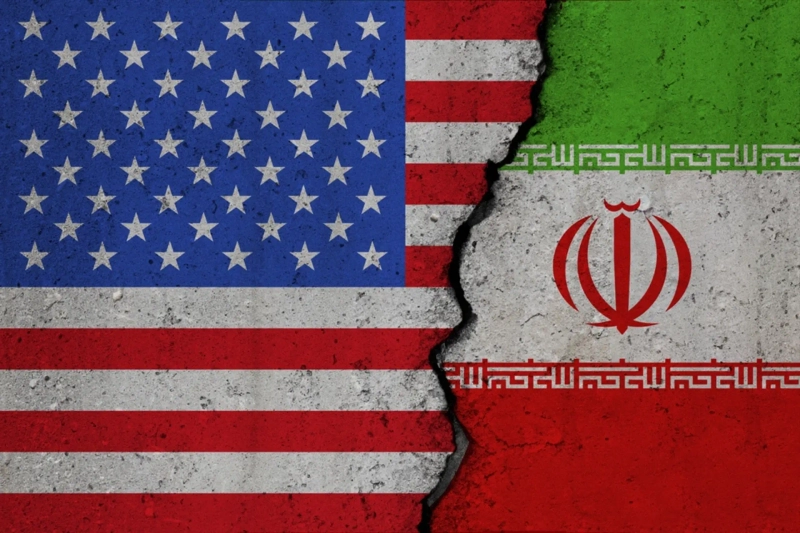
Steve Witkoff, President Donald Trump's special envoy for the Middle East, stated, "We hope to reach a comprehensive peace agreement with Iran."
Envoy Witkoff made these remarks in an interview with CNBC on the 25th (local time), as President Trump announced the resumption of talks with Iran next week. He added, "I have a strong impression that they (Iran) are also prepared."
A comprehensive peace agreement between the United States and Iran is anticipated to include Iran's abandonment of its uranium enrichment program, which could be used for nuclear weapons development, the lifting of U.S. sanctions on Iran, and the cessation of mutual hostilities.
At a press conference held that day in The Hague, Netherlands, President Trump claimed that Iran's nuclear facilities had been virtually eliminated by a U.S. strike on the 21st, in relation to the signing of a 'nuclear agreement' focused on denuclearization with Iran. He said, "We could sign it. (But) I don't think it's necessary."
Envoy Witkoff's remarks are interpreted as revealing his intent to promote a broader, comprehensive agreement including Iran's denuclearization.
He explained, "If talks with Iran take place, the issue will be how to rebuild a better civilian nuclear program (for Iran), one that cannot enrich uranium." He emphasized that, like the United Arab Emirates (UAE), Iran could utilize civilian nuclear energy even without maintaining an independent uranium enrichment program.
He also mentioned that Iran's uranium enrichment and the potential weaponization of nuclear fuel are a red line.
Additionally, he highlighted that one of President Trump's top goals is the expansion of the 'Abraham Accords,' which normalized relations between Israel and the UAE and Bahrain in 2020 during Trump's first term. He said, "We think we will have a pretty significant announcement about countries joining the Abraham Peace Accords."
This is interpreted as referring to the ongoing normalization of relations between Saudi Arabia, the leading Sunni Muslim nation in the Middle East, and Israel. Diplomats expect that if Saudi Arabia and Israel normalize their relations, Iran—which suffered blows to its nuclear and military capabilities from U.S. and Israeli attacks—could face further diplomatic isolation in the Middle East.
Envoy Witkoff also commented on President Trump's mention on social network services (SNS) that China can continue to purchase Iranian oil following the Israel-Iran ceasefire agreement brokered by Trump: "I think it was a signal to China that we want to cooperate and are not interested in hurting their economy."
He added, "Hopefully, this will also be a signal to the Iranian people."
Envoy Witkoff further stated that he hopes the transition to a ceasefire in the military conflict between Israel and Iran will positively influence efforts to resolve the Russia-Ukraine issue.
Kim Dae-young, Hankyung.com Reporter kdy@hankyung.com

Korea Economic Daily
hankyung@bloomingbit.ioThe Korea Economic Daily Global is a digital media where latest news on Korean companies, industries, and financial markets.