

Demonstration of strength by US: "May reach a nuclear agreement with Iran"
Summary
- President Trump signaled the possibility of resuming dialogue with Iran and easing some economic sanctions.
- Iran acknowledged the damage to its nuclear facilities, leaving room for negotiation with the US.
- There is growing attention to the future of nuclear negotiations as it remains unclear where Iran’s highly enriched uranium is currently held.
Trump: "Will resume talks next week"
Hints at potential easing of some economic sanctions
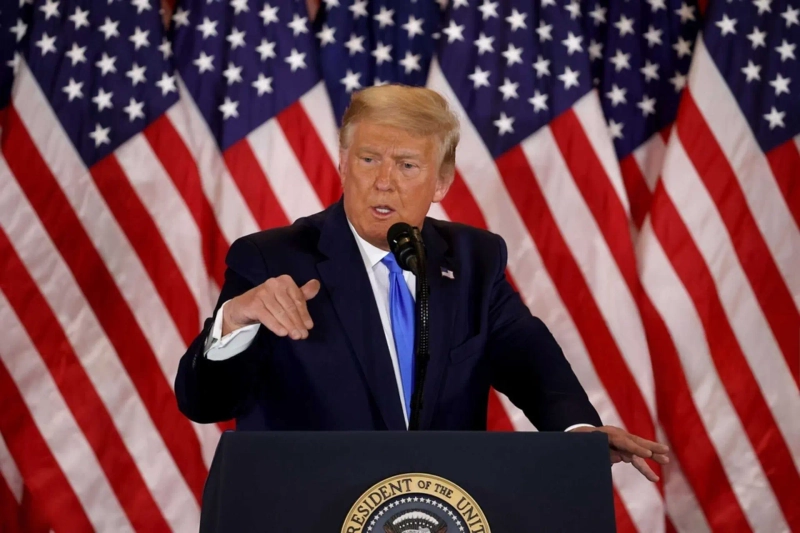
US President Donald Trump has decided to resume talks with Iran next week. However, he offered an ambiguous response regarding the possibility of concluding a nuclear agreement with Iran.
At a press conference during the North Atlantic Treaty Organization (NATO) summit on the 25th (local time), President Trump said, "We will talk to Iran next week," and added, "The only thing we will demand is what we have always demanded, namely regarding nuclear issues." President Trump is expected to pressure Iran to fully and officially abandon its nuclear program.
Nevertheless, regarding a nuclear agreement, he stated, "We might reach an agreement. (But) I don't think it's necessary." He added, "If there's documentation, that wouldn't be a bad thing," leaving some room for interpretation. Steven Witkoff, US special envoy to the Middle East, said in an interview with CNBC that day, "We hope for a comprehensive peace agreement with Iran." He also emphasized that even without a uranium enrichment program, Iran would be able to use civilian nuclear energy like the United Arab Emirates (UAE). Furthermore, expanding the 'Abraham Accords', which normalized relations between the US and Middle Eastern countries during Trump's first administration, is said to be one of President Trump's key objectives.
Iran is positive about the talks. Iranian President Masoud Pezeshkian said, "We are ready to resolve issues with the US according to international norms." Iran initially claimed that none of its main nuclear facilities were destroyed in the airstrike; however, on this day, Iranian Foreign Ministry spokesperson Esmail Baghaei admitted in an interview with Al Jazeera News that there was in fact damage. When asked about the extent of the damage, he replied, "Yes. Our nuclear facilities have been severely damaged. Since (the facilities) were attacked repeatedly, the damage is undeniable. As this is a technical matter, I have nothing more to add."
Iran's sudden admission of damage to its nuclear facilities is seen as an attempt to maintain alignment for continued dialogue with the US. If Iran were to insist that its nuclear facilities remained intact, it could risk additional attacks or pressure. When Trump was asked whether he would strike Iran again if it rebuilt its nuclear program, he answered, "Of course."
The incentives suggested by Trump are attractive from Iran's perspective. President Trump said, "Iran can export oil to China." The logic is that Iran should be allowed to secure the funds necessary for national reconstruction. This raises the possibility that the US and Iran could be negotiating a partial easing of economic sanctions. It is currently unclear where Iran's highly enriched uranium, which amounts to 400㎏, is located. Therefore, there is speculation that Iran may soon use this card to resume nuclear negotiations with the US and other countries.
Washington = Sang-eun Lee, Correspondent selee@hankyung.com

Korea Economic Daily
hankyung@bloomingbit.ioThe Korea Economic Daily Global is a digital media where latest news on Korean companies, industries, and financial markets.