

U.S. Expected to Expand Tariff Targets on Auto Parts…South Korea Likely to Be Hit
Summary
- The U.S. Department of Commerce is expected to expand the types of auto parts that are subject to a 25% tariff.
- Due to the Department’s action, the industries exporting auto parts to the United States and companies utilizing imported parts in the U.S. may see an increase in costs.
- In particular, the South Korean auto parts industry may also be impacted by this tariff expansion.
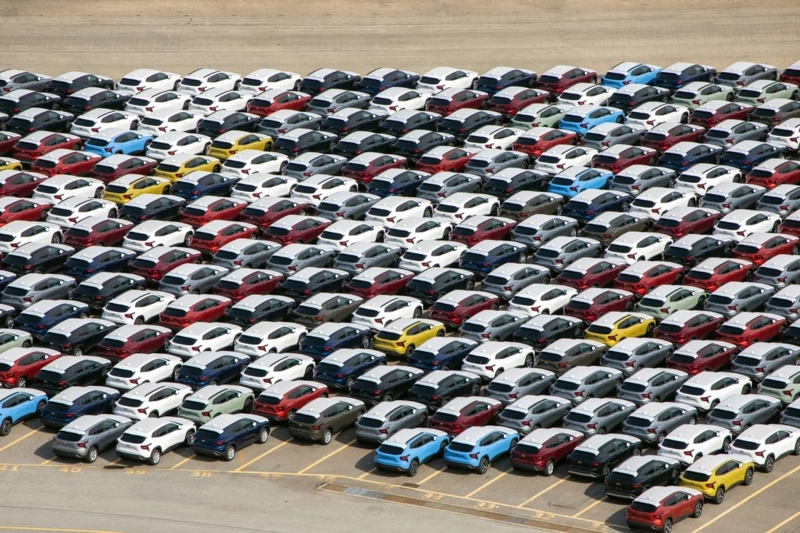
The U.S. Department of Commerce is expected to expand the types of auto parts subject to the 25% tariff.
The International Trade Administration (ITA) under the Department of Commerce announced on the 24th (local time) that it has established procedures to allow new parts to be added to the category of auto parts subject to a 25% tariff under Section 232 of the Trade Expansion Act when imported into the United States.
Accordingly, U.S. auto parts manufacturers will be able to submit their opinions regarding specific parts for which they want tariffs to be imposed to the Department of Commerce starting on the 1st of next month. The Department of Commerce plans to accept requests from the industry every January, April, July, and October going forward.
Previously, President Donald Trump issued a proclamation on March 26, instructing the Department of Commerce to establish a procedure for adding additional parts to the list of auto parts subject to the 25% tariff.
If U.S. manufacturers or relevant associations request that tariffs be imposed on certain parts, the Department of Commerce must decide within 60 days whether to impose them. Since May 3, a 25% tariff has been added on top of existing tariffs for auto parts, currently targeting items such as engines, transmissions, powertrain parts, and electronic components.
If the Department of Commerce expands the range of auto parts subject to tariffs, companies exporting parts to the U.S. and those assembling cars in the U.S. with imported parts may face increased costs. South Korea’s auto parts industry could also be affected.
When steel tariff items were previously expanded, domestic home appliance companies also fell under its influence as a result of petitions from U.S. companies. On the 12th, the Department of Commerce added appliances such as refrigerators, dryers, and washing machines to the list of steel derivative products subject to a 50% steel tariff, putting exporters like Samsung Electronics and LG Electronics who ship home appliances to the U.S. in a position where they must also pay the steel tariff.
Washington, D.C. = Sang-Eun Lee, Correspondent selee@hankyung.com

Korea Economic Daily
hankyung@bloomingbit.ioThe Korea Economic Daily Global is a digital media where latest news on Korean companies, industries, and financial markets.