

PiCK
Ten days left until the reciprocal tariff deadline… White House: “Possible extension”
Summary
- The White House mentioned the possibility of extending the grace period for reciprocal tariffs, highlighting ongoing failures to reach agreements with major trading partners.
- Currently, the United Kingdom is the only country to have officially reached an agreement with the US, while a deal with China was signed covering rare earths and semiconductors.
- Ongoing disagreements with Canada and Japan, as well as market opening talks with India, mean the uncertainty surrounding tariff policies continues.
"The President will decide"... Leaving room for extension
Numerous deals fall through… US has no signatories except the United Kingdom
Progress in negotiations with China… Agreement signed on rare earths and semiconductors
Trump: “Pursuing a massive deal with India”
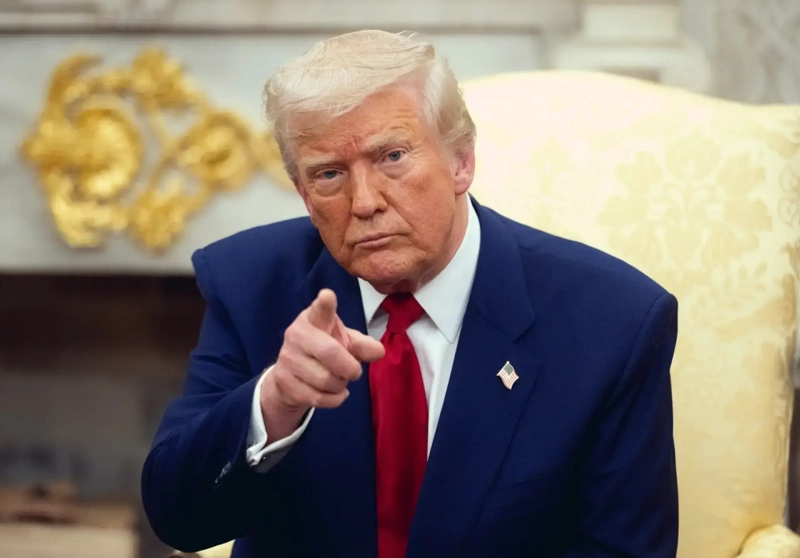
As the grace period expiration (July 8) for reciprocal tariffs set by Donald Trump, President of the United States, approaches in ten days, the White House has indicated the possibility of extending the deadline. This appears to take into consideration that many major trading partners still have yet to reach agreements.
Caroline Leavitt, White House spokesperson, responded to related questions at a briefing on the 26th (local time) by saying, “(The grace period) could likely be extended,” and “The decision will be made by the President.” The Trump Administration is currently negotiating over tariff adjustments, trade balance, and removal of non-tariff barriers before the expiration of the reciprocal tariffs’ grace period, which are being applied with differentials to 57 economic entities worldwide. So far, the only country to officially sign an agreement with the United States is the United Kingdom.
The possibility of extension is being discussed because of persistent differences in position among various countries. According to Bloomberg News, European Union (EU) officials believe it will be difficult to reach a substantive agreement before July 9, and consider a principled agreement to continue negotiations past the deadline as the best-case scenario. Canada as well has not managed to narrow its differences.
Canada plans to impose retaliatory tariffs on steel and aluminum (currently 25%) beginning next month if negotiations collapse. The main sticking point with Japan is auto tariffs. Yoshihiko Noda, leader of the Constitutional Democratic Party, the largest opposition party in Japan, stated, “What the United States is most concerned about is the automotive trade deficit, and there is still no compromise.”
On the other hand, progress has been made in negotiations with China. President Trump announced, “Yesterday we signed (the agreement) with China.” This agreement specifies the outcomes of the first round of high-level US-China trade talks held in Geneva in May and the second round held in London on the 9th and 10th of this month. The agreement is expected to include ▽ China resuming rare earth exports to the US ▽ continued stay for Chinese students in the United States ▽ relaxation of US restrictions on exports of advanced semiconductors and technology to China.
President Trump singled out India as the next target for an agreement. He said, “We are working on several massive agreements,” and “We will make a very big deal to open the Indian market.” The United States has requested that India open its market to genetically modified organisms (GMO), but India has refused and has been demanding mutual tariff and industry-specific tariff exemptions.
Reporter Im Dayeon allopen@hankyung.com

Korea Economic Daily
hankyung@bloomingbit.ioThe Korea Economic Daily Global is a digital media where latest news on Korean companies, industries, and financial markets.