

Countdown to U.S. Reciprocal Tariff Suspension Deadline… Will Extension Apply to South Korea?
Summary
- The reciprocal tariff suspension period under the Trump administration is set to expire in ten days, drawing investor attention regarding a possible extension.
- If there is no extension, South Korean export companies to the United States will face an additional 15% tariff burden starting from the 9th of next month.
- The South Korean government needs to secure more time for negotiations by extending the reciprocal tariff suspension, and it is necessary to maintain the suspension until the summit meeting takes place.
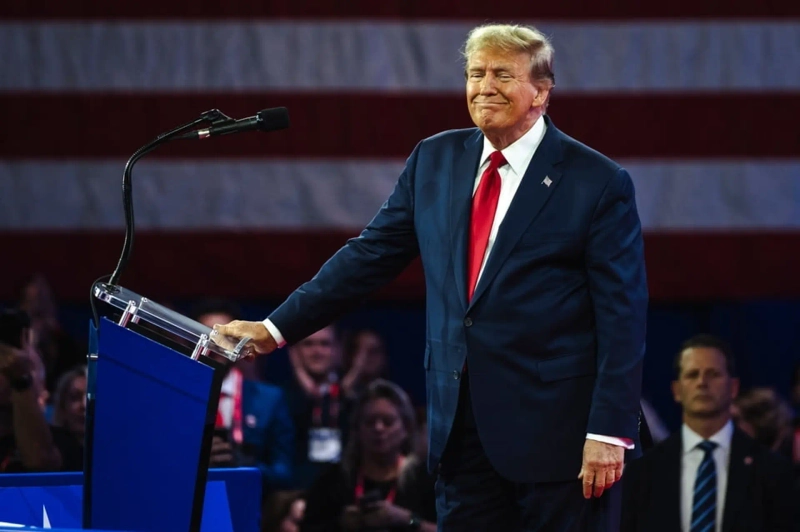
The expiration of the reciprocal tariff suspension period by U.S. President Donald Trump is just ten days away. There is growing attention on whether President Trump will extend the suspension and whether South Korea will be included among the countries for extension.
On the 29th (local time), the Trump administration’s reciprocal tariffs, which were imposed with different rates on 57 economic entities including South Korea and were then suspended, will end on the 8th of next month. If the suspension is not extended, reciprocal tariffs may be imposed as early as the 9th. The Trump administration has conducted trade negotiations with each country on issues such as tariff rates, trade balance, and the removal of non-tariff barriers during the tariff suspension period. An agreement has already been reached with the United Kingdom.
For South Korea, a total reciprocal tariff of 25% has been established: a basic tariff of 10% and an additional 15% depending on the country. The basic tariff, like in other countries, is already being applied. If the suspension is not extended, from the 9th of next month, most South Korean exports to the United States will face an additional 15% tariff, except for items such as automobiles (25%), steel, and aluminum (each 50%) that are already subject to separate tariffs by item.
President Trump has three main options regarding the reciprocal tariff suspension: to impose tariffs on all target countries as scheduled as early as the 9th of next month; to impose tariffs on some countries while extending the suspension for others; or to grant a blanket extension for all countries.
Recent remarks by President Trump and administration officials suggest that extending the suspension for at least some countries is being considered as one of the options. On the 26th, President Trump said about the suspension deadline, “We can do whatever we want. We can extend it. We can reduce it even further.”
However, while mentioning extension as a possible option, President Trump also sent a message of pressure, saying, “Within the next week and a half (ten days), or possibly even before that, we will send a letter stating what they will have to pay to do business in the United States.” This implies that even if the suspension is extended, not all countries will be eligible.
Countries that actively respond to U.S. demands, such as reducing trade surpluses with the United States and eliminating non-tariff barriers, may be granted an extension for trade negotiations even if an agreement is not reached by July 8. On the other hand, countries that do not cooperate may have reciprocal tariffs imposed without any extension as early as July 9.
With the leadership change from the launch of the Lee Jae-myung administration through the June 3 election during the reciprocal tariff suspension, it is realistically difficult for the South Korean government to reach a trade agreement with the United States by the 8th of next month.
Therefore, it is necessary to secure more time for negotiations by seeking an extension of the tariff suspension for now. If the extension is not granted, South Korean exporters to the United States would have to negotiate under less favorable conditions, bearing an additional 15% tariff compared to current levels.
The South Korean government is approaching the situation cautiously. Above all, the government must establish the framework of the ROK-U.S. relationship, encompassing both security and the economy, through the first summit between President Lee Jae-myung and President Trump, which is yet to be scheduled. Thus, it is necessary to maintain the reciprocal tariff suspension until the summit takes place.
Lee Song-ryeol, Hankyung.com journalist yisr0203@hankyung.com

Korea Economic Daily
hankyung@bloomingbit.ioThe Korea Economic Daily Global is a digital media where latest news on Korean companies, industries, and financial markets.