

PiCK
Trump: "Will send tariff letters to all countries"...Suggests unilateral notification
Summary
- President Trump announced he would unilaterally notify all countries of the imposition of tariffs after the reciprocal tariff exemption period ends.
- The U.S. stated it could impose up to 50% tariffs on certain countries based on its analysis of trade imbalances.
- The tariff policy changes could affect trade agreements with countries such as Japan and South Korea, as well as the U.S. automobile industry.
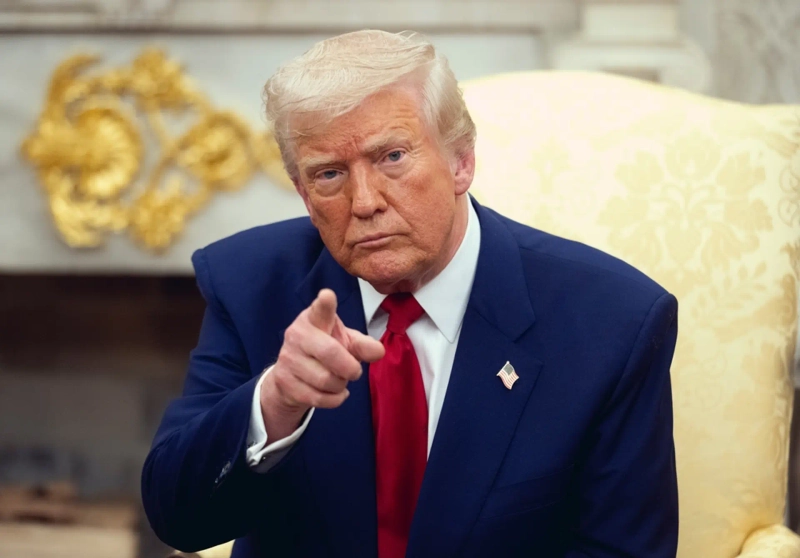
Donald Trump, President of the United States, stated on the 29th (local time) regarding the deadline for reciprocal tariff exemptions, "What we need to do is send letters to all countries."
According to Fox News and others, in a public interview that day, President Trump answered a question on ‘the approaching deadline for reciprocal tariff exemptions and what he plans to do’ by saying this.
The United States' reciprocal tariff exemption period, which was granted, lasts until the 8th of next month. On April 9, the United States postponed the reciprocal tariffs for 90 days and has since engaged in trade negotiations with each country.
President Trump's remarks are interpreted as indicating he will not extend the reciprocal tariff deferral period. He referred to ‘sending letters’ as "the end of trade negotiations" for the United States. He also mentioned that it is not possible to negotiate with all 200 countries.
President Trump emphasized, "We don't even have to meet (the target countries for trade talks)," adding, "What we need to do is send letters and say, 'Congratulations. We allow you to sell in the United States, but will impose tariffs of 25%, 35%, 50%, or 10%.'"
This is interpreted as meaning the U.S. could unilaterally impose up to 50% reciprocal tariffs depending on its own analysis of trade imbalances, but for some countries, only a basic tariff of 10% may be applied.
Fox News also raised concerns aimed at Japan and South Korea that they could sign agreements granting them lower tariffs than those applied to U.S. auto manufacturers. Questions were also asked about cars produced at American automobile manufacturers' plants in Mexico and imported into the United States.
In response, President Trump said, "U.S. auto manufacturers are so busy selling cars in the United States that they don't need to worry about that issue," adding, "But in any case, that will not happen."
President Trump, based on Section 232 of the Trade Expansion Act, is imposing a 25% item-specific tariff on automobiles and auto parts.
Regarding crackdowns on undocumented immigrants at farms and hotels with high dependence on manpower, President Trump also said, "If you take away all those who have done tough jobs that many people won't do, you would destroy American farmers," and that farm or hotel owners are preparing “a type of temporary permit” that would allow them to manage immigration enforcement.
Hankyung.com journalist Han Kyungwoo case@hankyung.com

Korea Economic Daily
hankyung@bloomingbit.ioThe Korea Economic Daily Global is a digital media where latest news on Korean companies, industries, and financial markets.