

Summary
- It is reported that stablecoins are attracting attention as a key bridge capturing both financial efficiency and scalability in the global virtual asset industry.
- Governments and entities such as the White House are rapidly preparing legislation and expanding infrastructure to lead the market and facilitate digital transformation based on stablecoins.
- The US is boosting dollar supremacy with USD stablecoins, while Korea is working to secure market competitiveness with KRW stablecoins.
Stablecoin: The Key Bridge for Digital Financial Transformation
Capturing Both Financial Efficiency and Scalability
President Lee’s Core Pledge: ‘KRW Stablecoin’
Government and Business Accelerate Legislation and Infrastructure Expansion
US Strengthens Dollar Hegemony With ‘USD Stablecoin’
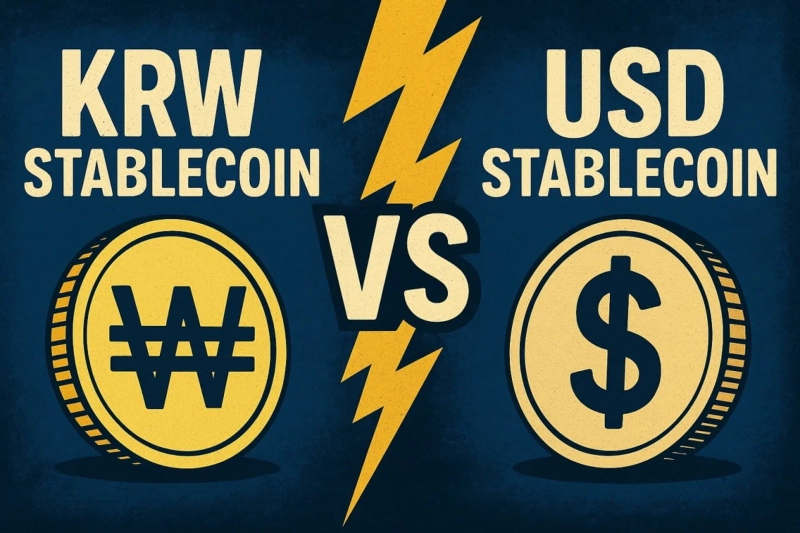
The global virtual asset (cryptocurrency) industry is abuzz with 'stablecoin.' Regulators are successively introducing bills to secure a lead in the market, while companies are moving swiftly to expand stablecoin infrastructure.
Today, let's take a closer look at the hottest topics: the ‘Korean won (KRW) stablecoin’, the ‘US dollar (USD) stablecoin’ leading the global market, and the changes these developments are set to bring.
What Is a Stablecoin?
A 'stablecoin' is a type of virtual asset (cryptocurrency) designed to maintain a stable value by being backed by assets such as fiat currency or gold. Unlike other virtual assets, their low volatility makes them ideal for use in decentralized finance (DeFi) transactions, and most stablecoins are pegged to fiat currencies, making them expected to serve as the 'critical bridge' in bringing traditional finance on-chain.
Initially, stablecoins were mainly used as a tool for stable transactions in the highly volatile crypto market. Recently, as digital transformation in the traditional financial sector accelerates, securities, bonds, and derivative infrastructures based on stablecoins are also rapidly expanding on-chain. Since they operate on-chain, they enable faster and more efficient remittances than traditional international banking networks (like SWIFT).
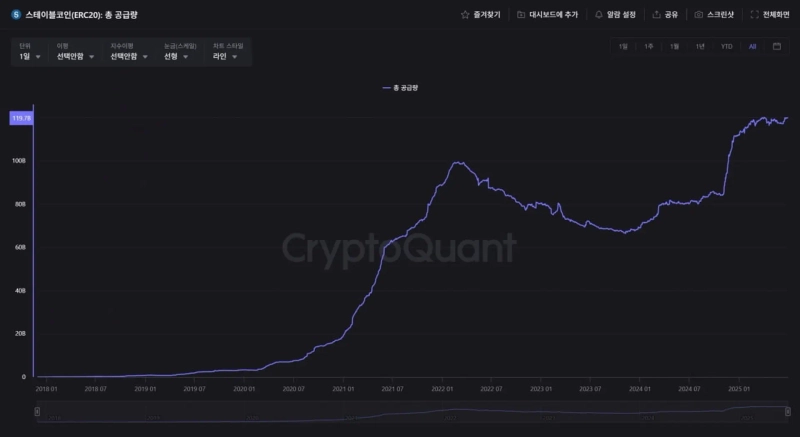
With growing interest in the market, the supply of stablecoins is also surging. According to CryptoQuant data, as of the 29th, the total supply of ERC-20-based stablecoins hit an all-time high of $119.7 billion.
Stablecoins are broadly classified into three types according to who operates them and how they function: △fiat-backed, △crypto-collateralized, and △algorithmic stablecoins.
Fiat-based stablecoins are issued against cash or cash-equivalent assets such as bonds deposited in the traditional banking system. Tether's USDT and Circle's USDC are representative examples. Although these are operated by centralized entities and thus subject to censorship or regulatory risk, they enable direct redemption into real dollars and are considered most favorable for institutional adoption.
Crypto-collateralized stablecoins are issued against crypto assets and are primarily used in DeFi markets. Sky Dollar (USDS) and Dai (DAI) belong to this category. These are not directly redeemable for physical assets, but their decentralized operation on-chain provides high resistance to censorship.
Algorithmic stablecoins maintain their value by adjusting circulation and utilizing arbitrage algorithms. Terra (UST), which shocked the market in 2022, is a prime example. Without collateral assets, it attempted to maintain a $1 value via arbitrage and burn mechanisms with LUNA, but ultimately collapsed due to structural vulnerabilities. While algorithmic stablecoins offer advantages in terms of capital efficiency and scalability, their lack of collateral also brings significant challenges with initial liquidity, stability, and real-world adoption.
"We’ll Lose Everything Like This"…New Administration Pushes Forward With KRW Stablecoin
As stablecoins gain broader utility globally, both government and business in Korea are accelerating expansion of KRW-based stablecoin infrastructure.
President Lee Jae-myung, since his candidacy for the presidency as the Democratic Party nominee, has made KRW stablecoin issuance and virtual asset industry promotion key campaign promises. During the height of his campaign last May, President Lee stated, “The US is striving to dominate the crypto market with dollar and treasury-backed stablecoins. We must quickly build a KRW-based stablecoin to secure market share and prevent capital outflow in the global competition.”

According to Hashed Open Research, as of now, over 99% of the stablecoin market is controlled by US dollar-based stablecoins. Issuers of these dollar stablecoins utilize US Treasury collateral, generating tens of billions of dollars in annual profits.
The Lee administration is working to capture market share monopolized by dollar stablecoins and strengthen the connectivity between the Korean and global digital asset markets through the issuance of KRW stablecoins.
Concrete legislation is progressing rapidly. On the 10th, just one week after the launch of the Lee administration, Democratic Party lawmaker Min Byung-deok submitted the ‘Digital Asset Basic Act’. The bill introduces key measures such as △pre-approval systems for asset-linked digital assets (including stablecoins), △legal definitions and applicable scope of digital assets and businesses, and △systematic policy support through a presidential digital asset committee.
Following government policy, domestic financial firms are also speeding up efforts to build KRW stablecoin infrastructure. Beginning with KakaoPay on the 17th, major fintechs such as KakaoBank, Naver Pay, and Toss Bank, as well as financial institutions like Hana Bank, KB Kookmin Bank, and Shinhan Financial Group, are racing to secure trademarks and compete for early market entry.
US Strengthens Dollar Hegemony With Stablecoins
The US is clearly demonstrating its intent to maintain dollar dominance into the digital era through the GENIUS Act, which regulates stablecoins.
The GENIUS Act is a Trump administration bill for stablecoin regulation, covering △introduction of a licensing system for stablecoins, △strengthened requirements for issuers’ reserve management, and △regulation of overseas-issued stablecoins to enforce US dollar control. The bill passed the Senate on the 17th with 68 votes in favor and 30 against, now awaiting a vote in the House.
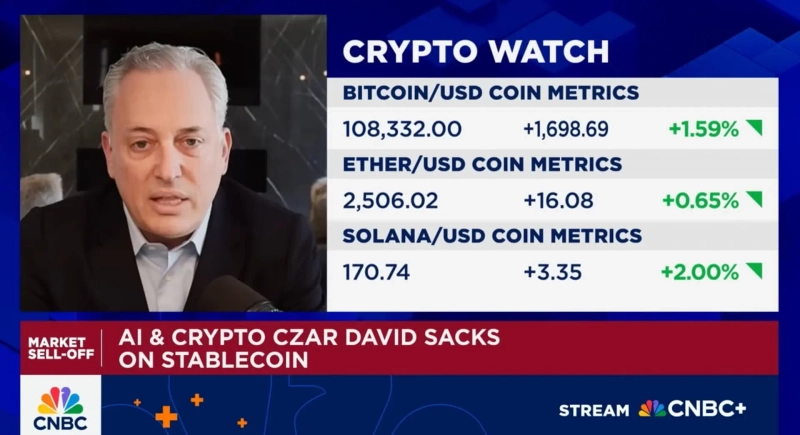
David Sacks, White House policy head for virtual assets (‘crypto czar’), stated in a CNBC interview regarding the GENIUS Act, “Stablecoins have the potential to play a key role in furthering the international dominance of the US dollar and expanding the use of digital dollars as a reserve currency,” adding, “This will generate new demand for US Treasuries amounting to trillions of dollars.”
As of the end of May, the amount of US Treasuries held by dollar stablecoin issuers such as Tether and Circle totaled around $128 billion. Amid declining demand for US Treasuries due to tariff conflicts with China, the Eurozone, and others, stablecoin issuers have emerged as major players in the treasury market.
In this way, the US leverages the treasury demand from stablecoin issuers to ease potential diplomatic burdens such as bond sale pressure during tariff negotiations, and actively pursues a strategy to maintain dollar dominance even in the digital transition era.
As both Korea and the US accelerate financial innovation with stablecoins—regarded as the key killer app for digital transformation—attention is focused on whether the KRW stablecoin, under President Lee’s administration, can challenge the dominance of USD stablecoins and take the lead in the global market.
<[Web 3.0 Report] can be regularly accessed through the blockchain and virtual asset (coin) investment information platform (app) ‘BloomingBit’>
# The internet has evolved without pause for over 30 years since its popularization in the 1990s. After the era of limited, one-way access in Web 1.0, and the platform-centered Web 2.0 where the public creates and shares content, we now live in the Web 3.0 era, enabled by blockchain-based decentralized protocols, where everyone can become an operator.
The ‘Web 3.0 Report’ aims to deliver accurate and in-depth information on blockchain markets and the web 3.0 transition to our readers.
Lee Young-min, BloomingBit Reporter 20min@bloomingbit.io

YM Lee
20min@bloomingbit.ioCrypto Chatterbox_ tlg@Bloomingbit_YMLEE