

Trump Ramps Up Pressure: "Reciprocal Tariffs to Be Imposed Starting the 9th"
Summary
- President Donald Trump announced that if no progress is made in negotiations by the July 8 reciprocal tariff suspension deadline, he will push ahead with tariff imposition.
- The US reportedly presented Korea with three major demands: easing non-tariff barriers, participation in Alaska LNG development, and addressing trade imbalances.
- There is speculation that 25% tariffs on items such as steel and automobiles could newly become subjects of negotiation.
US Issues Three Major Demands, Including Easing of Non-Tariff Barriers
Korea "Looking for Creative Solutions"
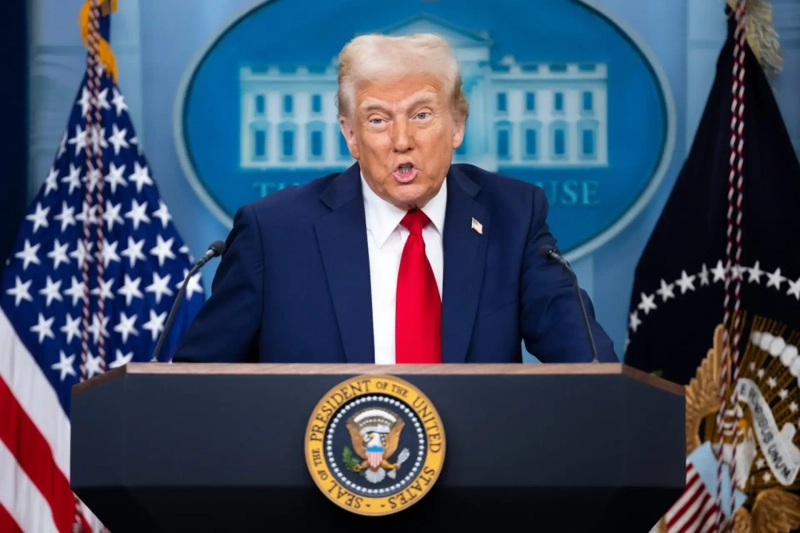
Donald Trump, President of the United States, said on the 29th (local time) that he "will not extend the deadline for the reciprocal tariff suspension." He warned that if the negotiating countries do not present a satisfactory deal by the July 8 reciprocal tariff suspension deadline, he will press ahead with the previously announced tariffs. Analysts say the new Korean administration, which held the third round of tariff working-level and technical talks last week in Washington, D.C., is feeling greater pressure.
In a Fox News interview released that day, President Trump said, "Soon, I’ll send a letter to every country saying that all they have to do is pay the US 25%, 35%, 50%, or 10% tariffs." He made it clear that he intends to conclude the tariff negotiations by applying different reciprocal tariffs by trading partner, as first revealed in April. Regarding the possibility that Korean and Japanese automakers could secure deals for lower tariffs than US automakers, he dismissed it, saying, "That will not happen."
During last week's third round of Korea-US tariff technical meetings, the US reportedly made three major demands to the Korean delegation: easing of non-tariff barriers, a firm commitment to participate in the Alaska Liquefied Natural Gas (LNG) development project, and proposals to resolve trade imbalances. At a briefing on the 30th, a senior official from the Ministry of Trade, Industry and Energy said, "Virtually everything mentioned in the United States Trade Representative (USTR)’s report on non-tariff barriers (NTE) was discussed," adding, "We are consulting with related ministries to find creative solutions to what can be accepted."
The official explained, "Because the US’s goal in introducing high tariffs is 'revitalizing manufacturing,' we emphasized Korea’s position as the optimal partner."
Korean officials sense there may be a possibility of extending the negotiation deadline, which is just a week away. While withholding specific comments on President Trump’s 'no extension' remarks, a Ministry of Trade official said, "Even if some countries reach a basic agreement, negotiations must continue to work out the details," adding, "(The government) will work to secure the maximum extension and do our utmost in negotiations."
While the US previously maintained that only reciprocal tariffs, excluding the 10% base tariff, were subject to negotiation, it is now reported that, depending on the scale of Korea’s commitments, tariffs of up to 25% on items such as steel and automobiles could also be included in the talks.
Han Kyung-jae / Kim Dae-hoon, reporters hankyung@hankyung.com

Korea Economic Daily
hankyung@bloomingbit.ioThe Korea Economic Daily Global is a digital media where latest news on Korean companies, industries, and financial markets.