

"Price Hikes Begin for Imported Chinese Goods in the U.S."
Summary
- The prices of Chinese goods sold on Amazon have started to outpace the overall U.S. inflation rate since May.
- This signals that tariffs have begun affecting American consumers and the retail supply chain, according to DataWeave and industry officials.
- Betadapura noted that additional price pressure on steel, aluminum, and electronics is expected in the coming months.
Prices of Chinese Products Sold on Amazon Rise at Twice the U.S. CPI
Prices of Chinese Household Goods and Electronics Increased by Over 3% within a Month from May
Retailers Start Reflecting Price Increases as Front-Loaded Inventories Dwindle
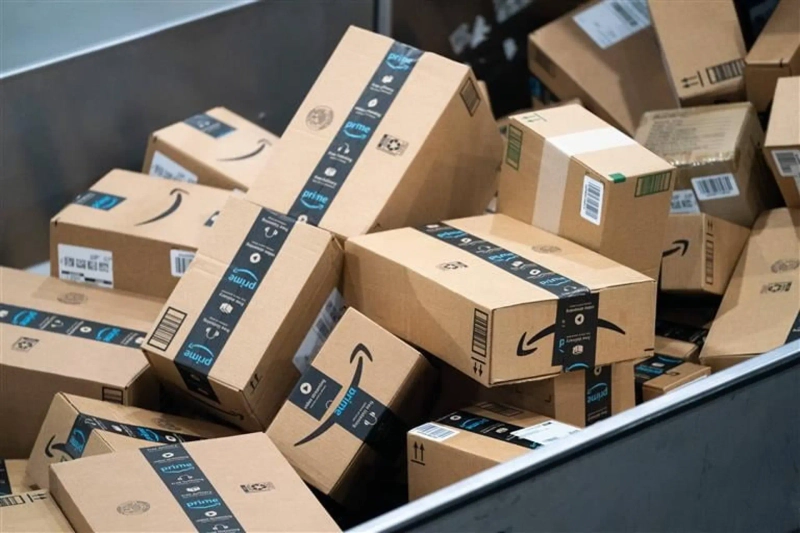
According to an analysis of products manufactured in China and sold on Amazon.com in the U.S., prices have been rising faster than the general inflation rate in the U.S. since May. This is interpreted as a sign that tariffs have begun to affect American consumers.
On the 30th (local time), according to a study by Reuters and data analytics firm DataWeave, prices of products made in China and sold on Amazon.com increased by 2.6% from January to mid-June, outpacing U.S. inflation. Core goods CPI, excluding services, rose at an annual rate of 2%, and 1% during the same period.
Particularly, price increases were modest until April when tariffs were first applied, due to existing inventories, but escalated after May.
The fastest-rising items included stationery and office supplies, electronics such as printers and shredders, media like CDs and DVDs, as well as household goods and kitchenware. China, which exported $438.9 billion (₩595.32 trillion) worth of goods to the U.S. last year, is a major supplier of these goods.
Of the 1,407 products tracked in this study between January and June 17, prices rose for 475 items, remained unchanged for 633 items, and fell for 299 items. Prices, while modest until April, increased significantly from May onward.
Specifically, household goods, furniture, and electronics recorded median price increases of 3.5% and 3.1%, respectively, after May.
DataWeave analyzed over 25,000 items, focusing primarily on 1,407 products sold on Amazon with China as the country of origin. Instead of average prices, which could be distorted by temporary spikes or abnormally high or low listings, median prices were used.
Chinese products include items sold by both Amazon and third-party sellers. Third-party sellers account for 62% of all items sold on Amazon.
Kartik Betadapura, co-founder and CEO of DataWeave, said, "Seasonal fluctuations may have an influence, but the timing and magnitude suggest cost shocks are rippling across the retail supply chain." He added, "When margins are slim and restocking cycles are short, even lower tariffs can result in quick price increases. Notably, as sellers began to adapt to higher tariffs in June, broad-based price hikes appeared for the first time."
However, Amazon stated in a statement that this does not reflect overall prices among the hundreds of millions of products it sells.
Several consumer goods companies, including the largest U.S. retailer Walmart, have warned about price hikes resulting from tariffs. Department store chain Macy's said it was raising prices selectively to offset tariffs. Nike, which recently resumed sales on Amazon, announced it would be raising prices on various products from June.
Amazon CEO Andy Jassy said that, prior to the imposition of tariffs, he worked with sellers to keep prices low by securing inventory.
Due to weakening consumer sentiment and high interest rates in the U.S., retailers are finding it difficult to pass on tariff costs. According to U.S. government data, consumer spending in May fell by 0.9% compared to April, a sharper decrease than expected.
Claudio Irigoyen, economist at Bank of America Securities, pointed out that companies are likely to decide to postpone price increases.
Current U.S. tariffs include a general 10% tariff, a 50% tariff on steel and aluminum products, and a 25% tariff on automobiles and auto parts.
Betadapura commented that as of June 23, steel tariffs took effect at 50%, and this will likely put further price pressure on cookware, kettles, small kitchen appliances, small electronics, and other household essentials in the coming months.
By Jung-A Kim, Guest Reporter kja@hankyung.com

Korea Economic Daily
hankyung@bloomingbit.ioThe Korea Economic Daily Global is a digital media where latest news on Korean companies, industries, and financial markets.