

Trump's Tax Cut Plan Becomes a 'One-Man Battle'… Senator Tillis Declares 'I Won't Run Next Year' in Defiance [Lee Sang-eun's Washington Now]
Summary
- President Trump’s massive tax cut plan faces a suspenseful situation in the Senate, with the outcome hinging on just one vote.
- The $5 trillion debt ceiling increase and cuts to Medicaid included in the bill emerged as the key issues.
- It is reported that persuading dissenting Republican senators is challenging, so uncertainty regarding the bill’s passage is expected to continue.
The market is focused on the final Senate vote for Trump's massive tax cut plan.
It is a tense situation where it is difficult to be certain if it will pass. Currently, whether this bill passes the Senate appears to depend on just one person. If this person changes their mind, the bill will pass; otherwise, it could fail.
Right now, the Senate is in the midst of a bill discussion process that started last Saturday with a procedural vote.
There are two main points of contention. First is the concern that the $5 trillion debt ceiling increase included in the bill burdens U.S. finances. Republican Senator Rand Paul of Kentucky, who has opposed it from the beginning, has been an outspoken critic. President Donald Trump, who has publicly targeted and criticized Senator Paul several times on social media, tried to win him over by playing golf with him last Saturday morning.
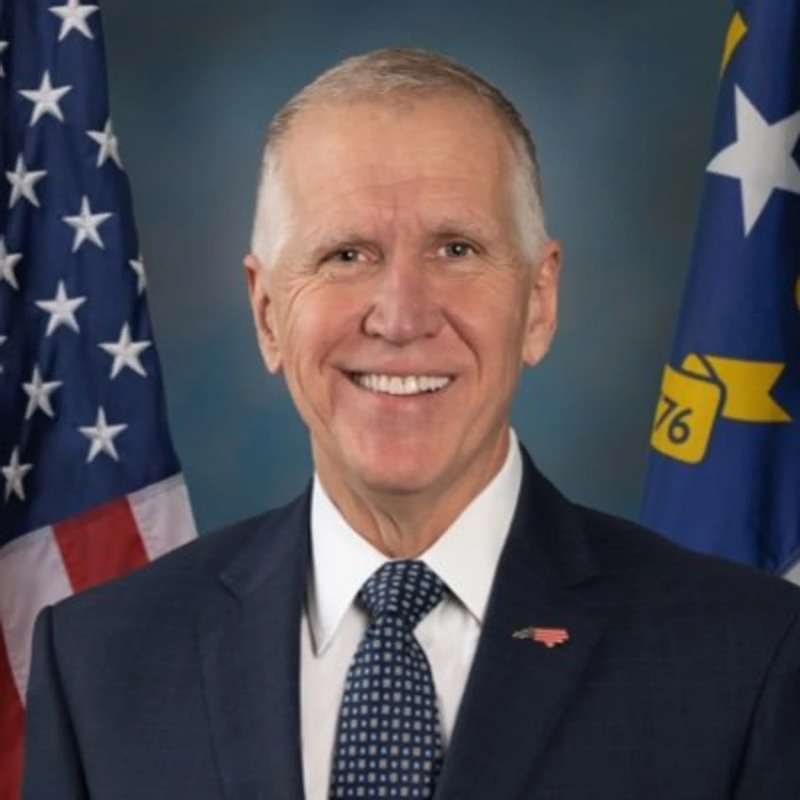
The second issue is the drastic cuts to Medicaid, which serves low-income people. Senator Thomas Tillis of North Carolina opposed it, saying it would negatively affect local residents. In addition, Senators Lisa Murkowski and Susan Collins, who have often voted against President Trump's wishes, also expressed concern about the Medicaid cuts.
Other opposing senators include Ron Johnson, Mike Lee, Cynthia Lummis, and Rick Scott. After one-on-one persuasion attempts by President Donald Trump, Vice President J.D. Vance, and Senate Republican Leader John Thune, it is reported that some changed their stance. In fact, Cynthia Lummis and Rick Scott had previously sided with MAGA supporters, so the change was not entirely surprising.
Summing this up, there are currently four senators who have made it clear they will not support the bill unless changes are made. However, the Republican Party can only afford to lose up to three votes. Therefore, the deciding factor is whether one more senator can ultimately be persuaded. For now, Senators Susan Collins and Murkowski, who agreed to bring the bill to a procedural vote, are likely targets for persuasion.
Senator Tillis faced another round of public criticism from President Trump on social media for opposing this vote. When Trump threatened to support someone else over Tillis in next year’s midterm election, Tillis flatly declared today that he will not run at all. This stance means he is determined to hold onto his opposing vote, making it difficult for him to reverse his position.
If Senator Tillis does not run, it is reported that the Republican Party is considering running President Trump's daughter-in-law, Lara Trump, as a candidate instead.
Failure to pass the bill this week would not cause a major immediate problem. However, questions could arise about President Trump’s leadership. Within the Republican Party, it's expected that they will attempt to pass the bill again before the August recess through bill revisions or persuading lawmakers. As the bill has already been partially amended, even if it passes the Senate, it will need to be put to another vote in the House with the same content. If both chambers approve, it will be enacted with President Trump’s signature.
Washington = Correspondent Sang-eun Lee selee@hankyung.com

Korea Economic Daily
hankyung@bloomingbit.ioThe Korea Economic Daily Global is a digital media where latest news on Korean companies, industries, and financial markets.