

"Trump Expected to Scale Back Goals as Tariff Negotiation Deadline Approaches"
Summary
- The Trump administration has stepped back from its 'comprehensive trade agreement' and shifted to a phased agreement strategy.
- While some countries will face exemptions from the highest-level reciprocal tariffs as conciliatory measures, the administration left open the possibility of additional tariffs on certain sectors such as automobiles, steel, and semiconductors.
- It was reported there is uncertainty regarding tariff rates for countries that do not reach a basic agreement before July 9.
Financial Times (UK) Report
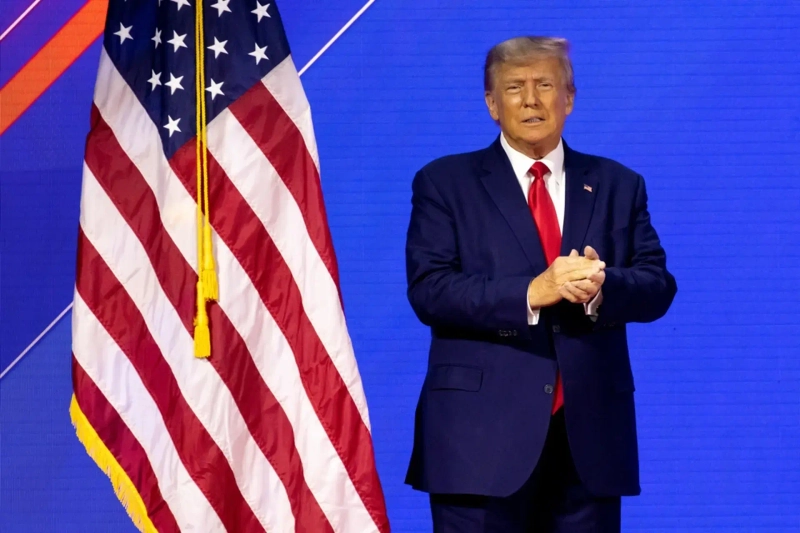
The Donald Trump administration stepped back from its ambitious goal of a 'comprehensive trade agreement' ahead of the reciprocal tariffs scheduled for July 9.
According to the Financial Times (FT) of the United Kingdom on the 1st (local time), the Trump administration revised its strategy to pursue a 'phased agreement' of narrower scope. This marks a retreat from the initial plan to sign trade agreements with 90 countries during the 90-day tariff suspension period. For some countries, this could present an opportunity to avoid reciprocal tariffs.
FT's analysis is that the United States intends to exempt the highest-level reciprocal tariffs for countries that reach a 'principled agreement' on some major issues. For these countries, only a 10% base tariff will be maintained while negotiations continue on the remaining issues.
Instead of comprehensive settlements, the administration aims for partial achievements in key sectors and leaves the remainder for future negotiations. This strategy was used in the trade agreement with the United Kingdom.
The United States agreed to apply a limited low-rate tariff quota to UK-manufactured automobiles and to reduce tariffs on aircraft parts. However, issues surrounding steel and aluminum tariffs have not been resolved, and the 10% tariff on UK exports remains in place.
Alongside these conciliatory gestures, the Trump administration is also employing a dual-track strategy that leaves open the possibility of imposing additional tariffs on certain sectors, such as automobiles, steel, and semiconductors. The Department of Commerce is investigating potential national security threats in specific industrial sectors—including copper, lumber, aerospace parts, pharmaceuticals, semiconductors, and key minerals—under Section 232 of the Trade Expansion Act.
Meanwhile, it remains uncertain how tariffs will be set for countries unable to reach even a basic agreement with President Trump by the July 9 deadline.
Song-Ryeol Lee, Hankyung.com Reporter yisr0203@hankyung.com

Korea Economic Daily
hankyung@bloomingbit.ioThe Korea Economic Daily Global is a digital media where latest news on Korean companies, industries, and financial markets.